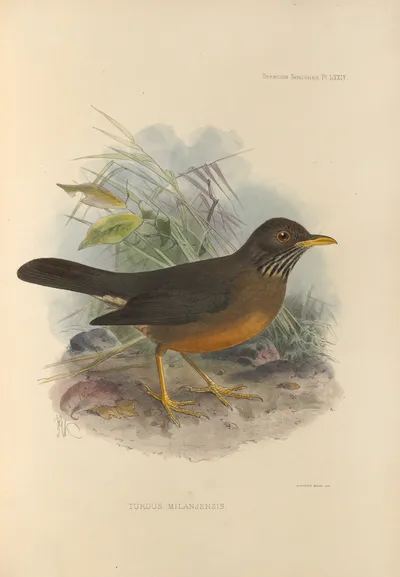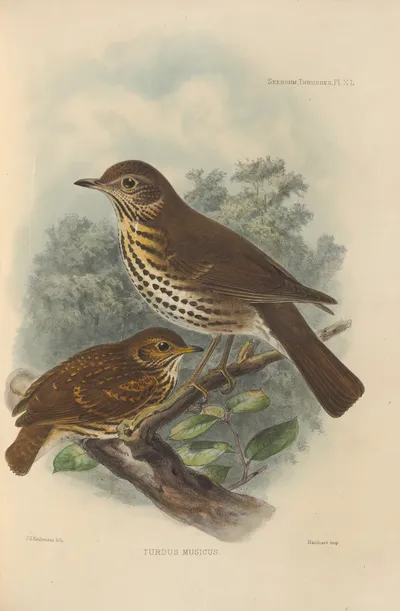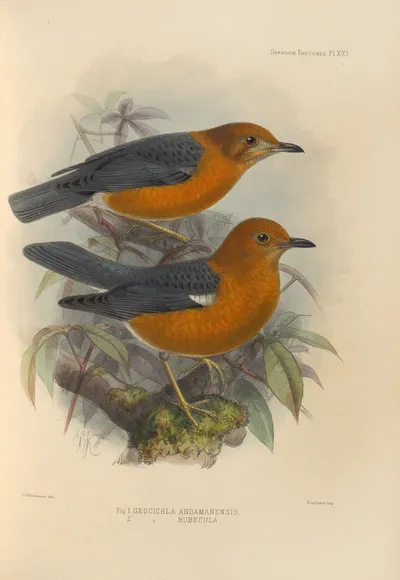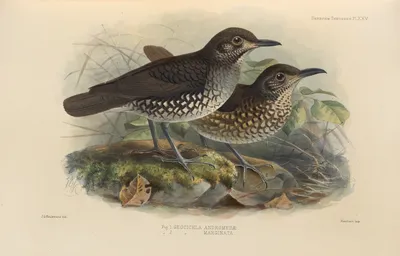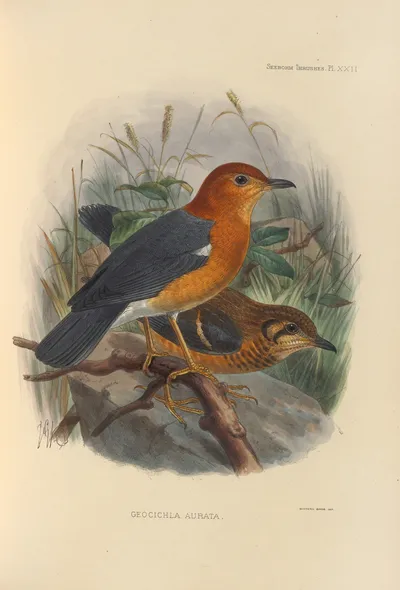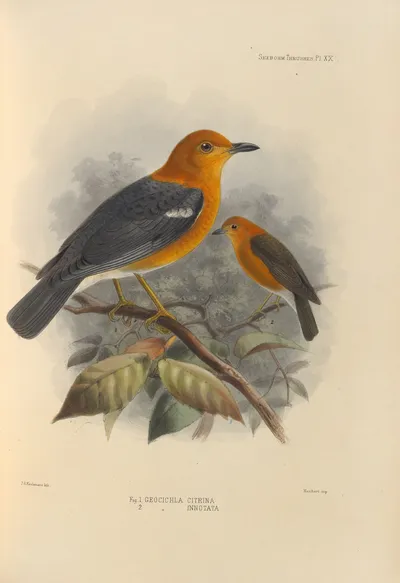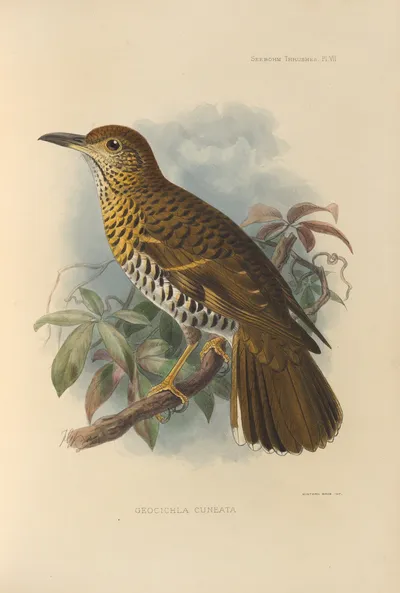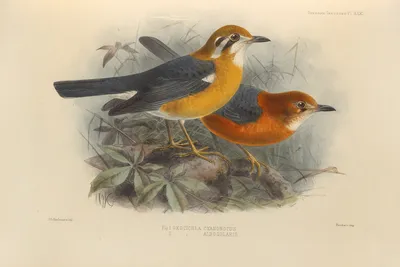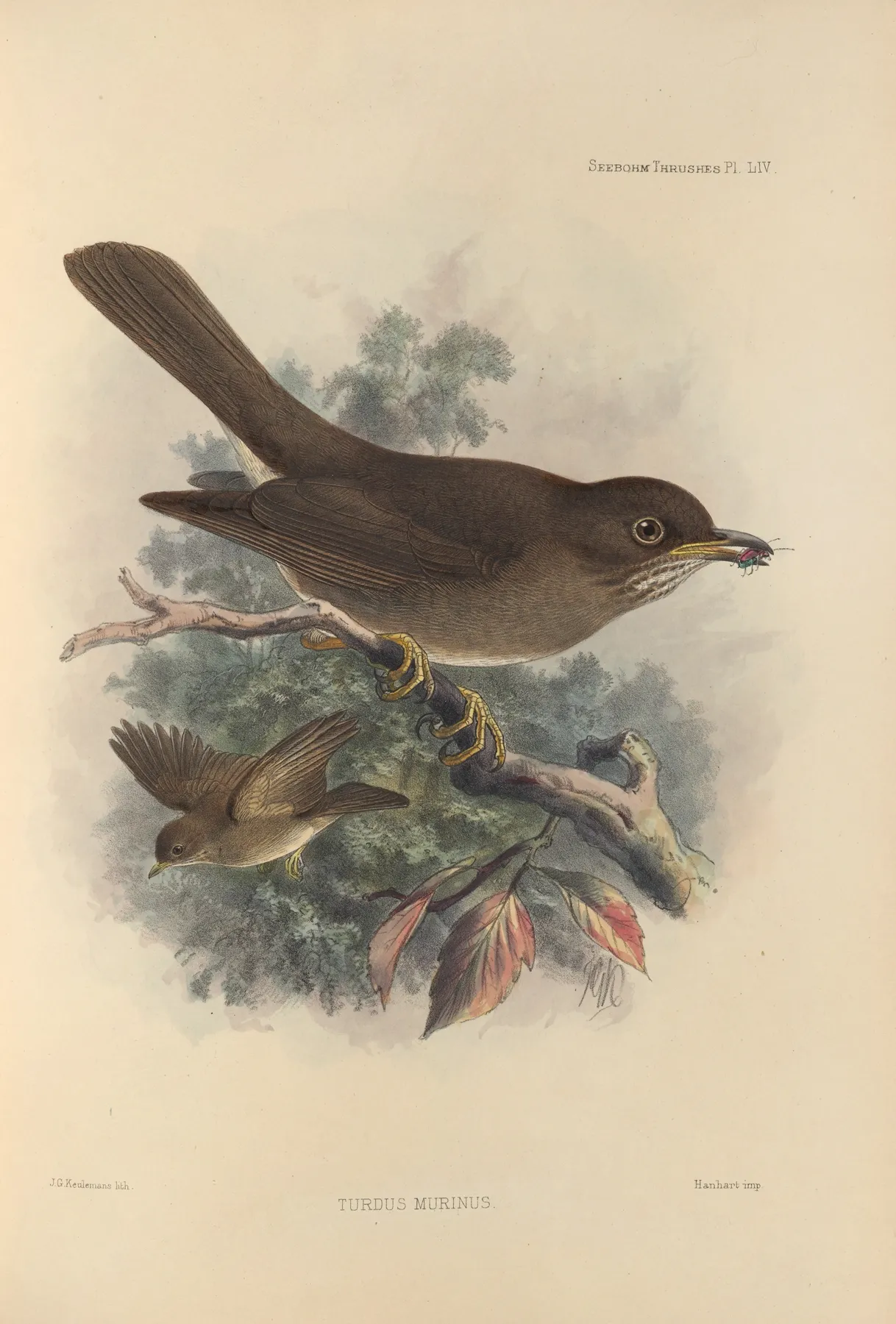
Turdus Murinus (1899-1902)
Ten ways of seeing
- upright 1.48 : 1
First Look
夫象物必在于形似,形似须全其骨气。
—— 唐·张彦远《历代名画记》
Likeness is the threshold; bone-and-breath is the point.
The sheet is vertical: the eye climbs and settles on the bird. Take the posture before the plumage. Then step in close: watch where colour meets line, and whether the line ever breaks. Third, find the darkest small patch: the whole tonal order is measured from there.
Name and Thing
The binomial is Turdus murinus: the first word is the genus it belongs among, the second the epithet that sets it apart. Two words carry a whole provenance. No established Chinese name exists, so it is cited by its binomial alone.
Form and Colour
Bird plates usually choose the perched pose: one foot gripping, one loose, the flight feathers laid in first, coverts over them, then the horny gleam of bill and eye.No colour group is recorded. Three things fix the habit: leaf arrangement, tepal count, and how the flower is borne.
Composition
Tall and narrow, the bird perched mid-branch with generous margins above and below. No details are appended: a plate for looking, not for keying out. Blank paper is not unfinished work: it is where the eye rests.
Line and Colour
In the later nineteenth century chromolithography took over: colour printed rather than painted, line demoted. Craft leaves franker evidence than inscriptions. If you mean to copy it: block in the broad shapes and colours first, detail last; lithographic softness comes from thin washes — two or three pale layers will get you close.
Poetic Resonance
雁声不到东篱畔,满城但、风雨凄凉。
—— 《惜黄花慢·菊》
The poem gives the mood first and the picture supplies the form; set the line beside the plate and the bird itself becomes its resting point.
Symbolism
In China the crane is longevity, the magpie joy, the wild goose a letter, the eagle prowess; in the Americas each bird carries a different totem. One bird, unrelated meanings. Meanings change their tune: the same flower can say opposite things within a century.
Season and Place
Bound to migration: north in spring, south in autumn, each species answering to a few weeks. Audubon's plates often read 'adult, spring' — plumage at its height. Audubon's Birds of America (1827–1838) came from specimens he shot himself, wired into lifelike poses and drawn from life — which is why the birds look so alive, and why the method is uncomfortable. The year 1899 on the plate is that of publication, not of flowering — the gathering came a year or two earlier. Much of what that generation knew of such birds came from specimens and cages; read locality and season both as hearsay.
The Book and the Hand
“A monograph of the Turdidae, or, Family of thrushes” carries only Henry Seebohm's name. A plate is collective work: drawer, engraver and colourist were different hands, and the unnamed ones decided how good it looks.
What to Take Away
Carry three rules away: whole before detail; line before colour; picture before book. Two centuries on, the plant may still flower in some garden; the one on this sheet stopped in the season of 1899.