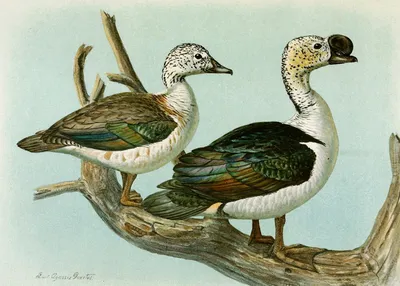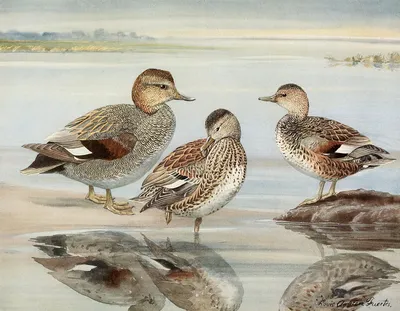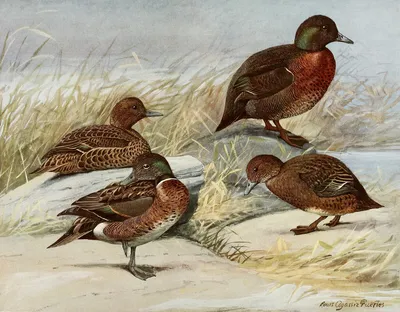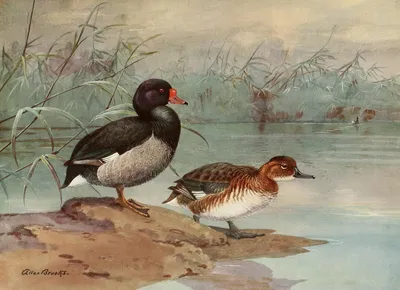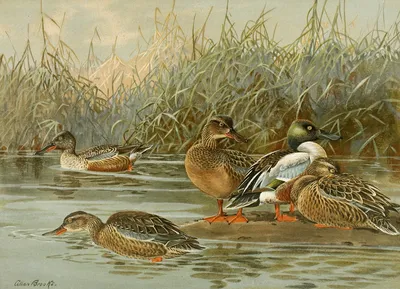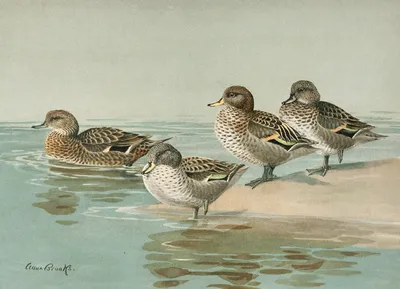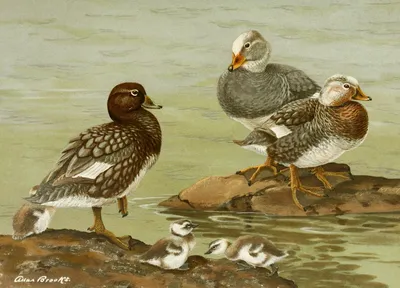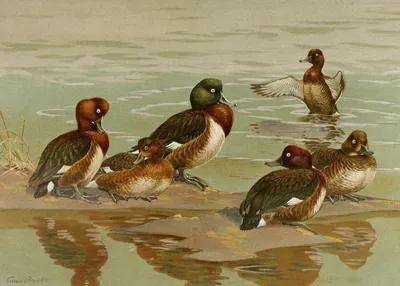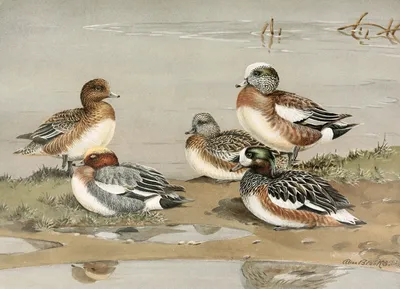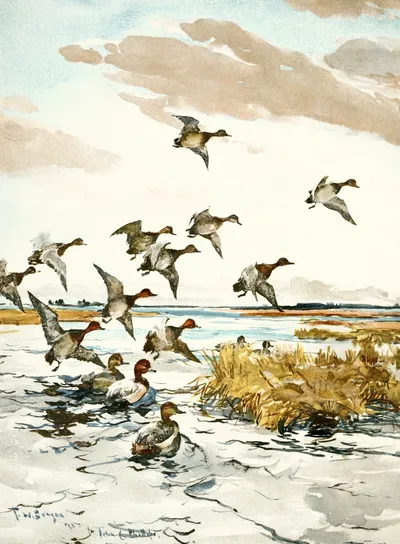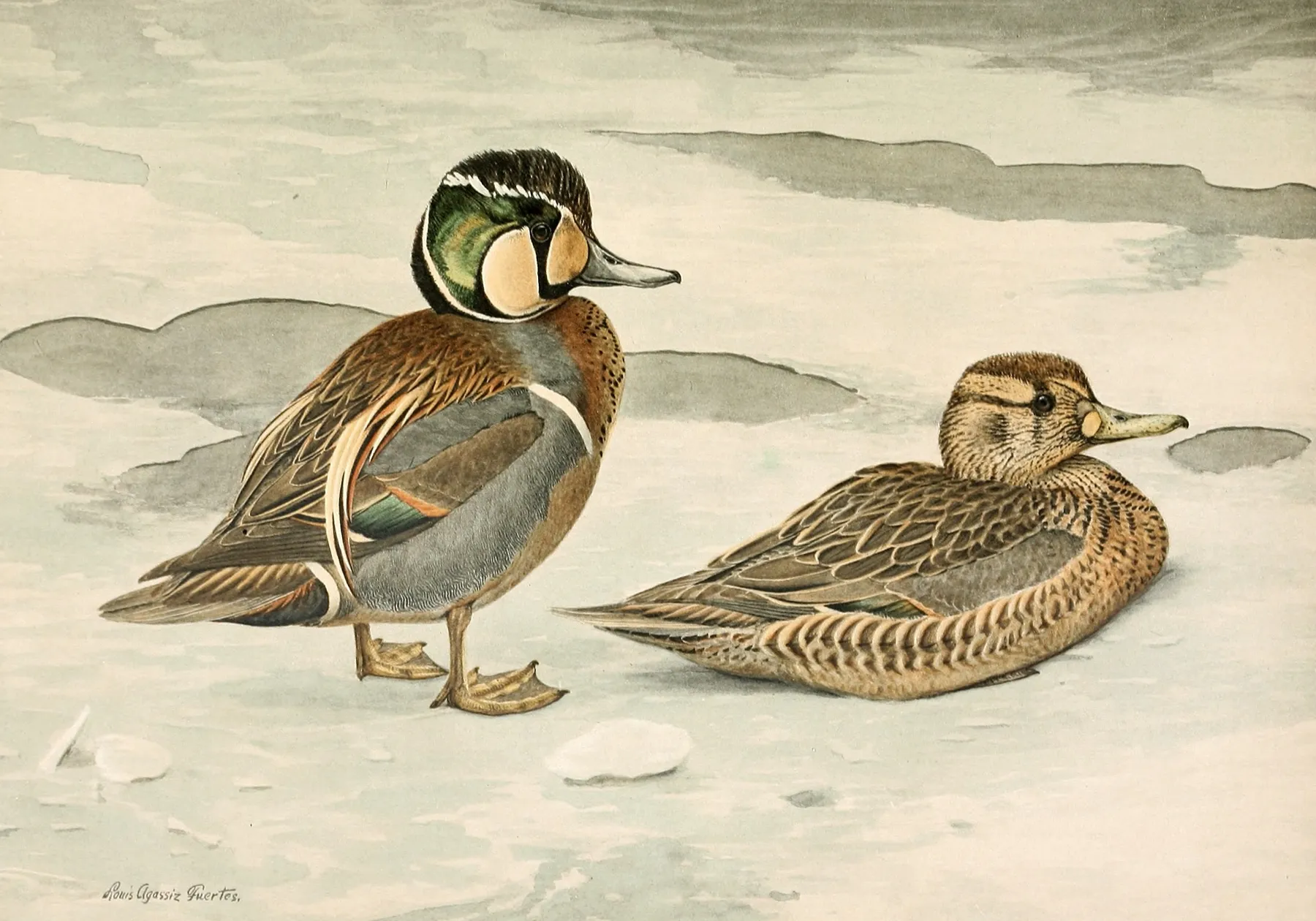
Formosan Teal (1922-1926)
Ten ways of seeing
- broad 0.70 : 1
First Look
论画以形似,见与儿童邻。
—— 宋·苏轼《书鄢陵王主簿所画折枝》
To judge painting by likeness alone is the view of a child.
Broad and horizontal: the eye travels side to side. Find where it stops. Then step in close: watch where colour meets line, and whether the line ever breaks. Third, find the darkest small patch: the whole tonal order is measured from there.
Name and Thing
The binomial is Formosan teal: the first word is the genus it belongs among, the second the epithet that sets it apart. Two words carry a whole provenance. No established Chinese name exists, so it is cited by its binomial alone.
Form and Colour
Camellias are evergreen shrubs with thick, waxen, serrate leaves; the double flowers overlap like roof tiles and fall whole, petals still attached.No colour group is recorded. Three things fix the habit: leaf arrangement, tepal count, and how the flower is borne.
Composition
Broad and horizontal — the format for groups or a whole plant with its roots. No details are appended: a plate for looking, not for keying out. Old plates set the plant slightly off centre, with unequal margins — that small imbalance is what keeps it alive.
Line and Colour
After 1900 photography and colour reproduction ran alongside watercolour: accuracy rose, the cut of the burin disappeared. Take a loupe to three places: petal edge, leaf vein, caption. An unbroken line means engraving; colour crossing the outline means a hand. If you mean to copy it: this is a photomechanical record — match the colours directly, do not imitate the printing grain.
Poetic Resonance
老桧如幢翠接连,山茶作塔绿萦缠。
—— 唐·杨万里《寒食雨中同舍约游天竺得十六绝句呈陆务观 其六》
The poem gives the mood first and the picture supplies the form; set the line beside the plate and the corolla becomes its resting point.
Symbolism
In China the camellia is the friend that endures; in Europe it became Eastern beauty and unattainability, and after La Dame aux Camélias, a token of brief life. In a flora it is a species first and a symbol second; the order is worth keeping.
Season and Place
Late winter into early spring, blooming in the cold of the first lunar month. Southwest China and Japan, with Yunnan the centre of diversity. The year 1922 on the plate is that of publication, not of flowering — the gathering came a year or two earlier. Read the locality and the flowering season both with a discount: one is hearsay, the other a ten-day peak.
The Book and the Hand
“A natural history of the ducks” carries only Allan Brooks's name. A plate is collective work: drawer, engraver and colourist were different hands, and the unnamed ones decided how good it looks.
What to Take Away
Carry three rules away: whole before detail; line before colour; picture before book. The flower of that year is dust, yet its image on paper has outlived every living cousin.