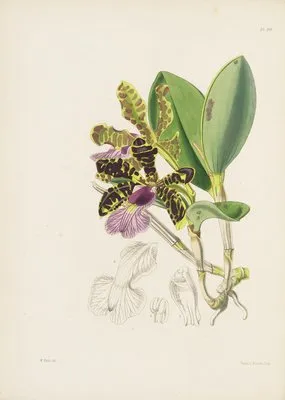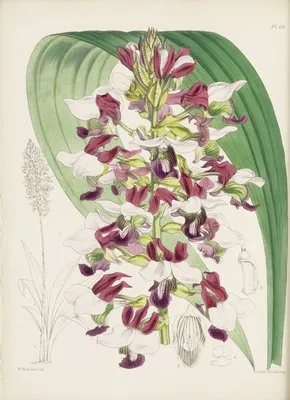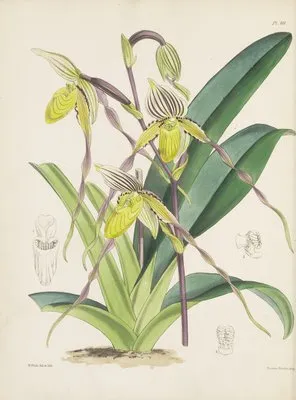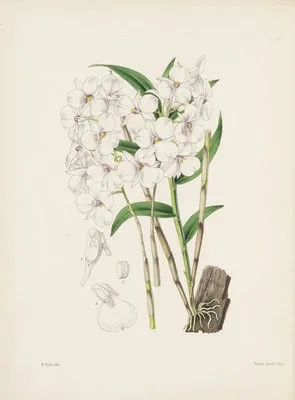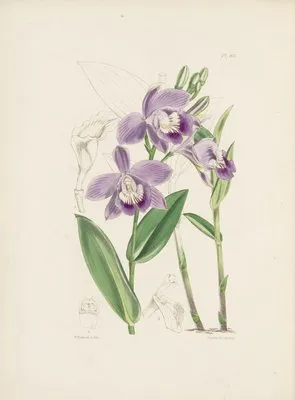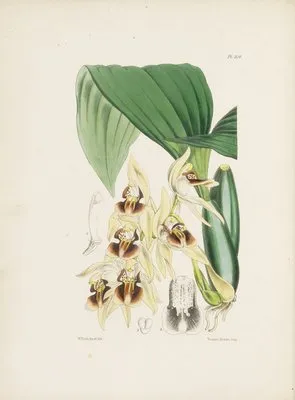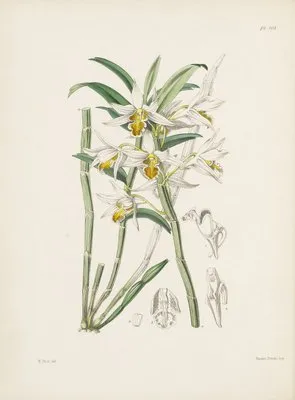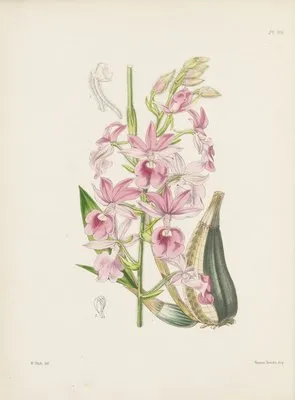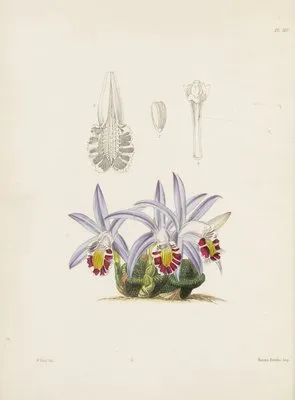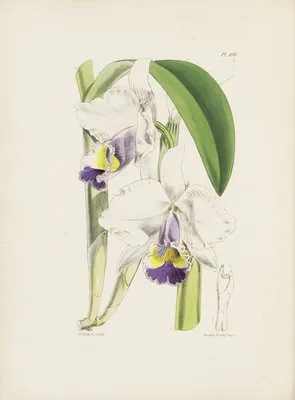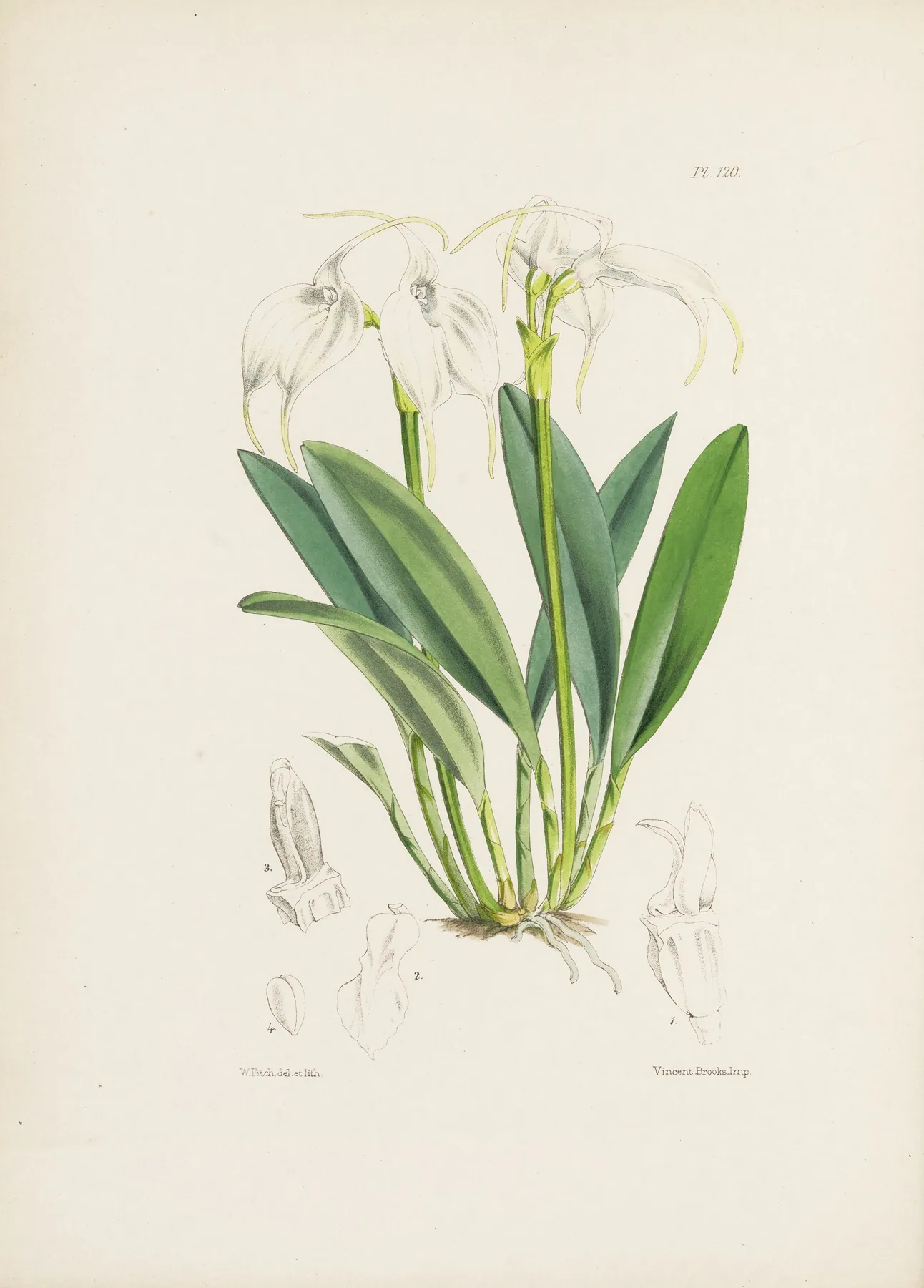
The Tovar Masdevallia (Masdevallia tovarensis) (1867)
尾萼兰属
The Tovar Masdevallia (Masdevallia tovarensis) (1867)
Ten ways of seeing
- measured cast yellow-green
- upright 1.39 : 1
First Look
凡画山水,意在笔先。
—— 唐·王维《山水论》
In painting, the intention precedes the brush.
The sheet is vertical: the eye climbs and settles in the upper half. Let the plant stand before you look for detail. Then step in close: watch where colour meets line, and whether the line ever breaks. Third, find the darkest small patch: the whole tonal order is measured from there.
Name and Thing
Only the genus Masdevallia is given; species-level names came later. The Chinese name 尾萼兰属 is a modern rendering of the Latin, not an old garden name.
Form and Colour
Measured on this plate: flower colour is sparing, 0.7% of the sheet against 8.4% of foliage, the cast tending yellow-green — as with pale or white blooms, outline and tone do the talking. Orchids carry pseudobulbs or fleshy roots; six tepals, one modified into a lip that serves as a landing stage, and a column uniting stamens and pistil — a structure unique to the family.No colour group is recorded. A single plant, laid out with nothing hidden.
Composition
The sheet is tall. No details are appended: a plate for looking, not for keying out. The plant covers only 11% of the sheet, centred near the centre; the emptiness is where the eye rests.
Line and Colour
In the later nineteenth century chromolithography took over: colour printed rather than painted, line demoted. Craft leaves franker evidence than inscriptions. If you mean to copy it: block in the broad shapes and colours first, detail last; lithographic softness comes from thin washes — two or three pale layers will get you close.
Poetic Resonance
汉书扬雄传反离骚云:“灵修既信椒、兰之唼佞兮。
—— 《潜夫论·明暗第六》
The poem gives the mood first and the picture supplies the form; set the line beside the plate and the corolla becomes its resting point.
Symbolism
In China the orchid is the gentleman who blooms unseen; in Victorian Europe it was luxury and obsession, a single new species worth a fortune. Meanings change their tune: the same flower can say opposite things within a century.
Season and Place
Varies by genus: temperate terrestrials flower in spring and summer, tropical epiphytes almost year-round. the orchids drawn for European portfolios came largely from the cloud forests of Central America and Southeast Asia. The year 1867 on the plate is that of publication, not of flowering — the gathering came a year or two earlier. See this kind of plate in the flowering season if you can: once you have met the living flower, you stop reading only colour.
The Book and the Hand
“A second century of orchidaceous plants” carries only James Bateman's name. The image is public domain; the hand-colouring is still one person's hand.
What to Take Away
Appreciation is not knowledge but habit — one more look each time. The flower of that year is dust, yet its image on paper has outlived every living cousin.
About this plate
The Tovar Masdevallia (Masdevallia tovarensis) (1867) is plate 20, from A second century of orchidaceous plants, drawn by James Bateman. This public-domain plate is reproduced at high resolution, free to view and download. Publication: London, L. Reeve & Co., 1867.