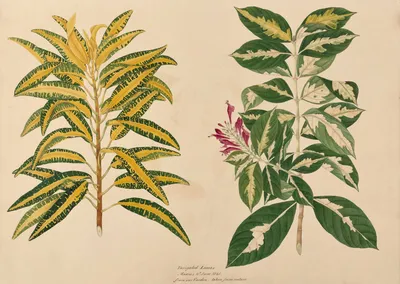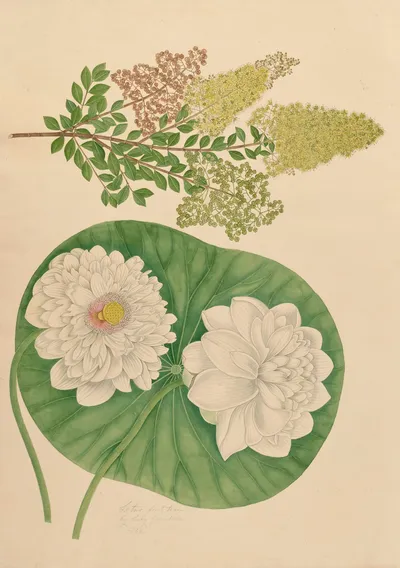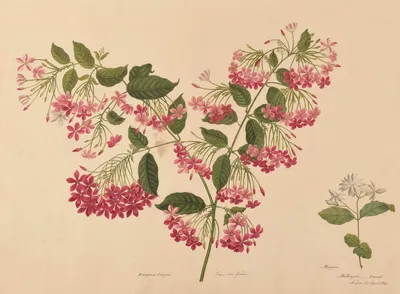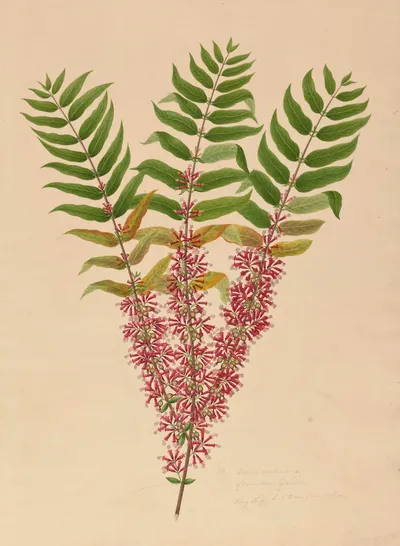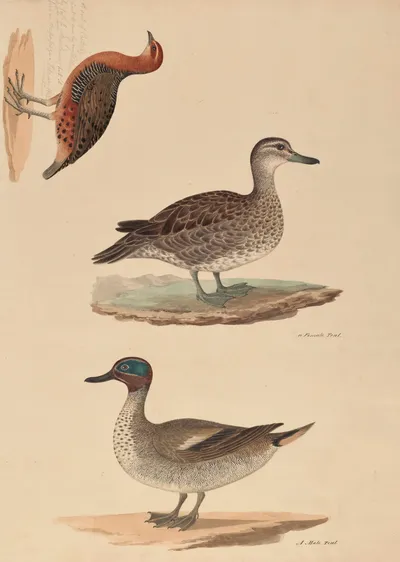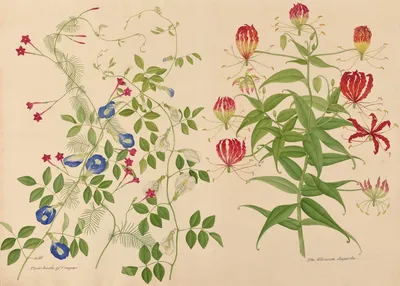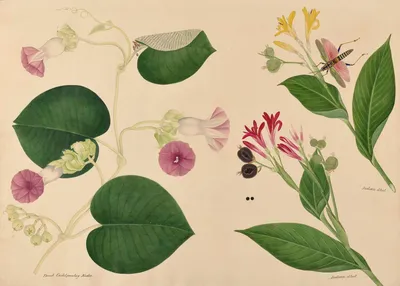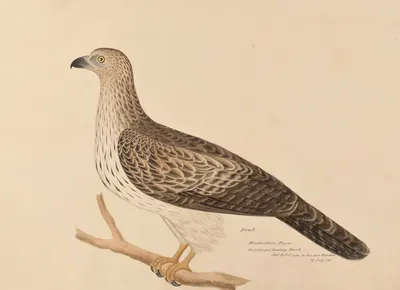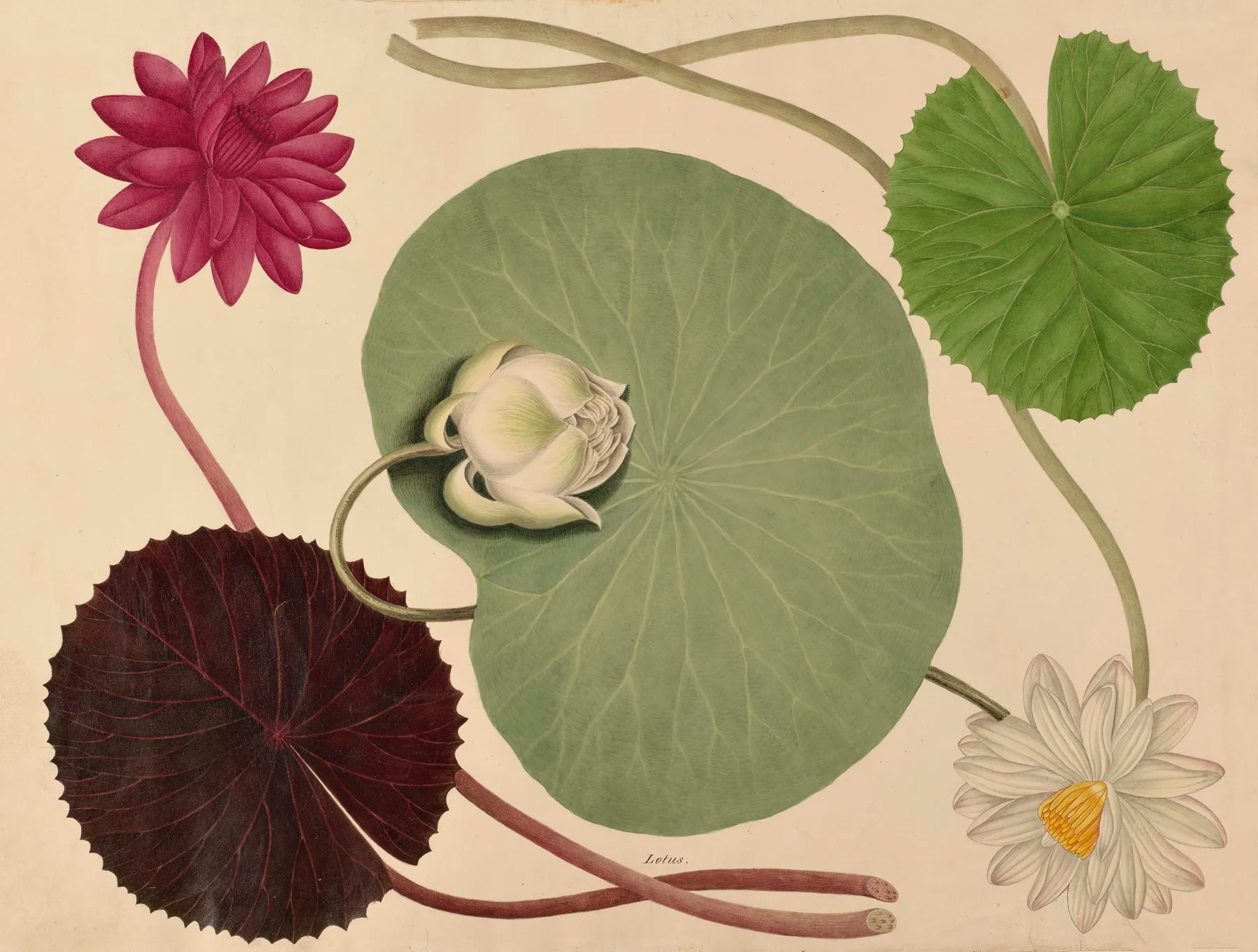
Lotus (1840-1843)
Ten ways of seeing
- broad 0.76 : 1
First Look
论画以形似,见与儿童邻。
—— 宋·苏轼《书鄢陵王主簿所画折枝》
To judge painting by likeness alone is the view of a child.
Broad and horizontal: the eye travels side to side. Find where it stops. Then step in close: watch where colour meets line, and whether the line ever breaks. Third, find the darkest small patch: the whole tonal order is measured from there.
Name and Thing
No reliable binomial survives, so the printed title must serve. Neither name nor binomial survives: the printed title must do.
Form and Colour
The sacred lotus lifts shield-shaped leaves above the water with a seed pod standing at the centre; waterlilies float their notched leaves and rest their flowers on the surface.No colour group is recorded. Read the outline, then the colour layers, then the brush.
Composition
Broad and horizontal — the format for groups or a whole plant with its roots. No details are appended: a plate for looking, not for keying out. Old plates set the plant slightly off centre, with unequal margins — that small imbalance is what keeps it alive.
Line and Colour
The first half of the nineteenth century moved from copper to steel to lithography; stipple could render the softest transition. There is evidence on the back too: the plate mark pressed into the paper, the slight relief of the pigment, lines worn shallow in a later printing. If you mean to copy it: take its skeleton, its margins and the order of its colours; the burin's hatching is the language of copper — suggest it with pencil density, do not imitate it stroke for stroke.
Poetic Resonance
荷𦰏衰翁似有情,相逢携手绕村行。
—— 唐·李商隐《赠田叟》
The poem gives the mood first and the picture supplies the form; set the line beside the plate and the corolla becomes its resting point.
Symbolism
In China the lotus is the gentleman unstained by mud; in Buddhism it is the seat of the pure land. In a flora it is a species first and a symbol second; the order is worth keeping.
Season and Place
High summer, June to August. The sacred lotus is native to warm Asia and cultivated in China for three millennia. The year 1840 on the plate is that of publication, not of flowering — the gathering came a year or two earlier. See this kind of plate in the flowering season if you can: once you have met the living flower, you stop reading only colour.
The Book and the Hand
“An album of Indian plants, fruit, birds, and insects” carries only Miss Gough's name. From drawing to plate the sheet passed through several hands — the engraver aimed at accuracy, the colourist at speed, and between them lies each plate's unevenness.
What to Take Away
Appreciation is not knowledge but habit — one more look each time. Two centuries on, the plant may still flower in some garden; the one on this sheet stopped in the season of 1840.