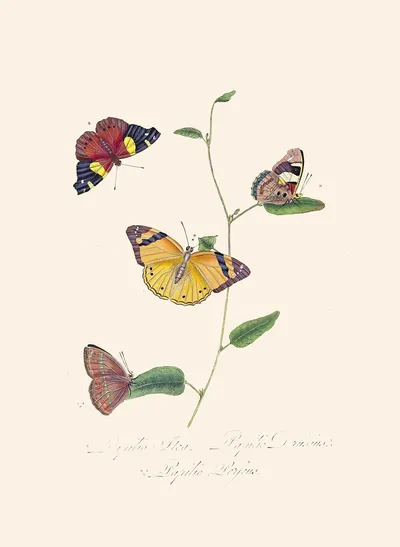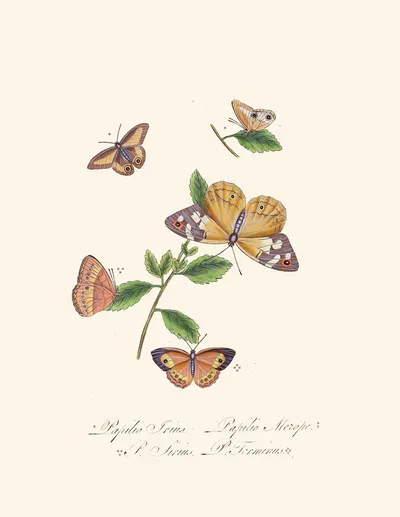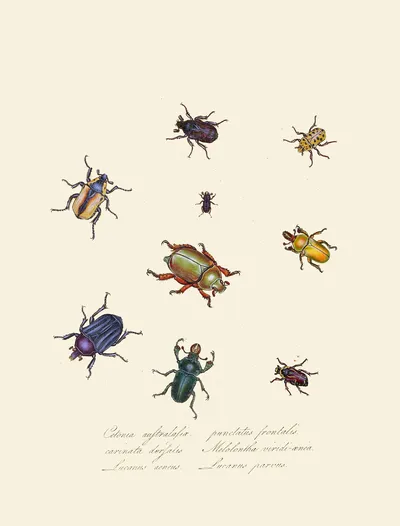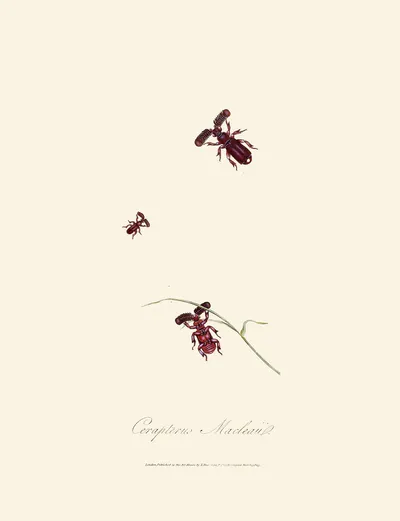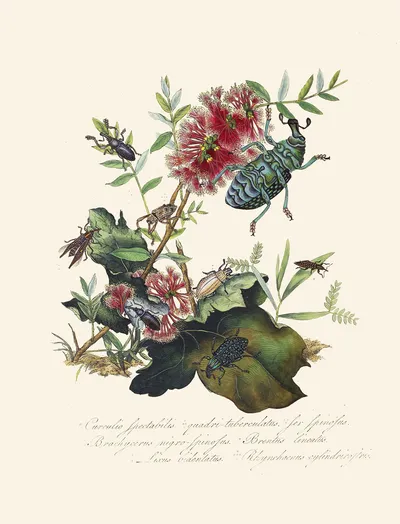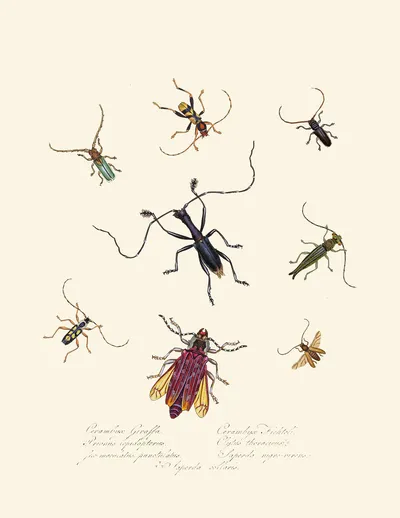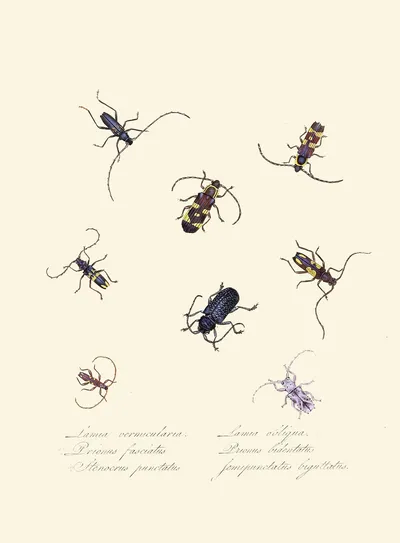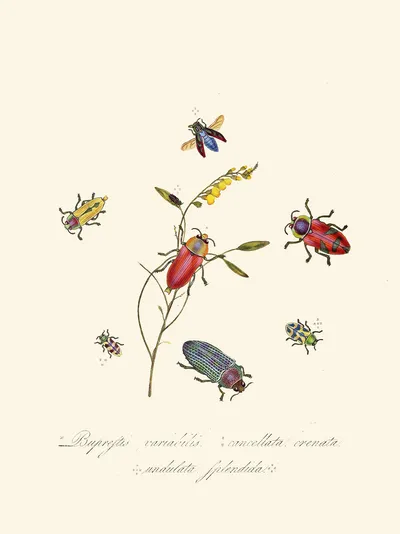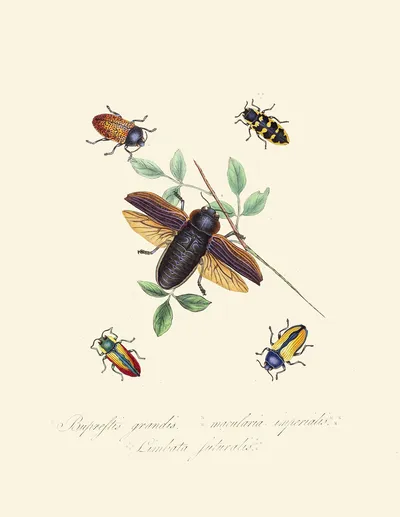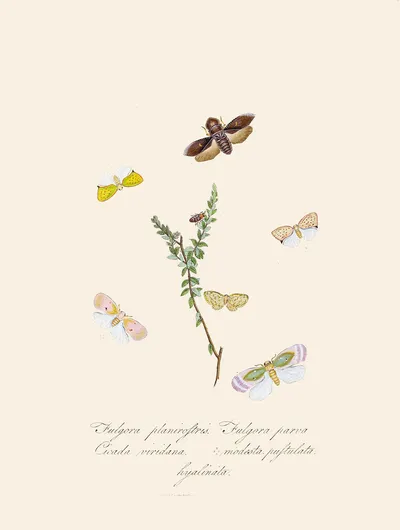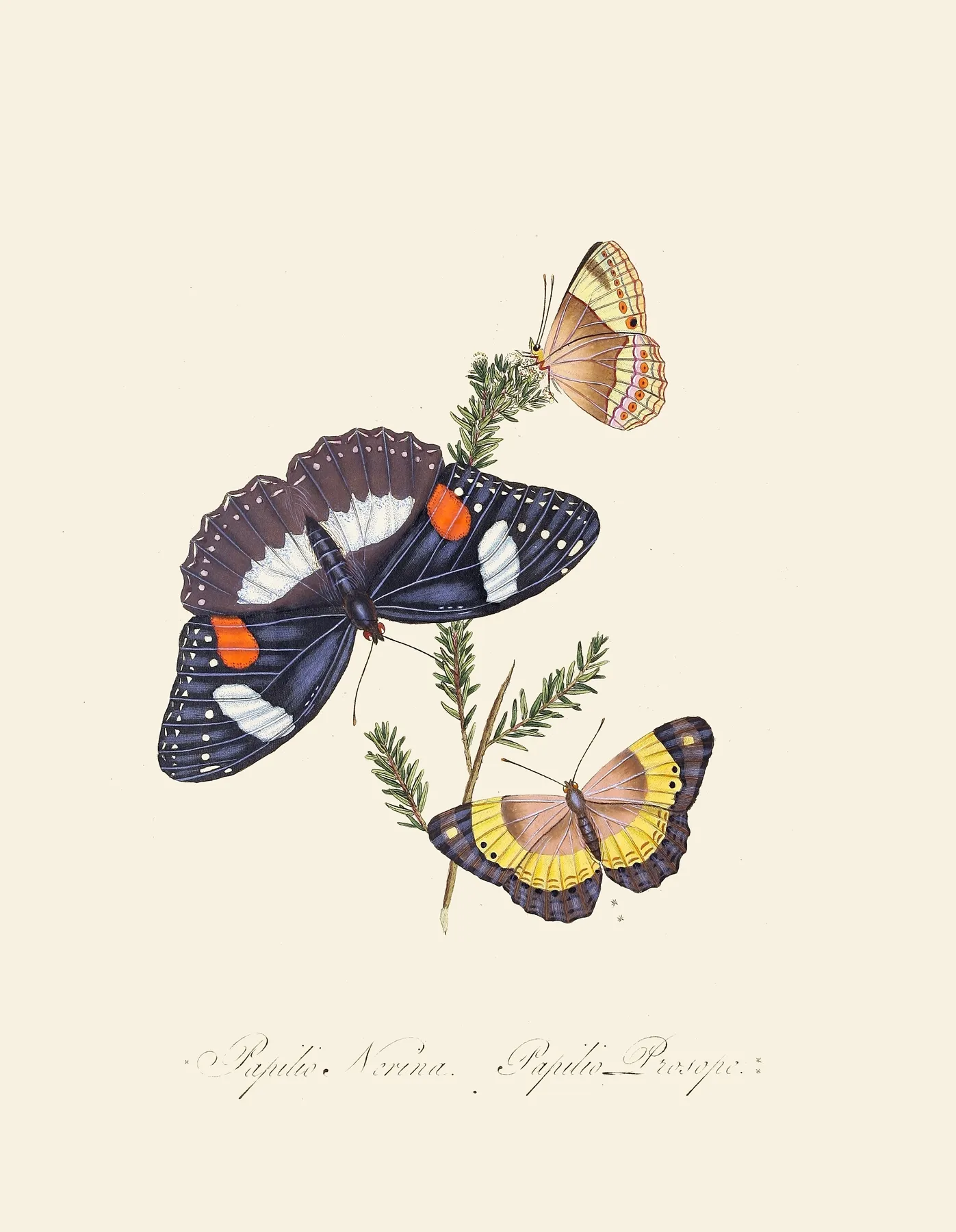
An epitome of the natural history of the insects of New Holland, New Zealand Pl.26 (1805)
Ten ways of seeing
- slightly upright 1.29 : 1
First Look
六法者何?一、气韵生动是也;二、骨法用笔是也;三、应物象形是也;四、随类赋彩是也;五、经营位置是也;六、传移模写是也。
—— 南齐·谢赫《古画品录》
The six laws: spirit resonance alive; bone-method in the brush; matching form; colour by kind; planning the placing; copying the masters.
Slightly taller than wide; the eye lands on the bird's head, a little above centre. Then step in close: watch where colour meets line, and whether the line ever breaks. Third, find the darkest small patch: the whole tonal order is measured from there.
Name and Thing
No reliable binomial survives, so the printed title must serve. Neither name nor binomial survives: the printed title must do.
Form and Colour
Insect plates show the host plant and all four stages at once — egg, larva, pupa, adult — with wing venation, scales and antennal segments accounted for: the most technical branch of natural-history art.No colour group is recorded. A single plant, laid out with nothing hidden.
Composition
Slightly taller than wide, the bird set a little above centre, the eye landing at head and bill. No details are appended: a plate for looking, not for keying out. Blank paper is not unfinished work: it is where the eye rests.
Line and Colour
The first half of the nineteenth century moved from copper to steel to lithography; stipple could render the softest transition. Take a loupe to three places: petal edge, leaf vein, caption. An unbroken line means engraving; colour crossing the outline means a hand. If you mean to copy it: take its skeleton, its margins and the order of its colours; the burin's hatching is the language of copper — suggest it with pencil density, do not imitate it stroke for stroke.
Poetic Resonance
穿花蛱蝶深深见,点水蜻蜓款款飞。
—— 唐·杜甫《曲江二首》
Butterflies thread the flowers, seen deep within; dragonflies touch the water and fly on, slow and deliberate.
The poem gives the mood first and the picture supplies the form; set the line beside the plate and the bird itself becomes its resting point.
Symbolism
In China the butterfly is dream and lovers, the cicada purity, the firefly a lamp for reading; in Europe the insect began as specimen before it became symbol. In a flora it is a species first and a symbol second; the order is worth keeping.
Season and Place
Set by life stage: butterflies in spring and summer, moths into autumn, beetles from May to July. Four stages on one sheet span a whole year. Merian's Metamorphosis Insectorum Surinamensium (1705) first showed insect stages with their host plants — the result of raising caterpillars in the Surinam forest with her daughters. The year 1805 on the plate is that of publication, not of flowering — the gathering came a year or two earlier. The bud and the ripe fruit on one branch tell the season; the name in the title often tells the journey.
The Book and the Hand
“An epitome of the natural history of the insects of New Holland, New Zealand, New Guinea, Otaheite.....” carries only Edward Donovan's name. A plate is collective work: drawer, engraver and colourist were different hands, and the unnamed ones decided how good it looks.
What to Take Away
Next time you watch a bird: posture first, then where the plumage is deepest, and only then the field guide. Two centuries on, the plant may still flower in some garden; the one on this sheet stopped in the season of 1805.