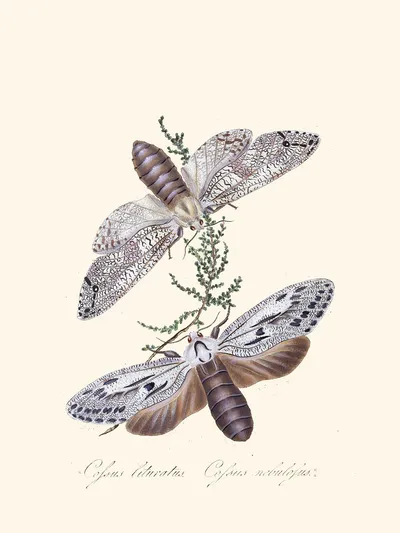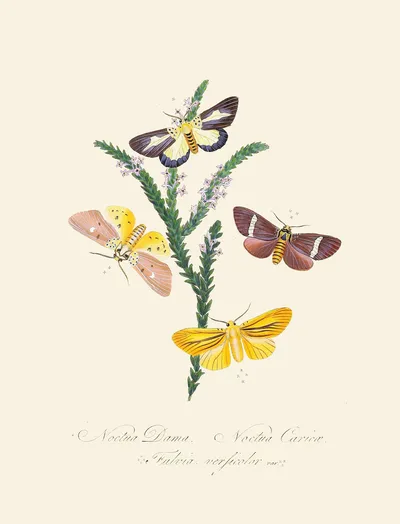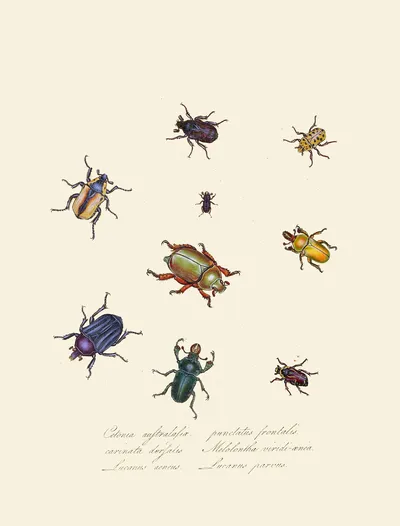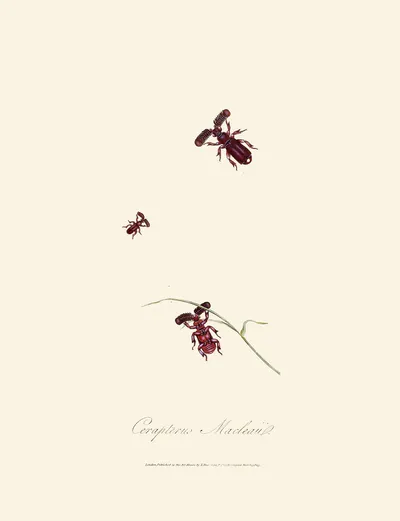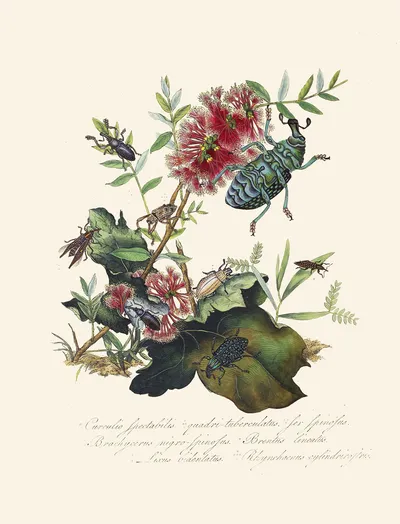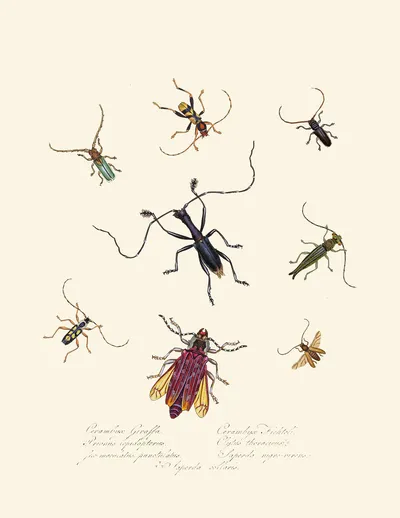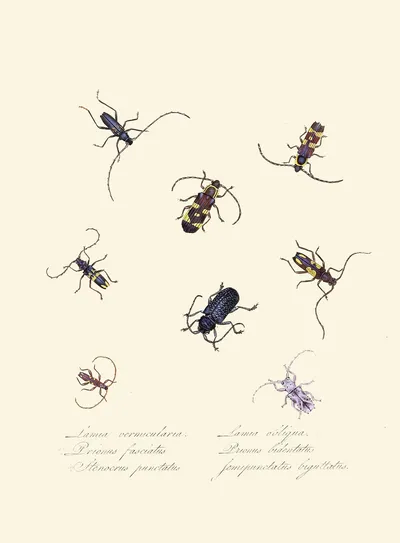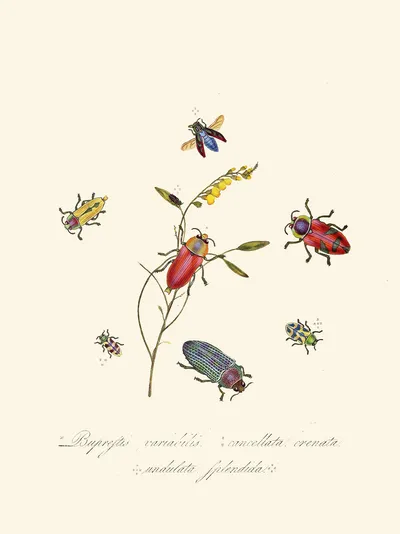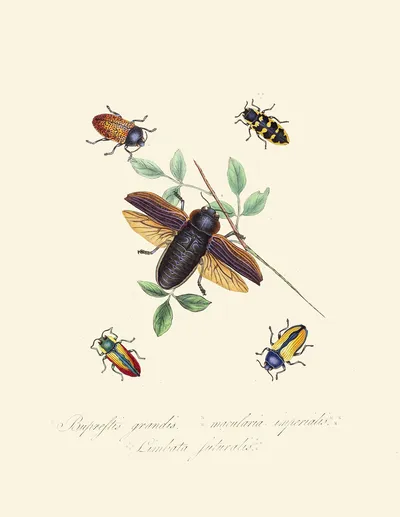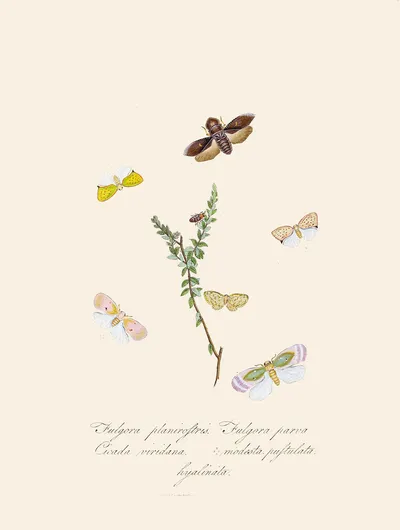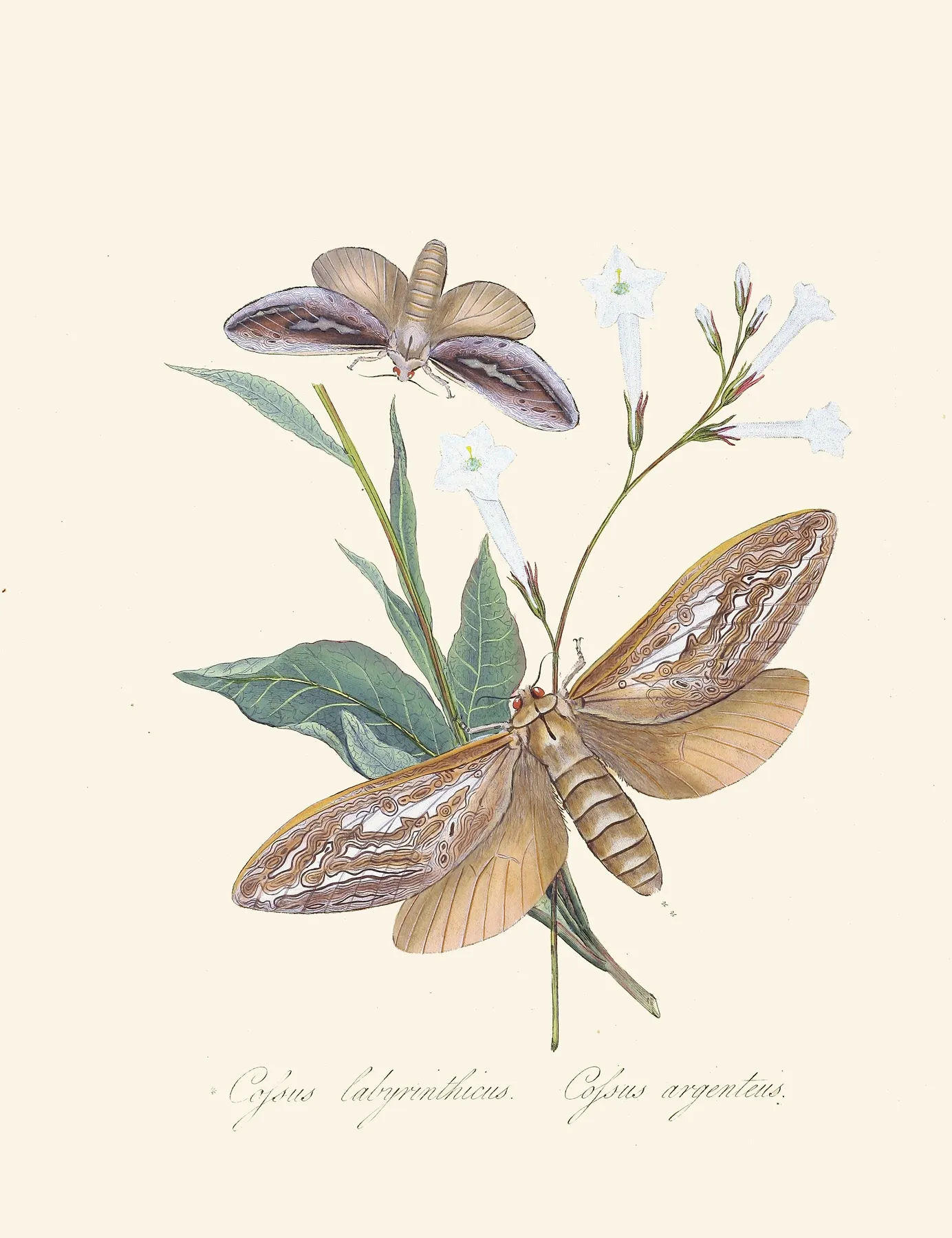
An epitome of the natural history of the insects of New Holland, New Zealand Pl.37 (1805)
Ten ways of seeing
- upright 1.30 : 1
First Look
搜尽奇峰打草稿。
—— 清·石涛《苦瓜和尚画语录》
Exhaust the strange peaks, and then make the sketch.
The sheet is vertical: the eye climbs and settles on the bird. Take the posture before the plumage. Then step in close: watch where colour meets line, and whether the line ever breaks. Third, find the darkest small patch: the whole tonal order is measured from there.
Name and Thing
No reliable binomial survives, so the printed title must serve. Neither name nor binomial survives: the printed title must do.
Form and Colour
Insect plates show the host plant and all four stages at once — egg, larva, pupa, adult — with wing venation, scales and antennal segments accounted for: the most technical branch of natural-history art.No colour group is recorded. Read the outline, then the colour layers, then the brush.
Composition
Tall and narrow, the bird perched mid-branch with generous margins above and below. No details are appended: a plate for looking, not for keying out. Blank paper is not unfinished work: it is where the eye rests.
Line and Colour
The first half of the nineteenth century moved from copper to steel to lithography; stipple could render the softest transition. Take a loupe to three places: petal edge, leaf vein, caption. An unbroken line means engraving; colour crossing the outline means a hand. If you mean to copy it: take its skeleton, its margins and the order of its colours; the burin's hatching is the language of copper — suggest it with pencil density, do not imitate it stroke for stroke.
Poetic Resonance
锦树摧残胡蝶老,冰绡剪破鸳鸯只。
—— 《满江红·枕上吴山》
The poem gives the mood first and the picture supplies the form; set the line beside the plate and the bird itself becomes its resting point.
Symbolism
In China the butterfly is dream and lovers, the cicada purity, the firefly a lamp for reading; in Europe the insect began as specimen before it became symbol. Flower language was added later; the flower knows nothing of it, and that innocence is part of its power.
Season and Place
Set by life stage: butterflies in spring and summer, moths into autumn, beetles from May to July. Four stages on one sheet span a whole year. Merian's Metamorphosis Insectorum Surinamensium (1705) first showed insect stages with their host plants — the result of raising caterpillars in the Surinam forest with her daughters. The year 1805 on the plate is that of publication, not of flowering — the gathering came a year or two earlier. The bud and the ripe fruit on one branch tell the season; the name in the title often tells the journey.
The Book and the Hand
“An epitome of the natural history of the insects of New Holland, New Zealand, New Guinea, Otaheite.....” carries only Edward Donovan's name. The image is public domain; the hand-colouring is still one person's hand.
What to Take Away
Appreciation is not knowledge but habit — one more look each time. Two centuries on, the plant may still flower in some garden; the one on this sheet stopped in the season of 1805.