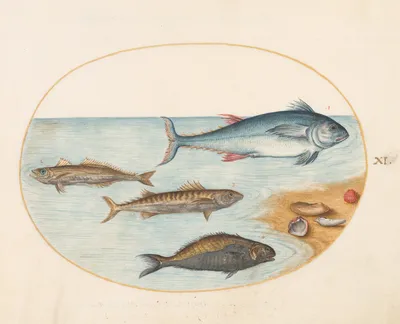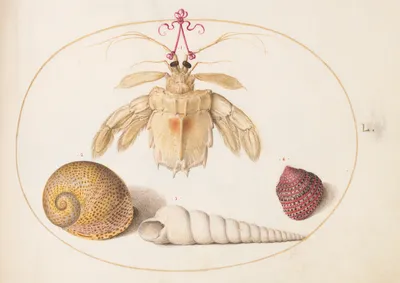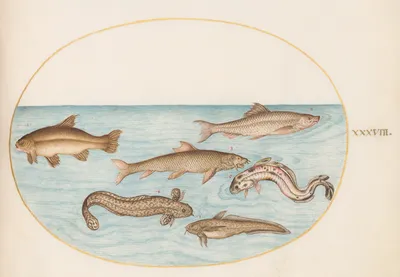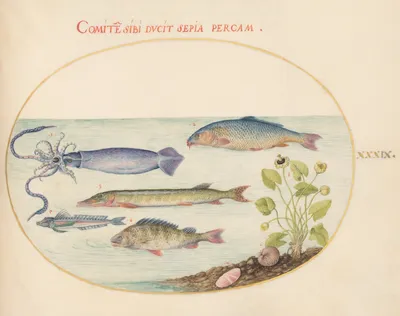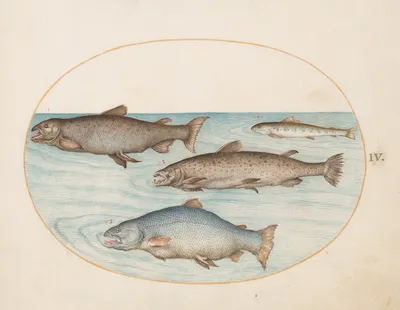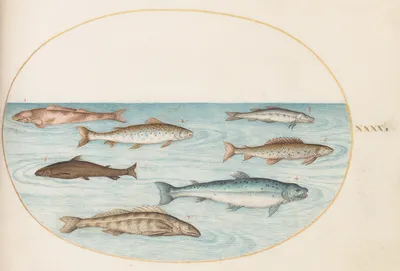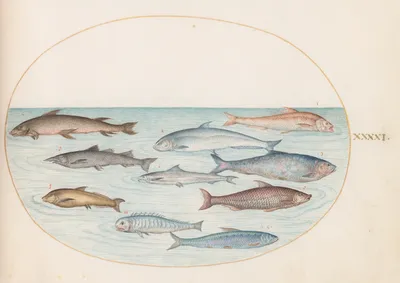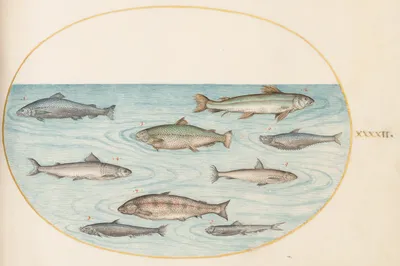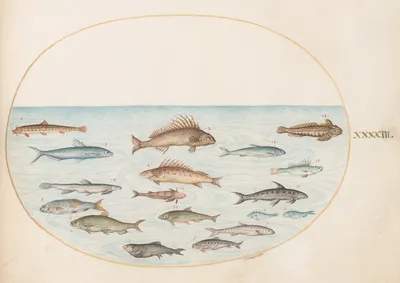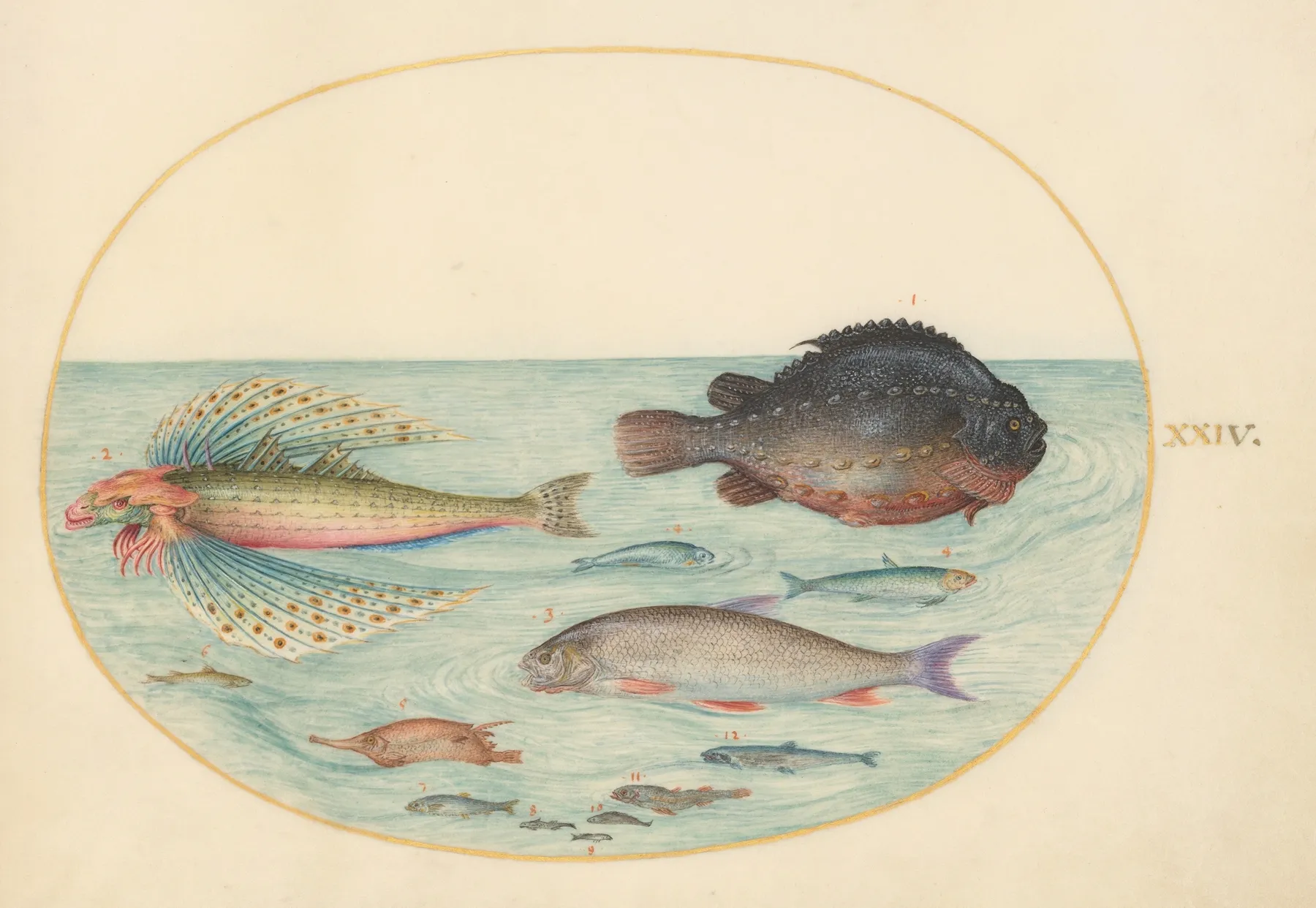
Plate 24; Flying Swallow Gurnard, Male Lumpsucker, Longspine Snipefish, and Other Fish (1575-1590)
Ten ways of seeing
- broad 0.69 : 1
First Look
六法者何?一、气韵生动是也;二、骨法用笔是也;三、应物象形是也;四、随类赋彩是也;五、经营位置是也;六、传移模写是也。
—— 南齐·谢赫《古画品录》
The six laws: spirit resonance alive; bone-method in the brush; matching form; colour by kind; planning the placing; copying the masters.
Broad and horizontal: the eye travels side to side. Find where it stops. Then step in close: watch where colour meets line, and whether the line ever breaks. Third, find the darkest small patch: the whole tonal order is measured from there.
Name and Thing
No reliable binomial survives, so the printed title must serve. Neither name nor binomial survives: the printed title must do.
Form and Colour
Insect plates show the host plant and all four stages at once — egg, larva, pupa, adult — with wing venation, scales and antennal segments accounted for: the most technical branch of natural-history art.No colour group is recorded. A single plant, laid out with nothing hidden.
Composition
Broad and horizontal — the format for perched, spread-wing or grouped birds. No details are appended: a plate for looking, not for keying out. Old plates set the plant slightly off centre, with unequal margins — that small imbalance is what keeps it alive.
Line and Colour
Before 1700 most botanical figures came from woodcut: thick, hard lines in relief, colour brushed on afterwards. Decide first whether it was printed or painted; only then discuss whether it is beautiful. If you mean to copy it: take its skeleton, its margins and the order of its colours; the burin's hatching is the language of copper — suggest it with pencil density, do not imitate it stroke for stroke.
Poetic Resonance
青蛾皓齿在楼船,横笛短箫悲远天。
—— 唐·杜甫《城西陂泛舟》
The poem gives the mood first and the picture supplies the form; set the line beside the plate and the bird itself becomes its resting point.
Symbolism
In China the butterfly is dream and lovers, the cicada purity, the firefly a lamp for reading; in Europe the insect began as specimen before it became symbol. Flower language was added later; the flower knows nothing of it, and that innocence is part of its power.
Season and Place
Set by life stage: butterflies in spring and summer, moths into autumn, beetles from May to July. Four stages on one sheet span a whole year. Merian's Metamorphosis Insectorum Surinamensium (1705) first showed insect stages with their host plants — the result of raising caterpillars in the Surinam forest with her daughters. The year 1575 on the plate is that of publication, not of flowering — the gathering came a year or two earlier. Read the locality and the flowering season both with a discount: one is hearsay, the other a ten-day peak.
The Book and the Hand
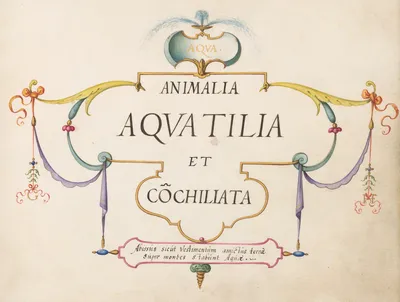
“Animalia Aqvatilia et Cochiliata (Aqva)” carries only Joris Hoefnagel's name. A plate is collective work: drawer, engraver and colourist were different hands, and the unnamed ones decided how good it looks.
What to Take Away
Next time you watch a bird: posture first, then where the plumage is deepest, and only then the field guide. Two centuries on, the plant may still flower in some garden; the one on this sheet stopped in the season of 1575.