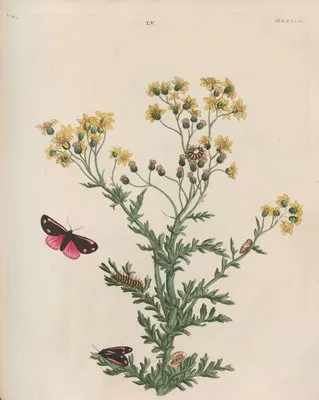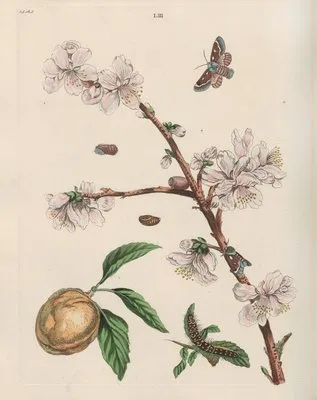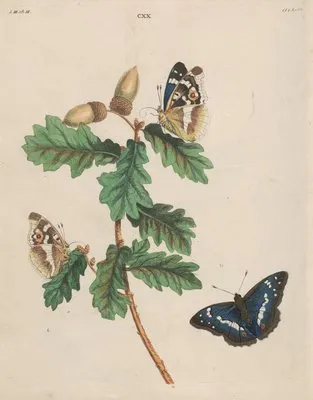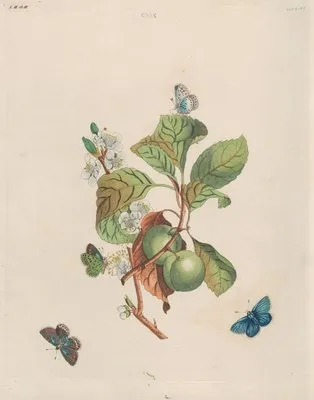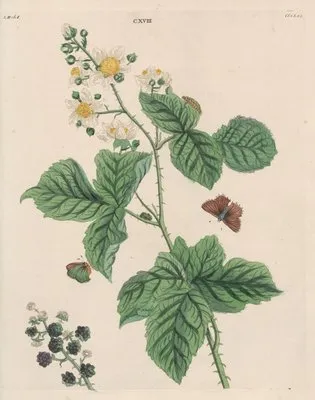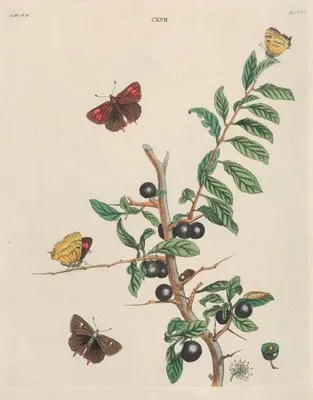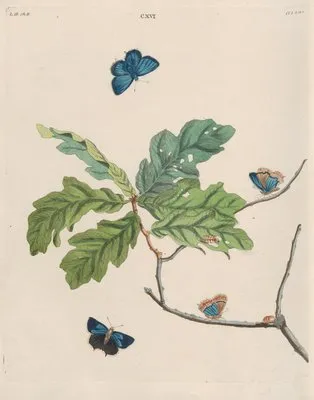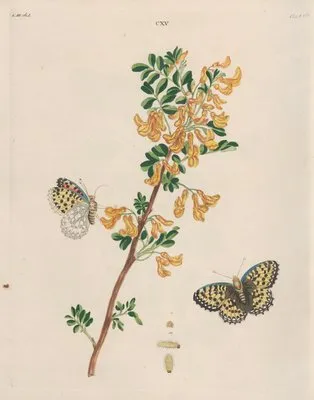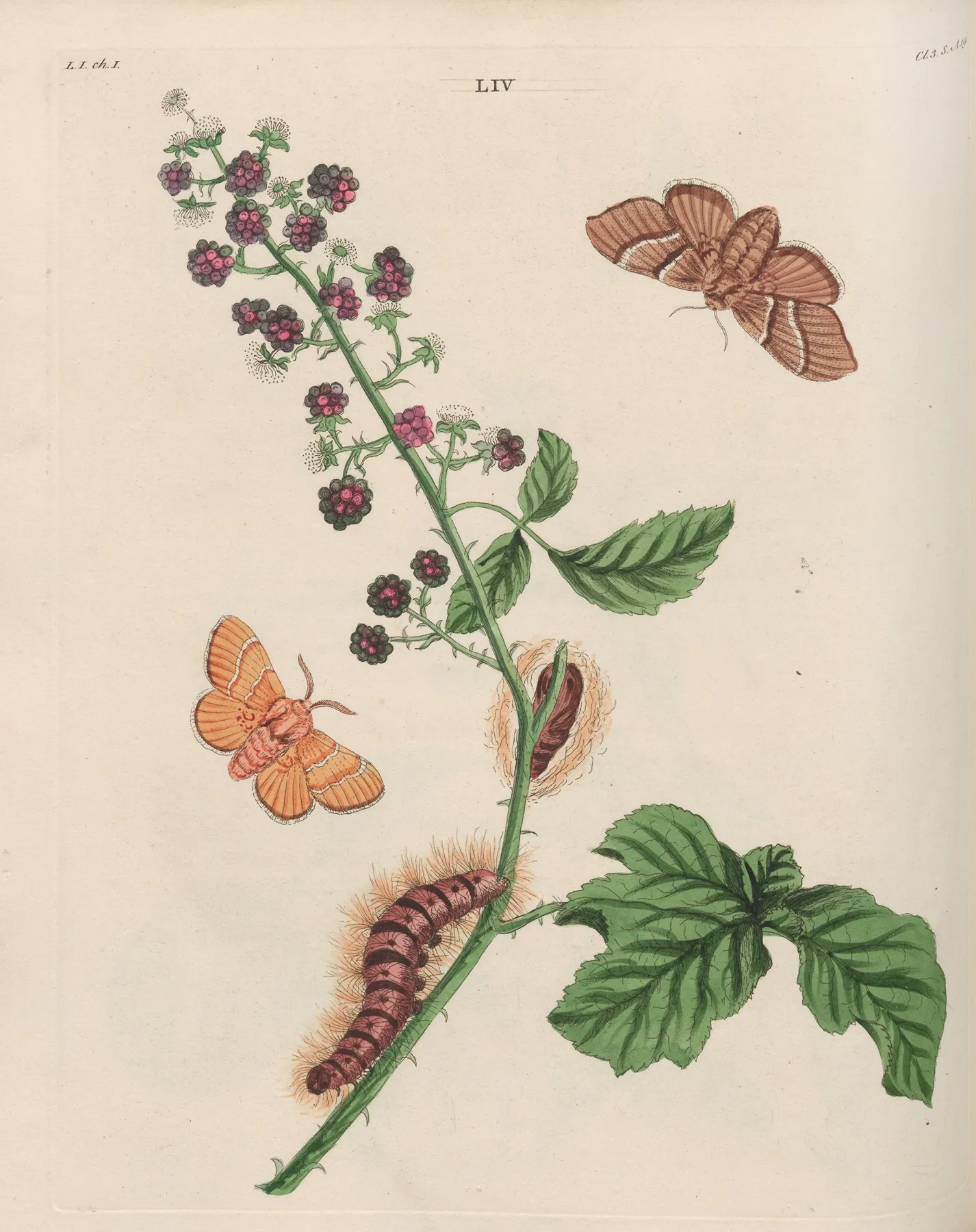
The Fox-coloured Moth (Phalæna rubi), The Bramble or Black-berry Fruit (Rubus fruticosus) (1773)
蔷薇亚科、悬钩子属
Ten ways of seeing
- measured cast amber
- slightly upright 1.26 : 1
First Look
夫象物必在于形似,形似须全其骨气。
—— 唐·张彦远《历代名画记》
Likeness is the threshold; bone-and-breath is the point.
Slightly taller than wide; the eye lands above centre. Then step in close: watch where colour meets line, and whether the line ever breaks. Third, find the darkest small patch: the whole tonal order is measured from there.
Name and Thing
Only the genus Rubus is given; species-level names came later. No established Chinese name exists, so it is cited by its binomial alone.
Form and Colour
Measured on this plate: flower colour covers 7.3% of the sheet, foliage 9.0%, the cast amber with a second note of red. No other plate shares exactly this measure. Fruit plates pair the whole fruit with a section: the outline identifies the variety, the cut reveals skin thickness, core size and seed arrangement — the evidence of registration.No colour group is recorded. Read the outline, then the colour layers, then the brush.
Composition
The sheet is slightly tall. No details are appended: a plate for looking, not for keying out. The plant covers only 18% of the sheet, centred below centre; the emptiness is where the eye rests.
Line and Colour
Eighteenth-century plates are mostly copper engraving: hatched lines for shadow, then hand-colouring by another hand. Craft leaves franker evidence than inscriptions. If you mean to copy it: take its skeleton, its margins and the order of its colours; the burin's hatching is the language of copper — suggest it with pencil density, do not imitate it stroke for stroke.
Poetic Resonance
一年好景君须记,最是橙黄橘绿时。
—— 宋·苏轼《赠刘景文》
Remember the best of the year: the time of yellow oranges and green tangerines.
The poem gives the mood first and the picture supplies the form; set the line beside the plate and the fruit becomes its resting point.
Symbolism
In China the pomegranate means many sons, the peach long life, the orange good fortune; in Europe the apple is temptation and knowledge, the grape abundance and sacrifice. In a flora it is a species first and a symbol second; the order is worth keeping.
Season and Place
Late summer into autumn, variety by variety. Temperate fruits came mostly from Eurasia, later from the Americas. Nineteenth-century nurseries printed varietal albums for trade and exhibition: every fruit on the page was a saleable claim. The year 1749 on the plate is that of publication, not of flowering — the gathering came a year or two earlier. Read the locality and the flowering season both with a discount: one is hearsay, the other a ten-day peak.
The Book and the Hand
“Benjamin Wilkes” carries only Benjamin Wilkes's name. A plate is collective work: drawer, engraver and colourist were different hands, and the unnamed ones decided how good it looks.
What to Take Away
Next time you stand before a flowering plant, give it three minutes: leaf arrangement, direction of the flower, the darkest patch. The flower of that year is dust, yet its image on paper has outlived every living cousin.
About this plate
The Fox-coloured Moth (Phalæna rubi), The Bramble or Black-berry Fruit (Rubus fruticosus) (1773) is plate 67, from Benjamin Wilkes, drawn by Benjamin Wilkes. This public-domain plate is reproduced at high resolution, free to view and download. Publication: English, ?-1749.