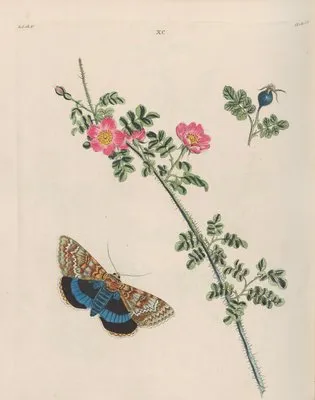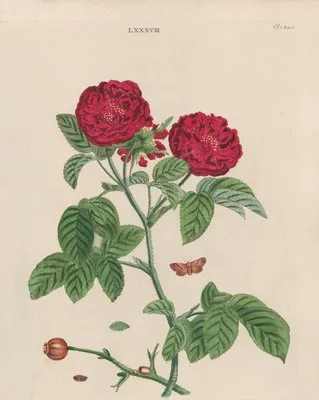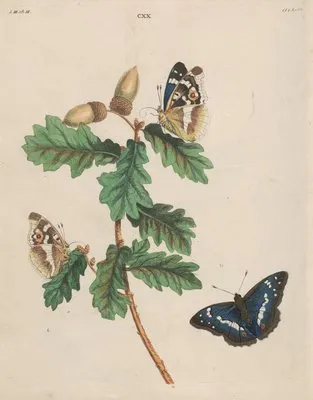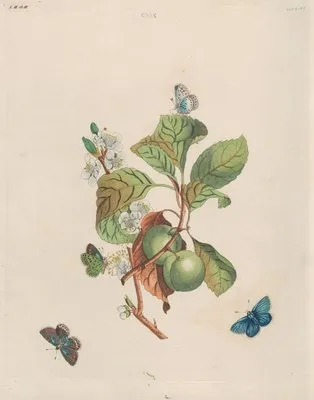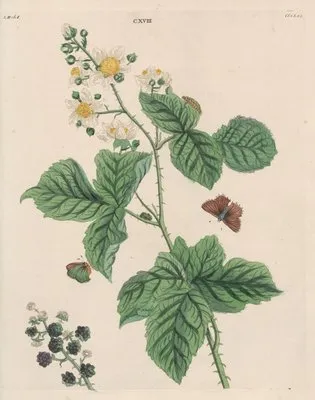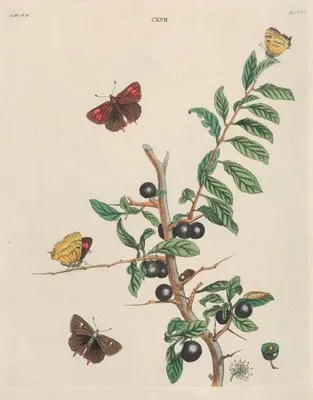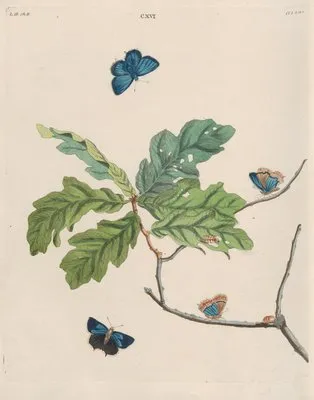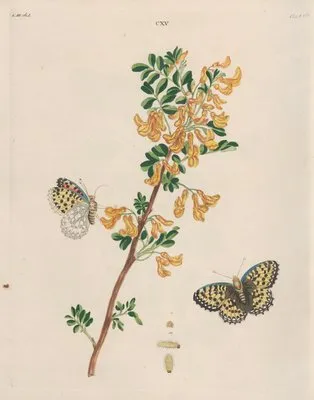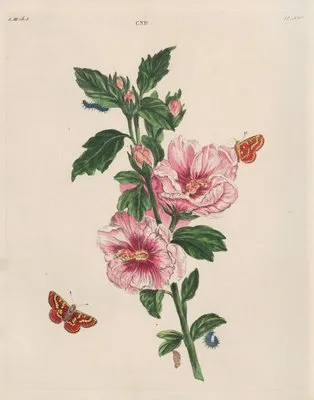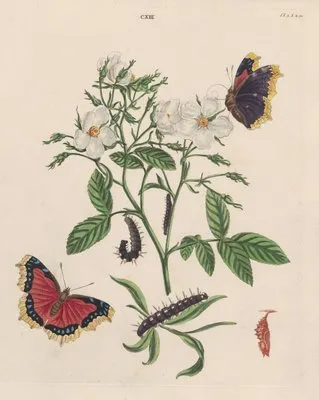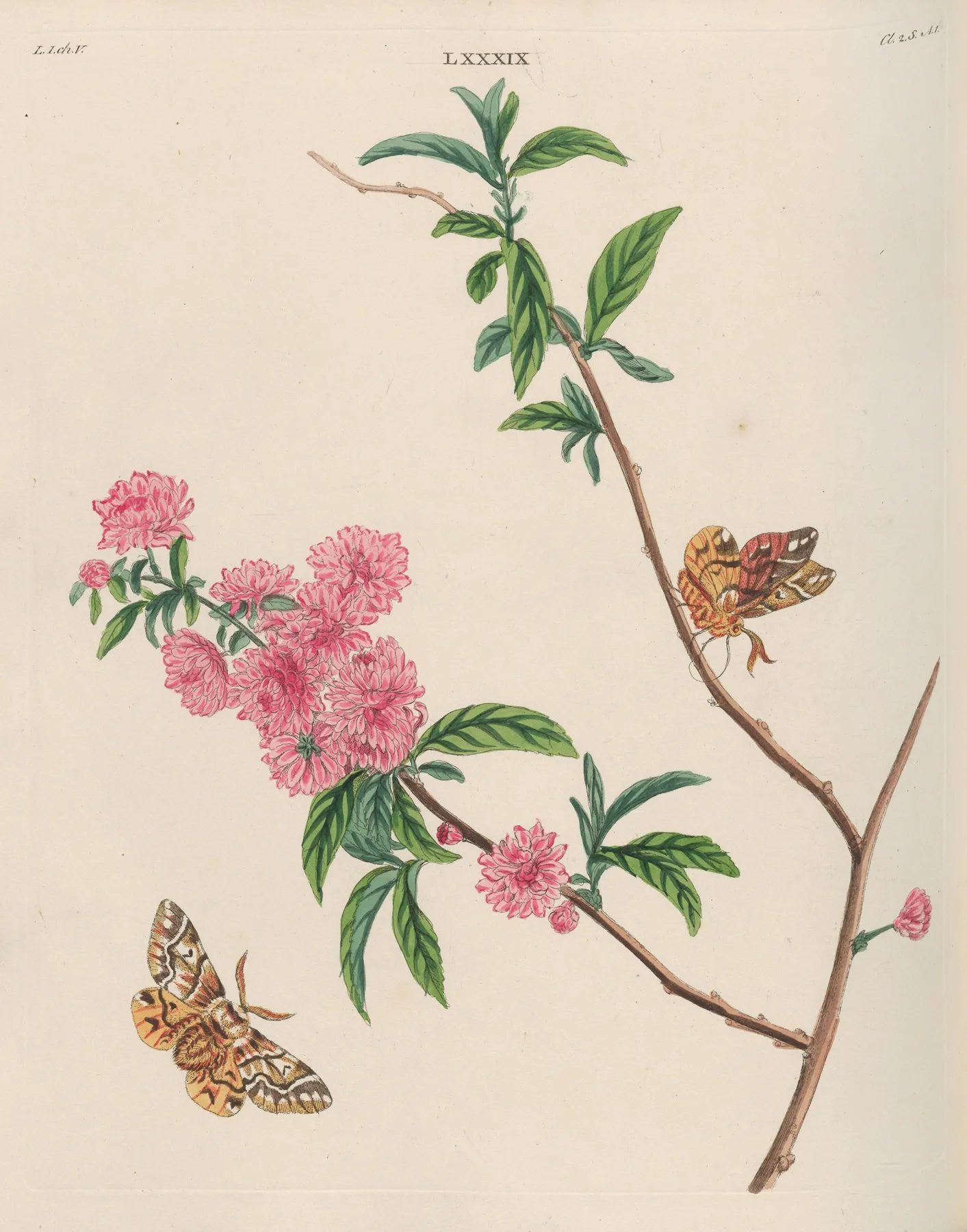
The Glory of Kent, a Moth (Phalæna versicolor), The double-flowering Peach (Amygdalus nana) (1773)
雪光花、兽亚纲、俄罗斯矮杏
Ten ways of seeing
- measured cast red
- slightly upright 1.27 : 1
First Look
六法者何?一、气韵生动是也;二、骨法用笔是也;三、应物象形是也;四、随类赋彩是也;五、经营位置是也;六、传移模写是也。
—— 南齐·谢赫《古画品录》
The six laws: spirit resonance alive; bone-method in the brush; matching form; colour by kind; planning the placing; copying the masters.
Slightly taller than wide; the eye lands above centre. Then step in close: watch where colour meets line, and whether the line ever breaks. Third, find the darkest small patch: the whole tonal order is measured from there.
Name and Thing
Only the genus Amygdalus is given; species-level names came later. No established Chinese name exists, so it is cited by its binomial alone.
Form and Colour
Measured on this plate: flower colour covers 7.9% of the sheet, foliage 4.7%, the cast red with a second note of amber. No other plate shares exactly this measure. Flowering trees and shrubs put out branches first; blossoms open before or with the leaves, usually five thin, translucent petals around a cluster of fine stamens.No colour group is recorded. A single plant, laid out with nothing hidden.
Composition
The sheet is slightly tall. No details are appended: a plate for looking, not for keying out. The plant covers only 15% of the sheet, centred near the centre; the emptiness is where the eye rests.
Line and Colour
Eighteenth-century plates are mostly copper engraving: hatched lines for shadow, then hand-colouring by another hand. There is evidence on the back too: the plate mark pressed into the paper, the slight relief of the pigment, lines worn shallow in a later printing. If you mean to copy it: take its skeleton, its margins and the order of its colours; the burin's hatching is the language of copper — suggest it with pencil density, do not imitate it stroke for stroke.
Poetic Resonance
羞逐弹安社中儿,赤鸡白雉赌梨栗。
—— 《行路难·其二》
The poem gives the mood first and the picture supplies the form; set the line beside the plate and the corolla becomes its resting point.
Symbolism
Plum is solitude, peach is marriage, apricot is spring itself, crabapple is a fragile fate; the hibiscus, opening at dawn and falling at dusk, is impermanence. Meanings change their tune: the same flower can say opposite things within a century.
Season and Place
Mid spring: plum first, then peach and apricot, cherry last — the season keeps its order. East Asia and temperate Eurasia. Plum, peach and apricot are Chinese in origin, grown for three thousand years. The year 1749 on the plate is that of publication, not of flowering — the gathering came a year or two earlier. The bud and the ripe fruit on one branch tell the season; the name in the title often tells the journey.
The Book and the Hand
“Benjamin Wilkes” carries only Benjamin Wilkes's name. The image is public domain; the hand-colouring is still one person's hand.
What to Take Away
Appreciation is not knowledge but habit — one more look each time. The flower of that year is dust, yet its image on paper has outlived every living cousin.
About this plate
The Glory of Kent, a Moth (Phalæna versicolor), The double-flowering Peach (Amygdalus nana) (1773) is plate 32, from Benjamin Wilkes, drawn by Benjamin Wilkes. This public-domain plate is reproduced at high resolution, free to view and download. Publication: English, ?-1749.