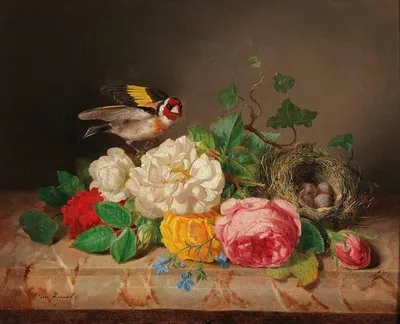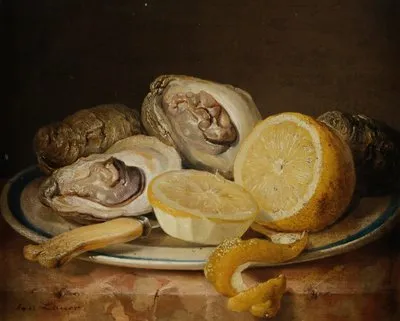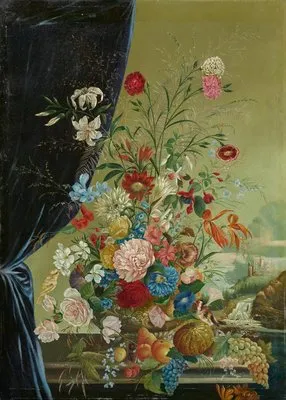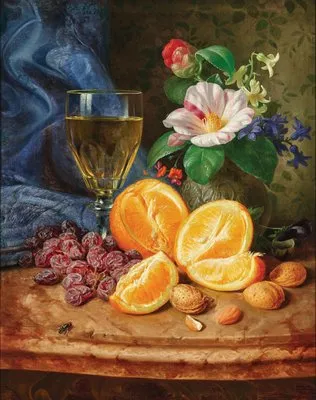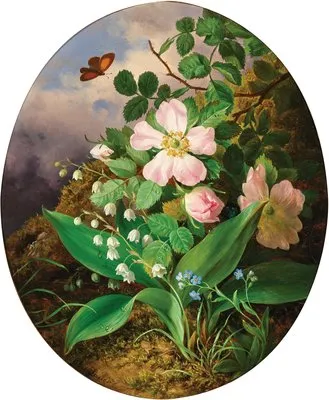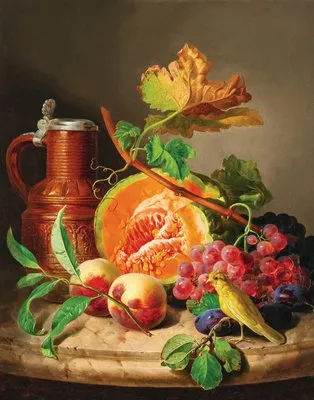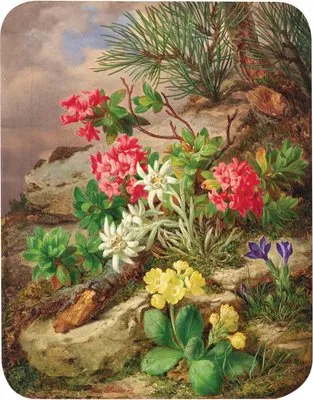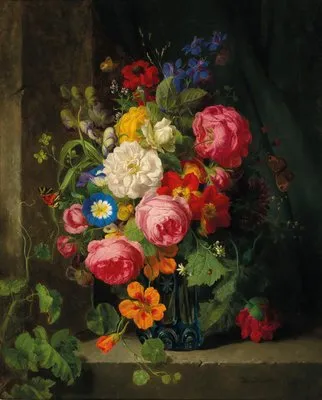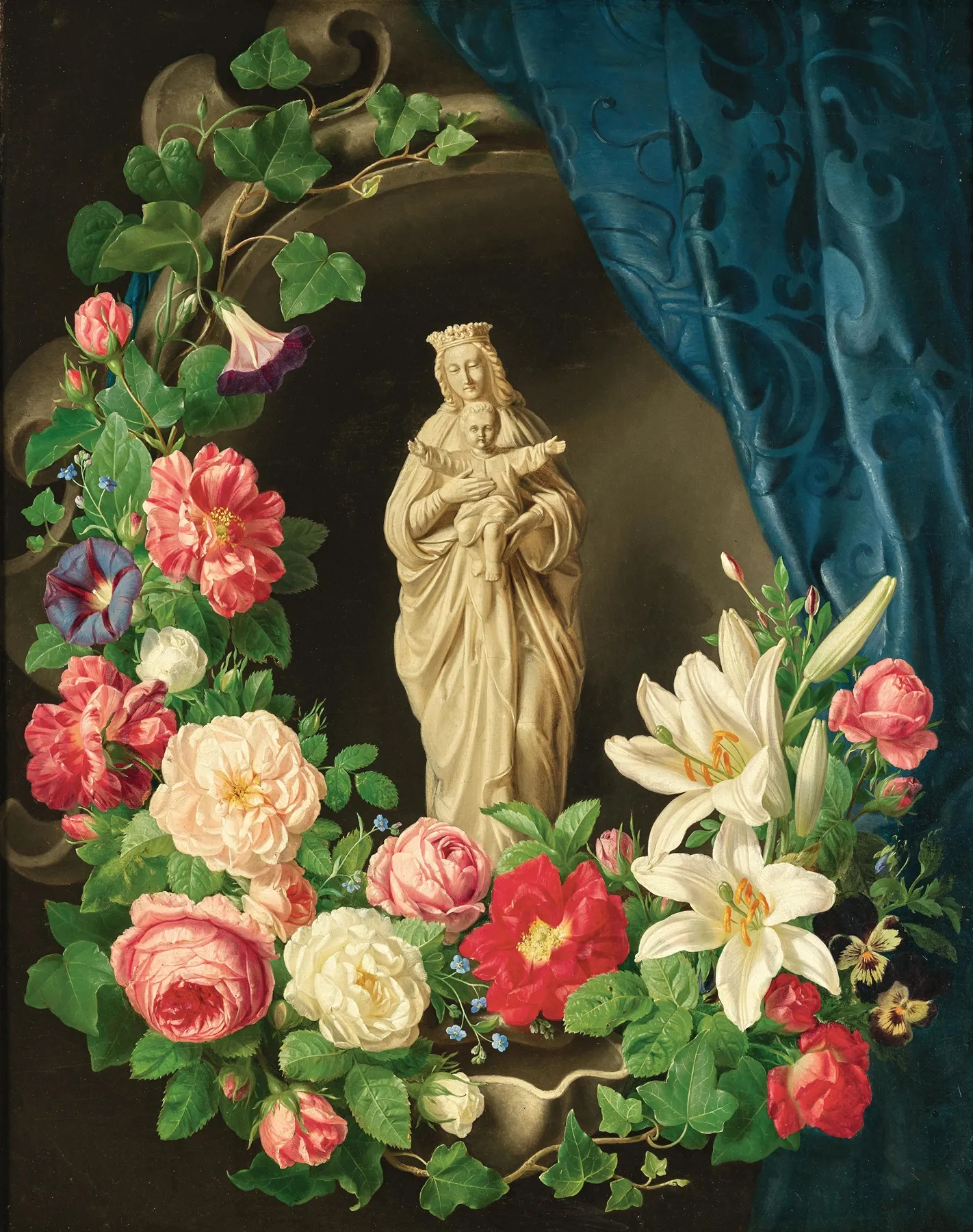
Madonna with child in a floral tendrils of roses, lilies and vetches
婆婆纳属
Madonna with child in a floral tendrils of roses, lilies and vetches
Ten ways of seeing
- measured cast yellow-green
- slightly upright 1.27 : 1
First Look
凡画山水,意在笔先。
—— 唐·王维《山水论》
In painting, the intention precedes the brush.
Slightly taller than wide; the eye lands above centre. Then step in close: watch where colour meets line, and whether the line ever breaks. Third, find where the yellow is deepest: the whole tonal order is measured from that patch.
Name and Thing
No reliable binomial survives, so the printed title must serve. The Chinese name 婆婆纳属 is a modern rendering of the Latin, not an old garden name.
Form and Colour
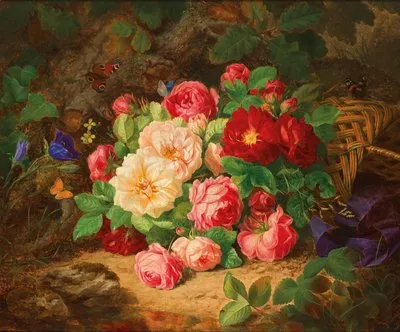
Measured on this plate: flower colour covers 33.8% of the sheet, foliage 18.2%, the cast yellow-green with a second note of amber. No other plate shares exactly this measure. Roses are shrubs or scramblers with pinnate leaves of three to seven serrated leaflets; the double flowers open in crumpled, inward-curling layers around a small knot of yellow stamens. Filed under yellow — a honey-yellow, built in washes from a pale ground. Read the outline, then the colour layers, then the brush.
Composition
The sheet is slightly tall. No details are appended: a plate for looking, not for keying out. The plant fills 54% of the sheet, centred near the centre — the herbarium way, drawn to be read whole.
Line and Colour
The first half of the nineteenth century moved from copper to steel to lithography; stipple could render the softest transition. Decide first whether it was printed or painted; only then discuss whether it is beautiful. If you mean to copy it: take its skeleton, its margins and the order of its colours; the burin's hatching is the language of copper — suggest it with pencil density, do not imitate it stroke for stroke.
Poetic Resonance
蔫红半落生香在,向晚玫瑰架上风。
—— 宋·贺铸《北园初夏》
The poem gives the mood first and the picture supplies the form; set the line beside the plate and the yellow the corolla becomes its resting point.
Symbolism
In Europe the rose means love and secrecy ('sub rosa'); in Chinese verse the rambling rose leans and clings — lingering attachment rather than ardour. This plate leans yellow, which in flower language adds one more degree of feeling. Meanings change their tune: the same flower can say opposite things within a century.
Season and Place
Late spring into early summer, peaking in May — the first flush of the garden year. Widespread in the temperate north. Chinese gardeners knew roses since the Han. The year 1818 on the plate is that of publication, not of flowering — the gathering came a year or two earlier. The bud and the ripe fruit on one branch tell the season; the name in the title often tells the journey.
The Book and the Hand
“Josef Lauer” carries only Josef Lauer's name. A plate is collective work: drawer, engraver and colourist were different hands, and the unnamed ones decided how good it looks.
What to Take Away
If you keep one line, keep Guo Xi's: from afar its momentum, up close its texture. Two centuries on, the plant may still flower in some garden; the one on this sheet stopped in the season of 1818.
About this plate
Madonna with child in a floral tendrils of roses, lilies and vetches is plate 33, from Josef Lauer, drawn by Josef Lauer. This public-domain plate is reproduced at high resolution, free to view and download. Publication: Austrian, 1818–1881.