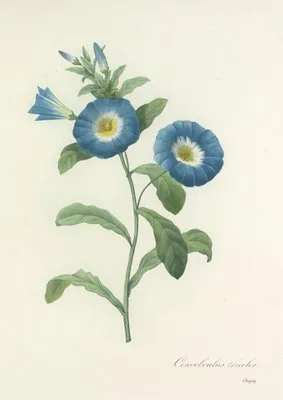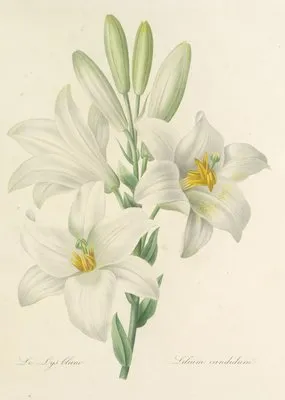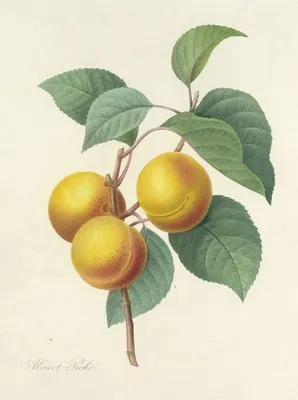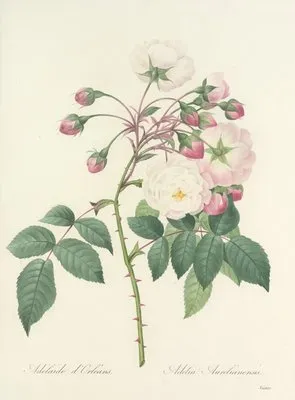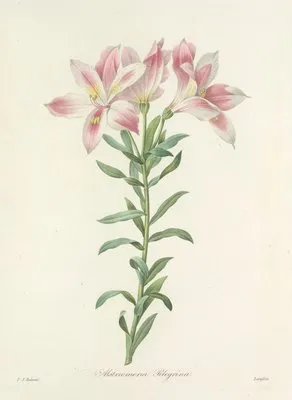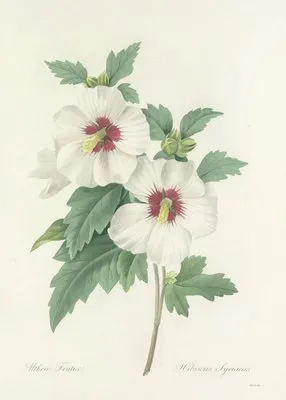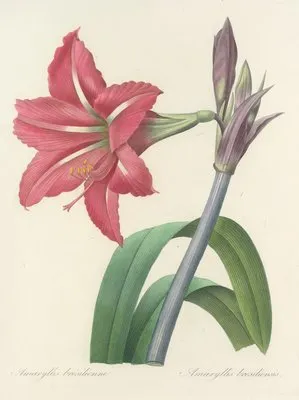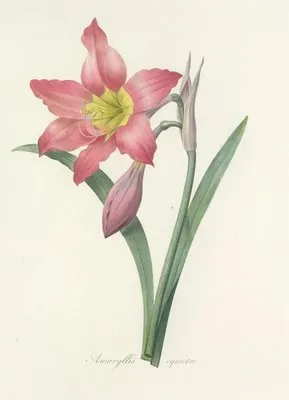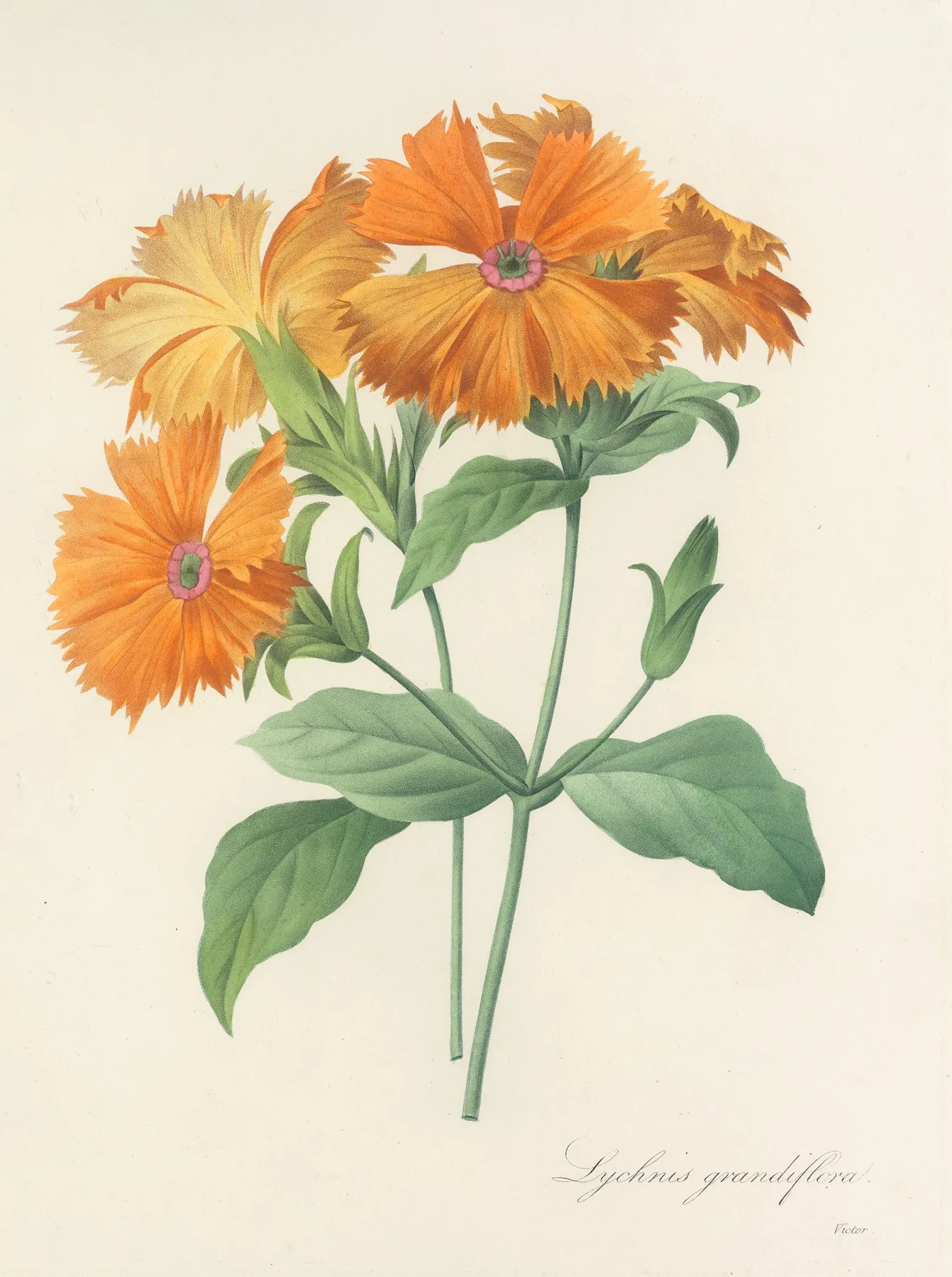
Choix des plus belles fleurs pl 044 (1827)
Hychnes prand fera|Choix des plus belles fleurs pl 044 (1827)
Choix des plus belles fleurs pl 044 (1827)
Ten ways of seeing
- measured cast amber
- upright 1.34 : 1
- published 1827
- Plate 44
First Look
搜尽奇峰打草稿。
—— 清·石涛《苦瓜和尚画语录》
Exhaust the strange peaks, and then make the sketch.
The sheet is vertical: the eye climbs and settles in the upper half. Let the plant stand before you look for detail. Then step in close: watch where colour meets line, and whether the line ever breaks. Third, find where the orange is deepest: the whole tonal order is measured from that patch.
Name and Thing
No reliable binomial survives, so the printed title must serve. Neither name nor binomial survives: the printed title must do.
Form and Colour
Measured on this plate: flower colour covers 16.6% of the sheet, foliage 9.1%, the cast amber. No other plate shares exactly this measure. A botanical plate: one plant lifted from field or glasshouse and set at the centre of the sheet, root, stem, leaf, flower and fruit in turn, made legible, citable, transmissible. Filed under orange — an amber orange, built in washes from a pale ground. Three things fix the habit: leaf arrangement, tepal count, and how the flower is borne.
Composition
Tall and narrow, the plant rising in one movement with generous margins — the upright format of most floras. (about 1.34 : 1) No details are appended: a plate for looking, not for keying out. The plant takes about 30% of the sheet, centred a little left of centre — the easy measure most florists kept to. Blank paper is not unfinished work: it is where the eye rests.
Line and Colour
The first half of the nineteenth century moved from copper to steel to lithography; stipple could render the softest transition. Craft leaves franker evidence than inscriptions. If you mean to copy it: take its skeleton, its margins and the order of its colours; the burin's hatching is the language of copper — suggest it with pencil density, do not imitate it stroke for stroke.
Poetic Resonance
朝饮木兰之坠露兮,夕餐秋菊之落英。
—— 战国·屈原《离骚》
At dawn I drink the dew fallen from magnolia; at dusk I dine on the fallen petals of autumn chrysanthemum.
The poem gives the mood first and the picture supplies the form; set the line beside the plate and the orange the corolla becomes its resting point.
Symbolism
The symbolism of such a plate lies not in flower lore but in record: the belief that a plant deserves to be drawn accurately — the plainest ethic of the scientific age. This plate leans orange, which in flower language adds one more degree of feeling. Flower language was added later; the flower knows nothing of it, and that innocence is part of its power.
Season and Place
the rest of the year it is only a mass of leaves. Various: local hillside or a plant brought from overseas. The nineteenth-century botanic garden and glasshouse were their first address away from home. The year 1827 on the plate is that of publication, not of flowering — the gathering came a year or two earlier. The volume was made in 1827, when most of this knowledge came from living plants under glass.
The Book and the Hand
“Choix des plus belles fleurs” was drawn by Pierre Joseph Redouté and published 1827. This plate is Plate 44. The image is public domain; the hand-colouring is still one person's hand.
What to Take Away
If you keep one line, keep Guo Xi's: from afar its momentum, up close its texture. A flora exists to be consulted; look long enough and you forget to consult — someone in 1827 gave a whole day to a single flower.
About this plate
Choix des plus belles fleurs pl 044 (1827) is plate 44, from Choix des plus belles fleurs, drawn by Pierre Joseph Redouté. This public-domain plate is reproduced at high resolution, free to view and download. Publication: Paris, Chez l’auteur, 1827.