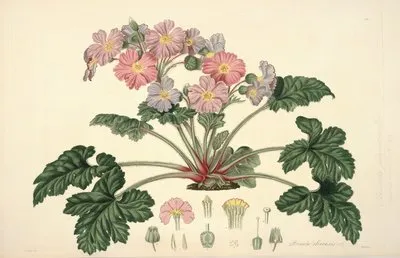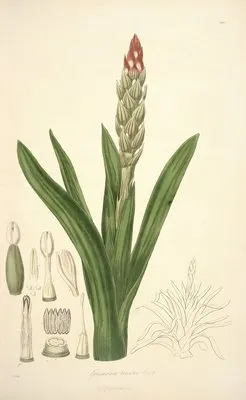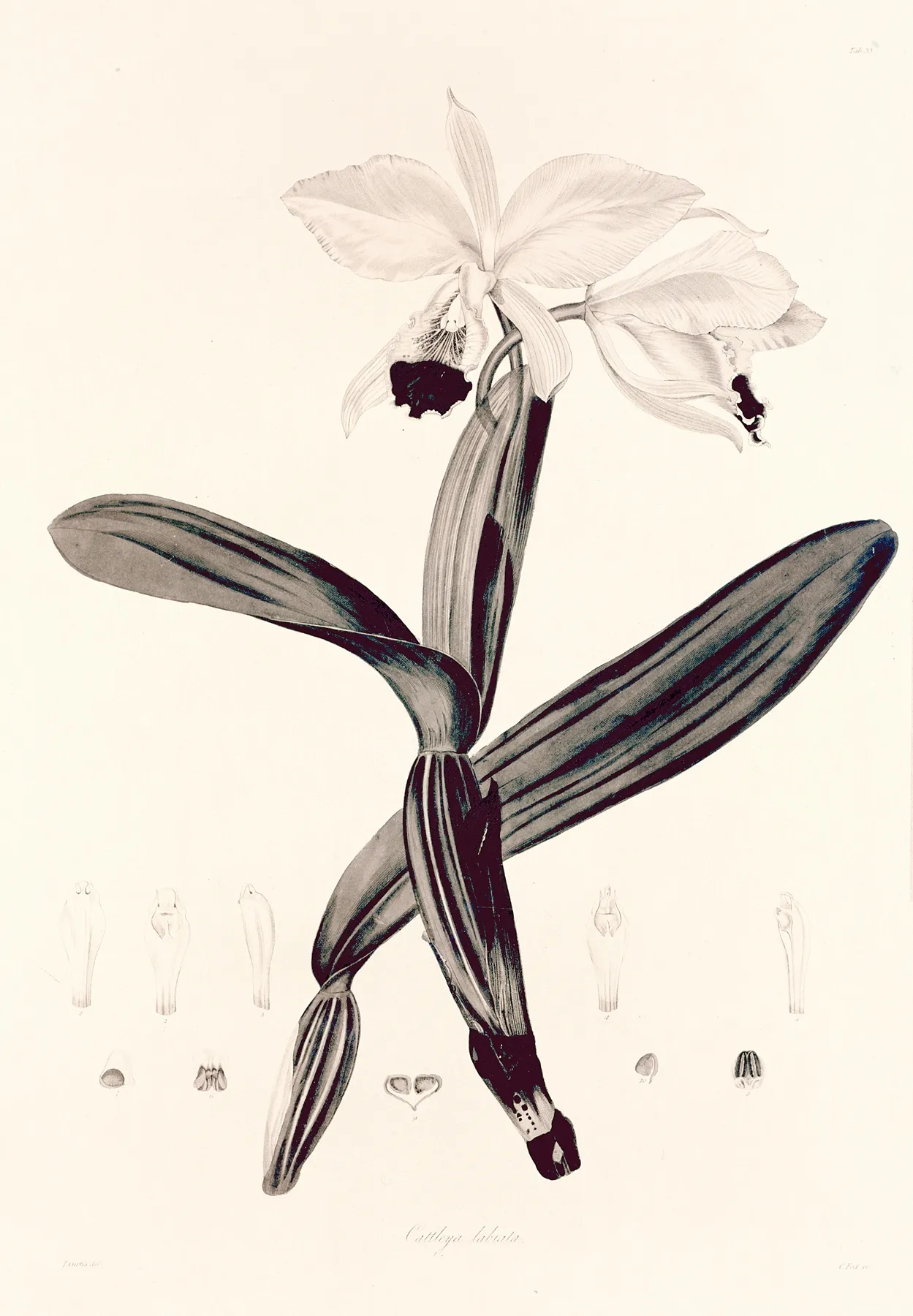
Collectanea botanica Pl.33
Collectanea botanica Pl.33
Collectanea botanica Pl.33
About this plate
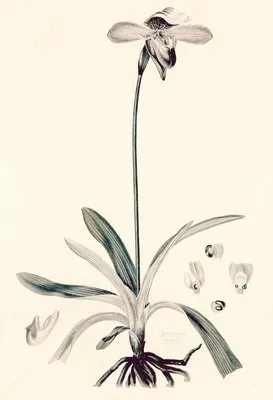
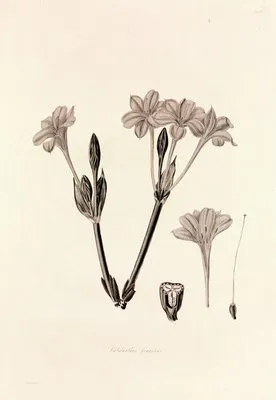
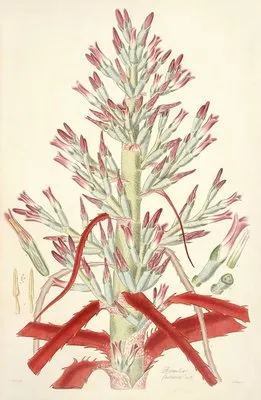
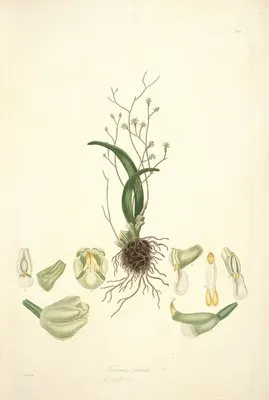
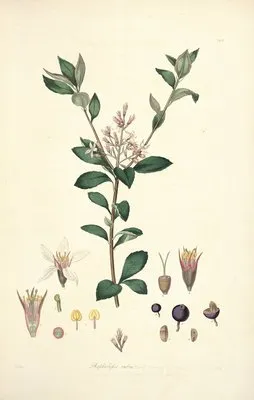
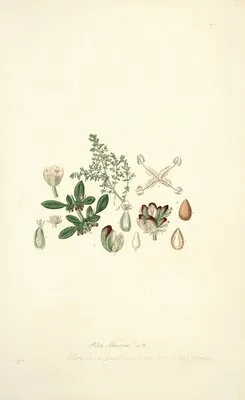
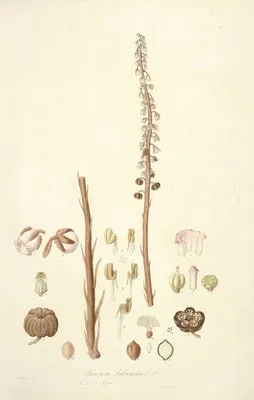
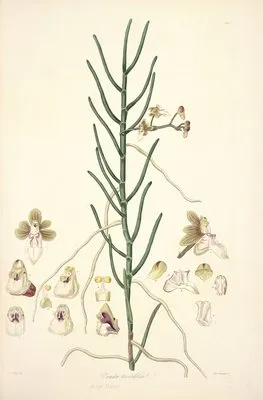
Collectanea botanica Pl.33 is plate 33, from Collectanea botanica, drawn by John Lindley. This public-domain plate is reproduced at high resolution, free to view and download. Publication: London, Richard and Arthur Taylor, 1821-1826.
Twelve ways of seeing
- measured cast crimson
- upright 1.44 : 1
- published 1821
- Plate 33
Not a catalogue entry but a way of looking: how to stand, what to notice, how the line was cut, when it flowers, where it came from, who made it — and then the poems and the classics that taught China to see the same flower. Read the twelve in order and the plate opens.
-
First Look
论画以形似,见与儿童邻。
—— 宋·苏轼《书鄢陵王主簿所画折枝》
To judge painting by likeness alone is the view of a child.
The sheet is vertical: the eye climbs and settles in the upper half. Let the plant stand before you look for detail. Then step in close: watch where colour meets line, and whether the line ever breaks. Third, find the darkest small patch: the whole tonal order is measured from there.
-
Name and Thing
No reliable binomial survives, so the printed title must serve. Neither name nor binomial survives: the printed title must do.
-
Form and Colour
Measured on this plate: flower colour covers 3.2% of the sheet, foliage 0.1%, the cast crimson. No other plate shares exactly this measure. A botanical plate: one plant lifted from field or glasshouse and set at the centre of the sheet, root, stem, leaf, flower and fruit in turn, made legible, citable, transmissible.No colour group is recorded. Read the outline, then the colour layers, then the brush.
-
Composition
Tall and narrow, the plant rising in one movement with generous margins — the upright format of most floras. (about 1.44 : 1) No details are appended: a plate for looking, not for keying out. The plant covers only 16% of the sheet, centred near the centre; the emptiness is where the eye rests. Blank paper is not unfinished work: it is where the eye rests.
-
Line and Colour
The first half of the nineteenth century moved from copper to steel to lithography; stipple could render the softest transition. Decide first whether it was printed or painted; only then discuss whether it is beautiful.
-
Season
Plates usually record flowering, the fortnight when a plant is most identifiable; the rest of the year it is only a mass of leaves. The year 1821 on the plate is that of publication, not of flowering — the gathering came a year or two earlier. The plate records ten days of peak; the other three hundred are leaf, fruit and rest.
-
Provenance
Various: local hillside or a plant brought from overseas. The nineteenth-century botanic garden and glasshouse were their first address away from home. The volume was made in 1821-1826, when most of this knowledge came from living plants under glass.
-
The Book and the Hand
“Collectanea botanica” was drawn by John Lindley and published 1821-1826. This plate is Plate 33. The image is public domain; the hand-colouring is still one person's hand.
-
Poetic Resonance
朝饮木兰之坠露兮,夕餐秋菊之落英。
—— 战国·屈原《离骚》
At dawn I drink the dew fallen from magnolia; at dusk I dine on the fallen petals of autumn chrysanthemum.
The poem gives the mood first and the picture supplies the form; set the line beside the plate and the corolla becomes its resting point.
-
The Written Tradition
六法者何?一、气韵生动是也;二、骨法用笔是也;三、应物象形是也;四、随类赋彩是也;五、经营位置是也;六、传移模写是也。
—— 南齐·谢赫《古画品录》
The six laws: spirit resonance alive; bone-method in the brush; matching form to the object; colour according to kind; planning the placing; transcribing and copying.
China had the Bencao Gangmu and the Illustrated Study of Plant Names and Realities; Europe moved from herbal woodcuts to chromolithography. Both trusted pictures to finish what words could not. The difference is not of quality but of question: Europe asks what it is, China asks whom it resembles.
-
Symbolism
The symbolism of such a plate lies not in flower lore but in record: the belief that a plant deserves to be drawn accurately — the plainest ethic of the scientific age. Meanings change their tune: the same flower can say opposite things within a century.
-
What to Take Away
Carry three rules away: whole before detail; line before colour; picture before book. Two centuries on, the plant may still flower in some garden; the one on this sheet stopped in the season of 1821.