Auricula urcy (1624)
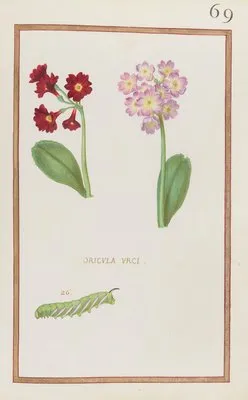
Auricula urcy (1624)
Auricula urcy (1624)
Ten ways of seeing
- measured cast amber
- upright 1.62 : 1
First Look
搜尽奇峰打草稿。
—— 清·石涛《苦瓜和尚画语录》
Exhaust the strange peaks, and then make the sketch.
The sheet is vertical: the eye climbs and settles on the bird. Take the posture before the plumage. Then step in close: watch where colour meets line, and whether the line ever breaks. Third, find the darkest small patch: the whole tonal order is measured from there.
Name and Thing
The binomial is Auricula urcy: the first word is the genus it belongs among, the second the epithet that sets it apart. Two words carry a whole provenance. No established Chinese name exists, so it is cited by its binomial alone.
Form and Colour
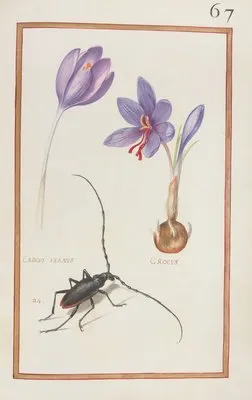
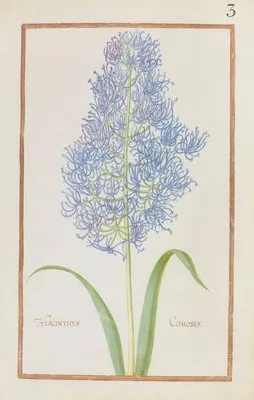
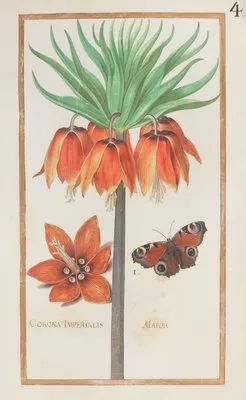
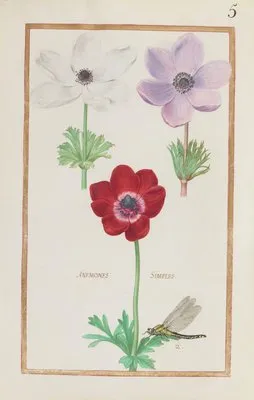
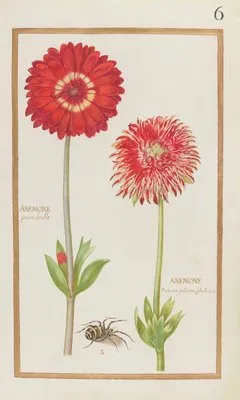
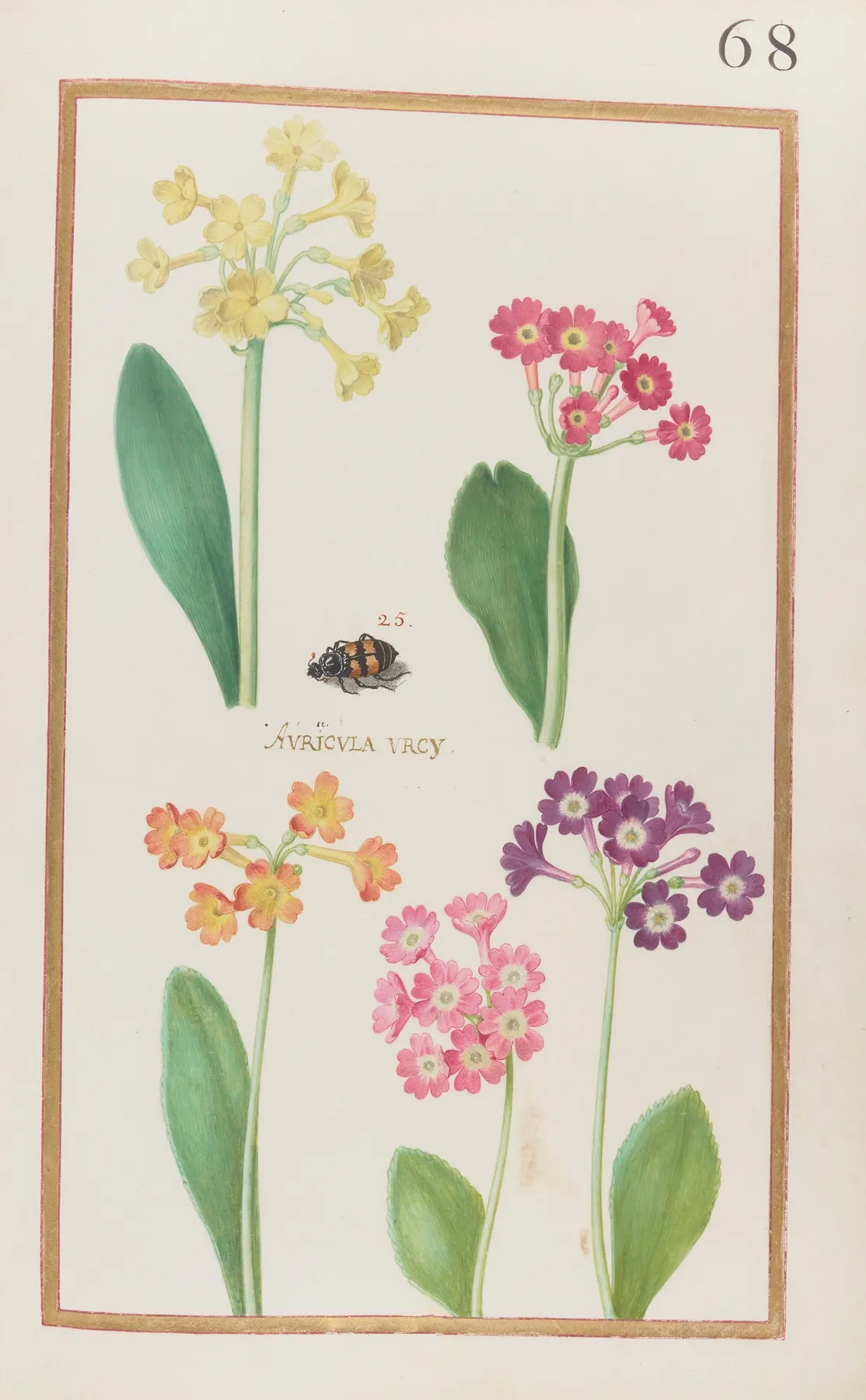
Measured on this plate: flower colour covers 12.5% of the sheet, foliage 8.2%, the cast amber with a second note of yellow-green. No other plate shares exactly this measure. Insect plates show the host plant and all four stages at once — egg, larva, pupa, adult — with wing venation, scales and antennal segments accounted for: the most technical branch of natural-history art.No colour group is recorded. Three things fix the habit: leaf arrangement, tepal count, and how the flower is borne.
Composition
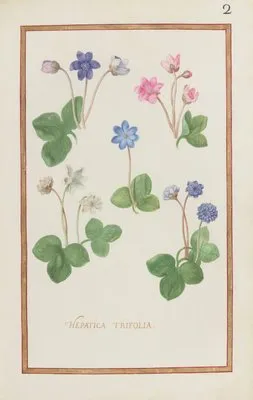
The sheet is tall. No details are appended: a plate for looking, not for keying out. The plant covers only 22% of the sheet, centred near the centre; the emptiness is where the eye rests.
Line and Colour
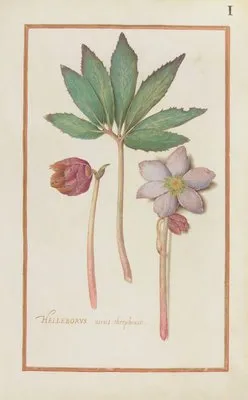
Before 1700 most botanical figures came from woodcut: thick, hard lines in relief, colour brushed on afterwards. Decide first whether it was printed or painted; only then discuss whether it is beautiful. If you mean to copy it: take its skeleton, its margins and the order of its colours; the burin's hatching is the language of copper — suggest it with pencil density, do not imitate it stroke for stroke.
Poetic Resonance
北城寒食烟火微,落花蝴蝶作团飞。
—— 宋·苏轼《作书寄王晋卿忽忆前年寒食北城之游走笔为此》
The poem gives the mood first and the picture supplies the form; set the line beside the plate and the bird itself becomes its resting point.
Symbolism
In China the butterfly is dream and lovers, the cicada purity, the firefly a lamp for reading; in Europe the insect began as specimen before it became symbol. Meanings change their tune: the same flower can say opposite things within a century.
Season and Place
Set by life stage: butterflies in spring and summer, moths into autumn, beetles from May to July. Four stages on one sheet span a whole year. Merian's Metamorphosis Insectorum Surinamensium (1705) first showed insect stages with their host plants — the result of raising caterpillars in the Surinam forest with her daughters. The year 1624 on the plate is that of publication, not of flowering — the gathering came a year or two earlier. Read the locality and the flowering season both with a discount: one is hearsay, the other a ten-day peak.
The Book and the Hand
“Collection of flowers and insects” carries only Daniel Rabel's name. A plate is collective work: drawer, engraver and colourist were different hands, and the unnamed ones decided how good it looks.
What to Take Away
Next time you watch a bird: posture first, then where the plumage is deepest, and only then the field guide. A flora exists to be consulted; look long enough and you forget to consult — someone in 1624 gave a whole day to a single flower.
About this plate
Auricula urcy (1624) is plate 68, from Collection of flowers and insects, drawn by Daniel Rabel. This public-domain plate is reproduced at high resolution, free to view and download. Publication: Paris, 1624.