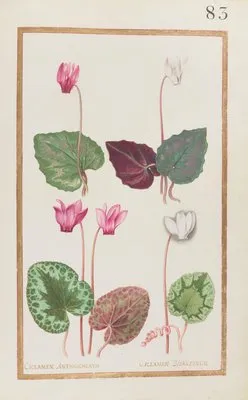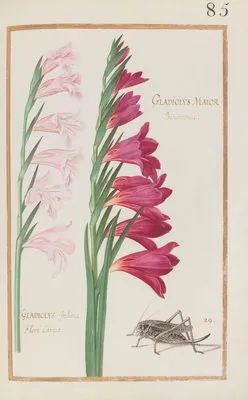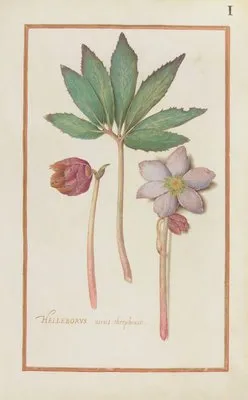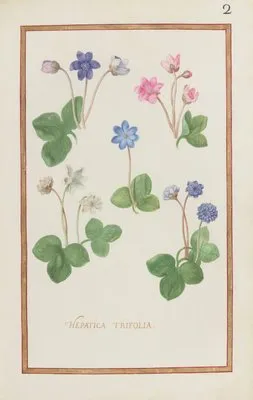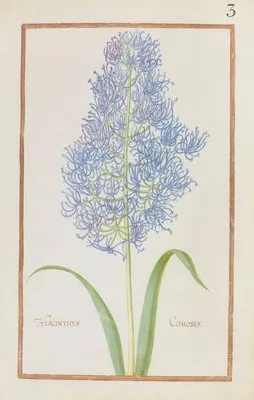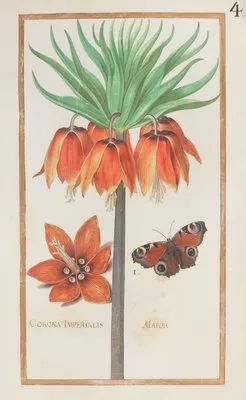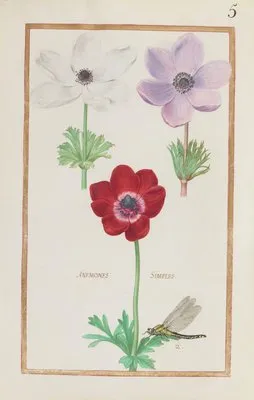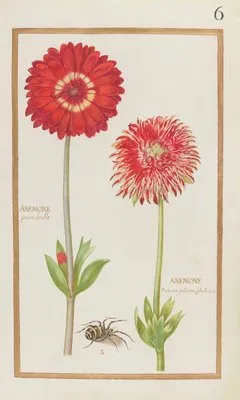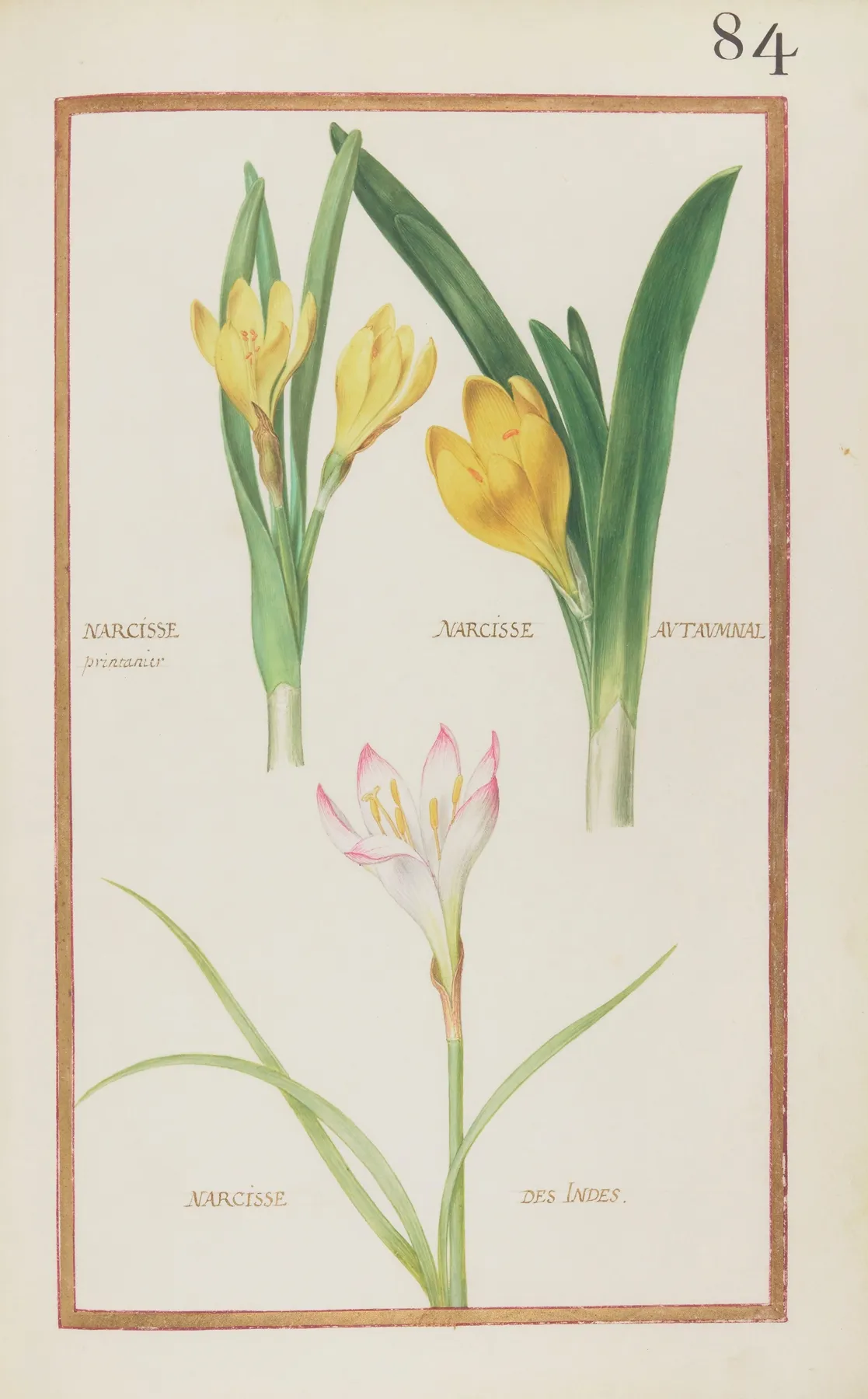
Narcisse printanier ; narcisse autaumnal ; narcisse des Indes (1624)
Narcisse printanier ; narcisse autaumnal ; narcisse des Indes (1624)
Narcisse printanier ; narcisse autaumnal ; narcisse des Indes (1624)
Ten ways of seeing
- measured cast amber
- upright 1.61 : 1
First Look
凡画山水,意在笔先。
—— 唐·王维《山水论》
In painting, the intention precedes the brush.
The sheet is vertical: the eye climbs and settles in the upper half. Let the plant stand before you look for detail. Then step in close: watch where colour meets line, and whether the line ever breaks. Third, find the darkest small patch: the whole tonal order is measured from there.
Name and Thing
The binomial is Narcisse printanier: the first word is the genus it belongs among, the second the epithet that sets it apart. Two words carry a whole provenance. No established Chinese name exists, so it is cited by its binomial alone.
Form and Colour
Measured on this plate: flower colour covers 8.7% of the sheet, foliage 7.3%, the cast amber with a second note of yellow-green. No other plate shares exactly this measure. A layered bulb, upright strap leaves, six white tepals and a small golden cup — the Chinese name is 'silver terrace with a golden cup'.No colour group is recorded. Three things fix the habit: leaf arrangement, tepal count, and how the flower is borne.
Composition
The sheet is tall. No details are appended: a plate for looking, not for keying out. The plant covers only 17% of the sheet, centred above centre; the emptiness is where the eye rests.
Line and Colour
Before 1700 most botanical figures came from woodcut: thick, hard lines in relief, colour brushed on afterwards. There is evidence on the back too: the plate mark pressed into the paper, the slight relief of the pigment, lines worn shallow in a later printing. If you mean to copy it: take its skeleton, its margins and the order of its colours; the burin's hatching is the language of copper — suggest it with pencil density, do not imitate it stroke for stroke.
Poetic Resonance
水仙携蜡梅,来作散花雨。
—— 宋·范成大《瓶花二首 其一》
The poem gives the mood first and the picture supplies the form; set the line beside the plate and the corolla becomes its resting point.
Symbolism
In China it is the New Year's offering — clear, fragrant, a little otherworldly; in Europe, because of Narcissus, it means self-love and the gaze turned inward. Flower language was added later; the flower knows nothing of it, and that innocence is part of its power.
Season and Place
Late winter into early spring: forced in water in the twelfth month, blooming at the New Year. Native to the Mediterranean, reaching China by sea in the late Tang. The year 1624 on the plate is that of publication, not of flowering — the gathering came a year or two earlier. The bud and the ripe fruit on one branch tell the season; the name in the title often tells the journey.
The Book and the Hand
“Collection of flowers and insects” carries only Daniel Rabel's name. From drawing to plate the sheet passed through several hands — the engraver aimed at accuracy, the colourist at speed, and between them lies each plate's unevenness.
What to Take Away
Next time you stand before a flowering plant, give it three minutes: leaf arrangement, direction of the flower, the darkest patch. A flora exists to be consulted; look long enough and you forget to consult — someone in 1624 gave a whole day to a single flower.
About this plate
Narcisse printanier ; narcisse autaumnal ; narcisse des Indes (1624) is plate 84, from Collection of flowers and insects, drawn by Daniel Rabel. This public-domain plate is reproduced at high resolution, free to view and download. Publication: Paris, 1624.