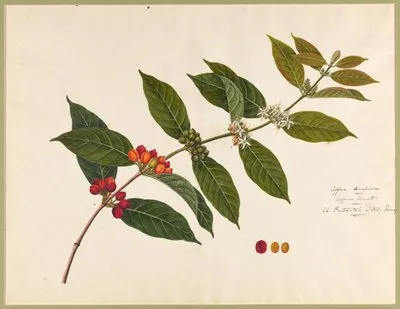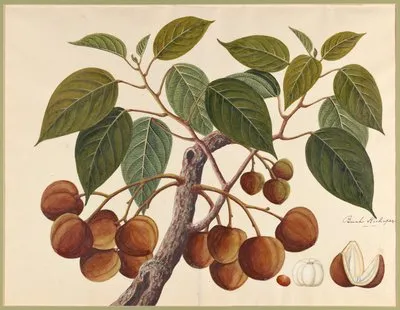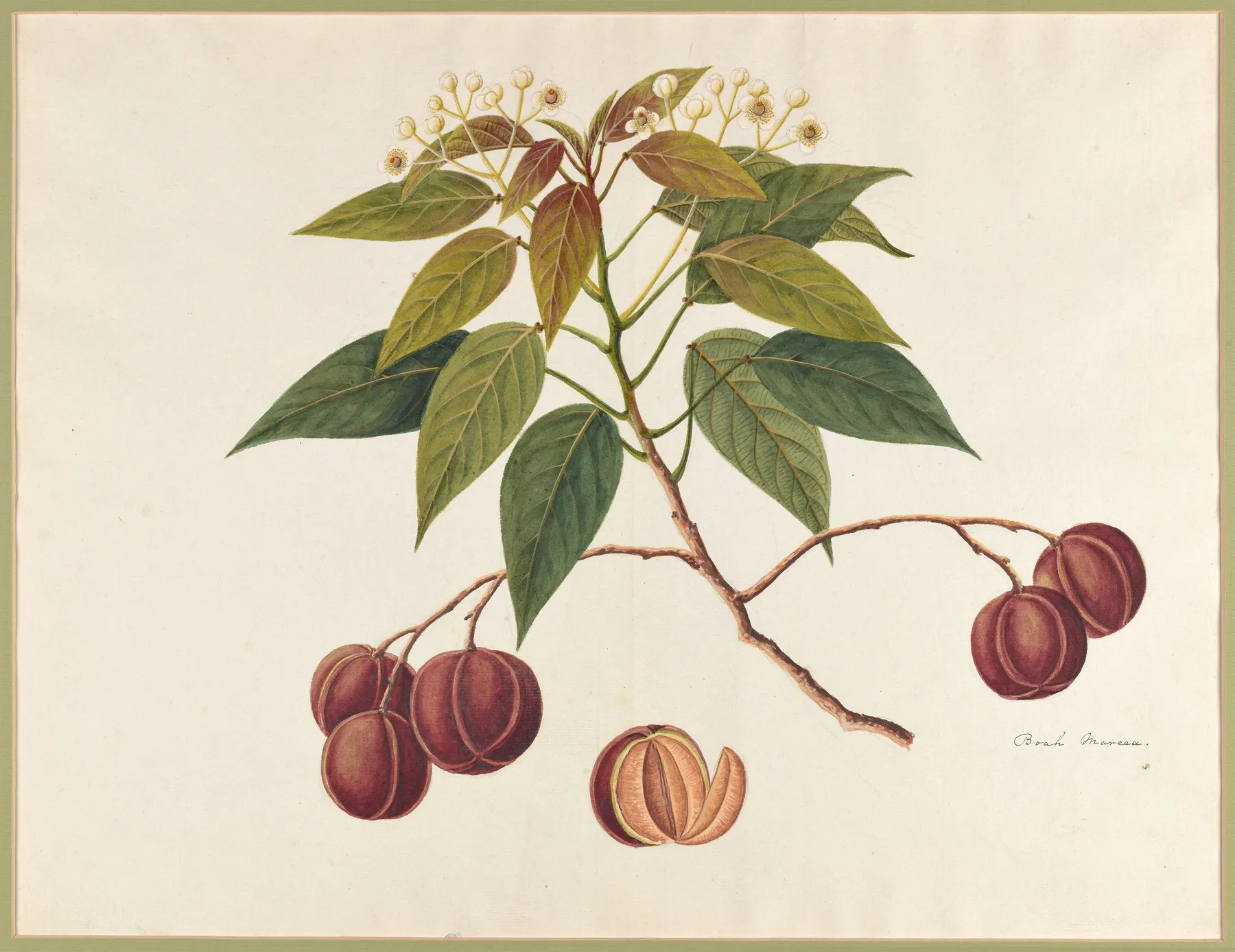
Collection of fruit bearing plants Pl.32
Collection of fruit bearing plants Pl.32
Collection of fruit bearing plants Pl.32
Ten ways of seeing
- measured cast yellow-green
- square 0.77 : 1
First Look
真山水之川谷,远望之以取其势,近看之以取其质。
—— 宋·郭熙《林泉高致·山水训》
Mountains and valleys: from afar take their momentum, up close take their texture — the two distances from which any picture is read.
Nearly square, plant and detail each holding a corner. Then step in close: watch where colour meets line, and whether the line ever breaks. Third, find where the yellow is deepest: the whole tonal order is measured from that patch.
Name and Thing
No reliable binomial survives, so the printed title must serve. Neither name nor binomial survives: the printed title must do.
Form and Colour
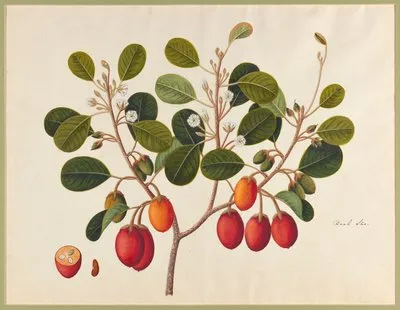
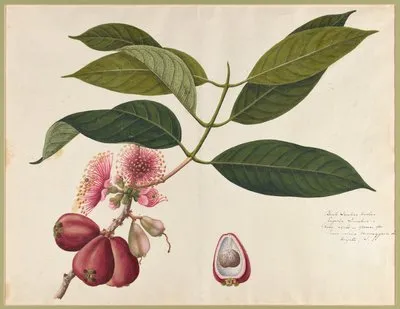
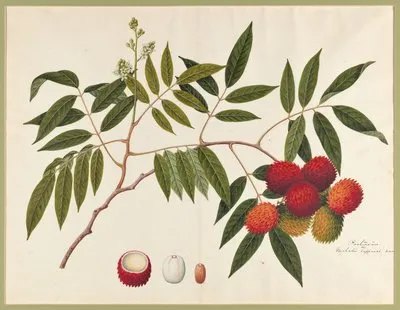
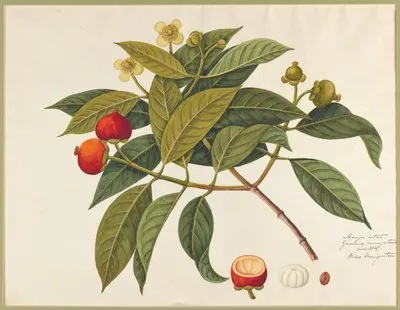
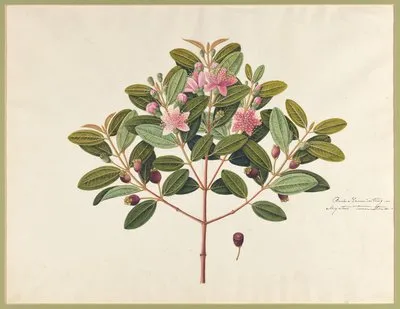
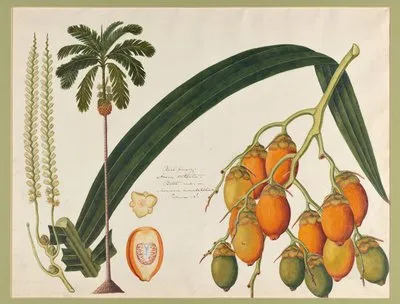
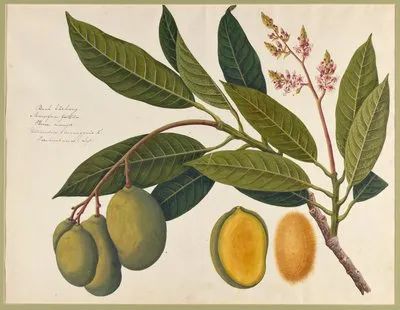
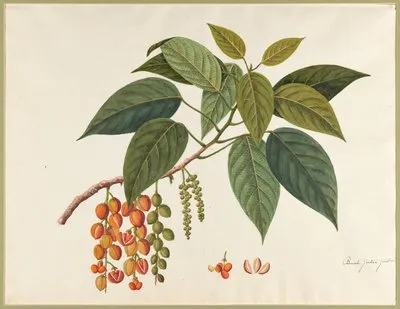
Measured on this plate: flower colour covers 12.9% of the sheet, foliage 4.2%, the cast yellow-green with a second note of red. No other plate shares exactly this measure. Fruit plates pair the whole fruit with a section: the outline identifies the variety, the cut reveals skin thickness, core size and seed arrangement — the evidence of registration. Filed under yellow — a honey-yellow, built in washes from a pale ground. A single plant, laid out with nothing hidden.
Composition
The sheet is square. No details are appended: a plate for looking, not for keying out. The plant fills 91% of the sheet, centred near the centre — the herbarium way, drawn to be read whole.
Line and Colour
The first half of the nineteenth century moved from copper to steel to lithography; stipple could render the softest transition. Take a loupe to three places: petal edge, leaf vein, caption. An unbroken line means engraving; colour crossing the outline means a hand. If you mean to copy it: take its skeleton, its margins and the order of its colours; the burin's hatching is the language of copper — suggest it with pencil density, do not imitate it stroke for stroke.
Poetic Resonance
十年结子知谁在,自向庭中种荔枝。
—— 唐·白居易《种荔枝》
The poem gives the mood first and the picture supplies the form; set the line beside the plate and the yellow the fruit becomes its resting point.
Symbolism
In China the pomegranate means many sons, the peach long life, the orange good fortune; in Europe the apple is temptation and knowledge, the grape abundance and sacrifice. This plate leans yellow, which in flower language adds one more degree of feeling. Meanings change their tune: the same flower can say opposite things within a century.
Season and Place
a fruit portfolio spans the whole harvest. Temperate fruits came mostly from Eurasia, later from the Americas. Nineteenth-century nurseries printed varietal albums for trade and exhibition: every fruit on the page was a saleable claim. The year 1820 on the plate is that of publication, not of flowering — the gathering came a year or two earlier. See this kind of plate in the flowering season if you can: once you have met the living flower, you stop reading only colour.
The Book and the Hand
“Collection of fruit bearing plants executed by one or more Chinese artists for Dr. Thomas Ward” carries only Chinese School's name. From drawing to plate the sheet passed through several hands — the engraver aimed at accuracy, the colourist at speed, and between them lies each plate's unevenness.
What to Take Away
Appreciation is not knowledge but habit — one more look each time. The flower of that year is dust, yet its image on paper has outlived every living cousin.
About this plate
Collection of fruit bearing plants Pl.32 is plate 32, from Collection of fruit bearing plants executed by one or more Chinese artists for Dr. Thomas Ward, drawn by Chinese School. This public-domain plate is reproduced at high resolution, free to view and download. Publication: Island of Penang, 1820-1828.