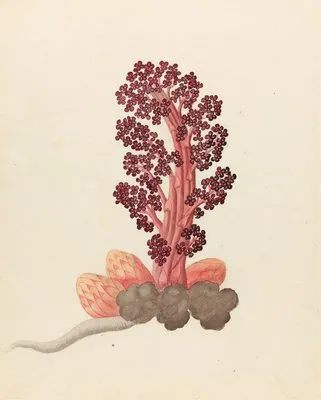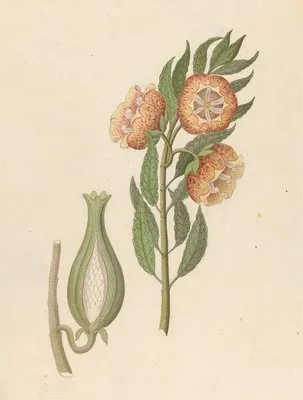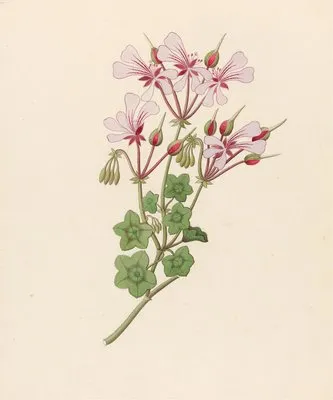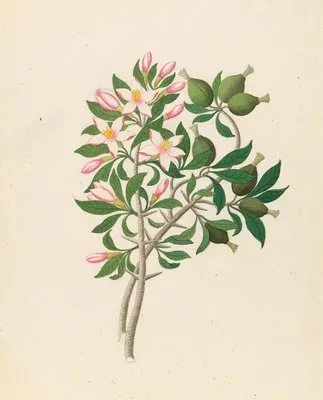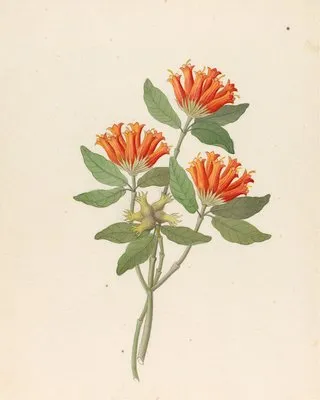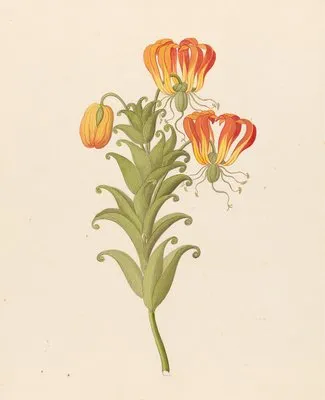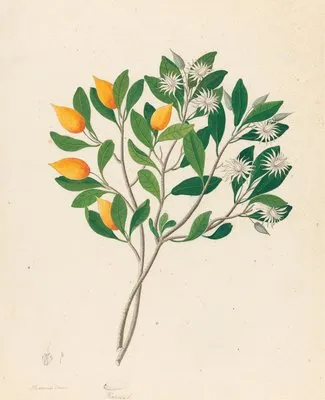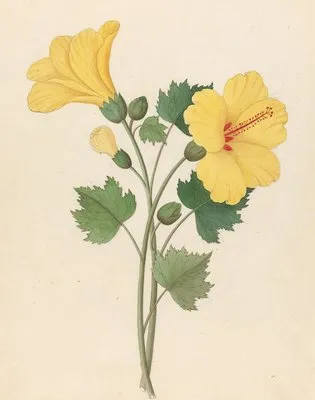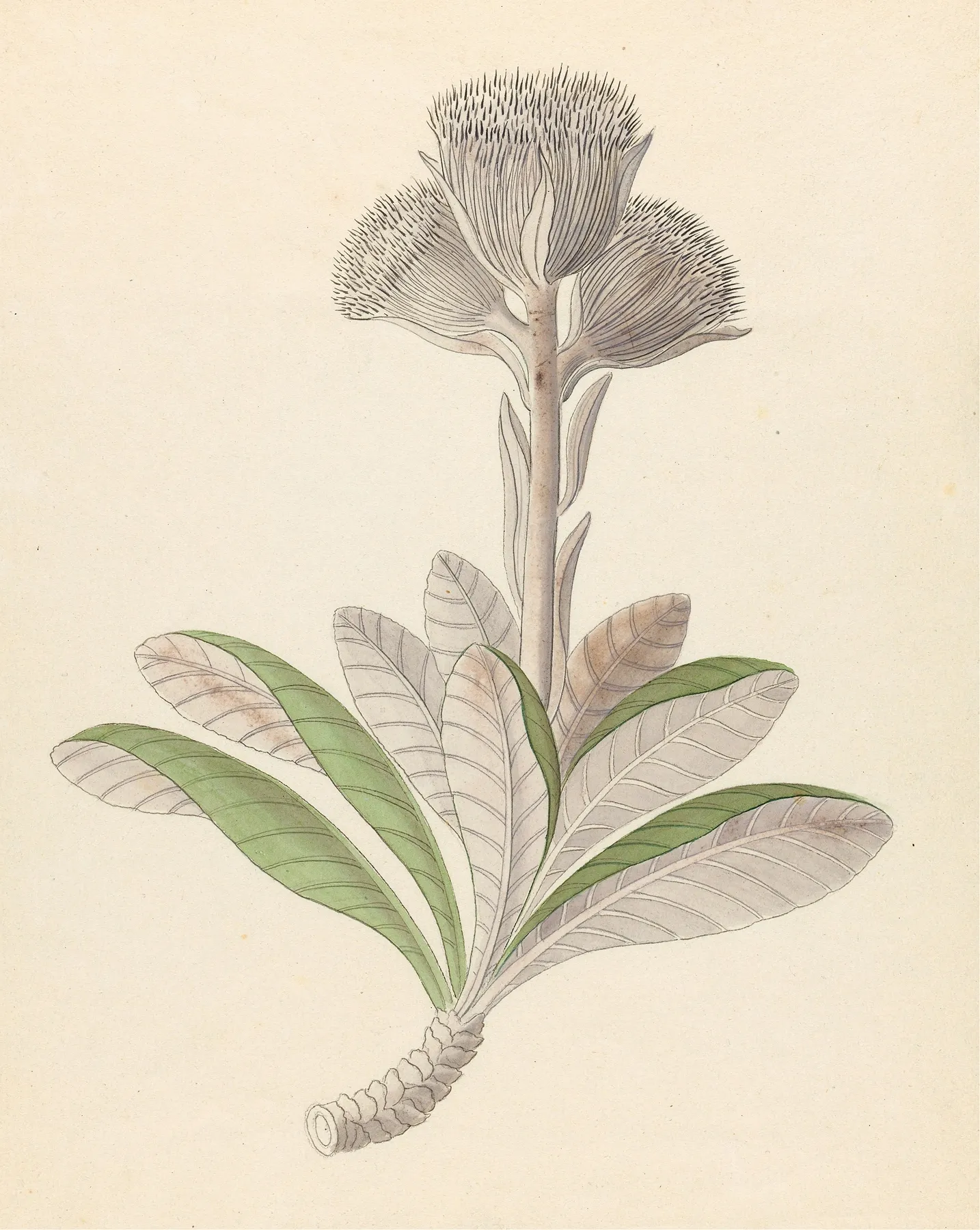
Arnica [Oldenburgia grandis] (1817)
大崖绒菊
Arnica [Oldenburgia grandis] (1817)
Ten ways of seeing
- measured cast amber
- slightly upright 1.26 : 1
First Look
凡画山水,意在笔先。
—— 唐·王维《山水论》
In painting, the intention precedes the brush.
Slightly taller than wide; the eye lands above centre. Then step in close: watch where colour meets line, and whether the line ever breaks. Third, find the darkest small patch: the whole tonal order is measured from there.
Name and Thing
No reliable binomial survives, so the printed title must serve. The Chinese name 大崖绒菊 is a modern rendering of the Latin, not an old garden name.
Form and Colour
Measured on this plate: flower colour covers 3.4% of the sheet, foliage 3.2%, the cast amber with a second note of yellow-green. No other plate shares exactly this measure. Chrysanthemums are herbaceous with deeply lobed, downy leaves. Each 'flower' is a head — ray florets around the rim, disc florets in the centre, hundreds of small flowers in one.No colour group is recorded. Read the outline, then the colour layers, then the brush.
Composition
The sheet is slightly tall. No details are appended: a plate for looking, not for keying out. The plant covers only 16% of the sheet, centred near the centre; the emptiness is where the eye rests.
Line and Colour
The first half of the nineteenth century moved from copper to steel to lithography; stipple could render the softest transition. There is evidence on the back too: the plate mark pressed into the paper, the slight relief of the pigment, lines worn shallow in a later printing. If you mean to copy it: take its skeleton, its margins and the order of its colours; the burin's hatching is the language of copper — suggest it with pencil density, do not imitate it stroke for stroke.
Poetic Resonance
少日曾题菊枕诗,蠹编残稿锁蛛丝。
—— 宋·陆游《余年二十时尝作菊枕诗颇传于人今秋偶复采菊》
The poem gives the mood first and the picture supplies the form; set the line beside the plate and the corolla becomes its resting point.
Symbolism
in Japan, imperial authority; in Europe, the last warmth of the year. Flower language was added later; the flower knows nothing of it, and that innocence is part of its power.
Season and Place
Deep autumn, around the Double Ninth in the ninth month — after the first frost, when everything else is gone. Native to China, adopted in Japan as the imperial crest, carried to Europe by the Dutch in the seventeenth century and remade by Victorian breeders. The year 1817 on the plate is that of publication, not of flowering — the gathering came a year or two earlier. See this kind of plate in the flowering season if you can: once you have met the living flower, you stop reading only colour.
The Book and the Hand
“Drawings of plants collected at Cape Town” carries only Clemenz Heinrich Wehdemann's name. A plate is collective work: drawer, engraver and colourist were different hands, and the unnamed ones decided how good it looks.
What to Take Away
Appreciation is not knowledge but habit — one more look each time. Two centuries on, the plant may still flower in some garden; the one on this sheet stopped in the season of 1817.
About this plate
Arnica [Oldenburgia grandis] (1817) is plate 32, from Drawings of plants collected at Cape Town, drawn by Clemenz Heinrich Wehdemann. This public-domain plate is reproduced at high resolution, free to view and download. Publication: 1817-1820.