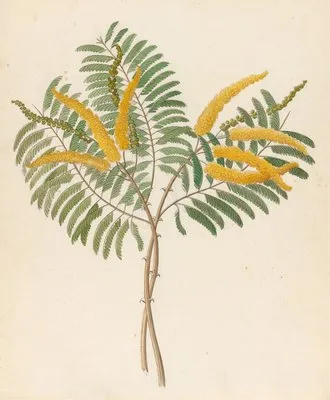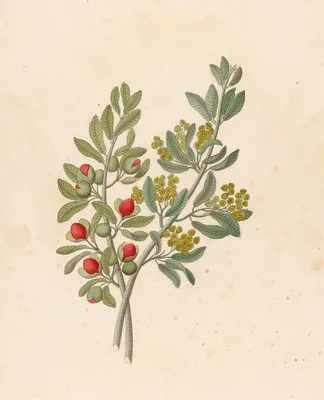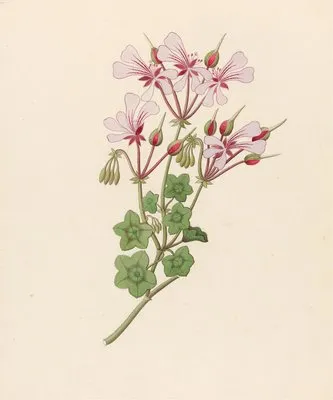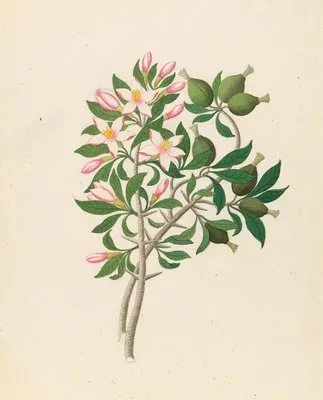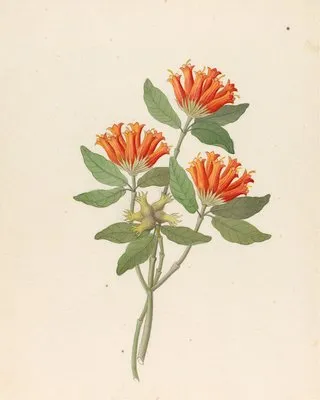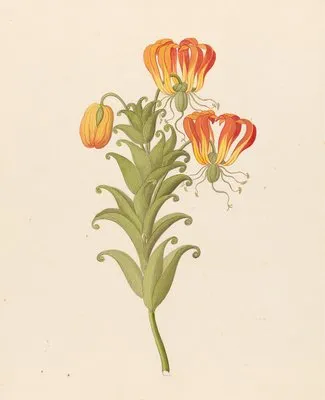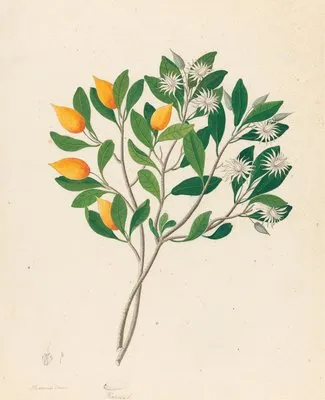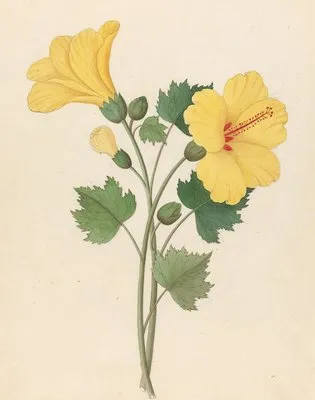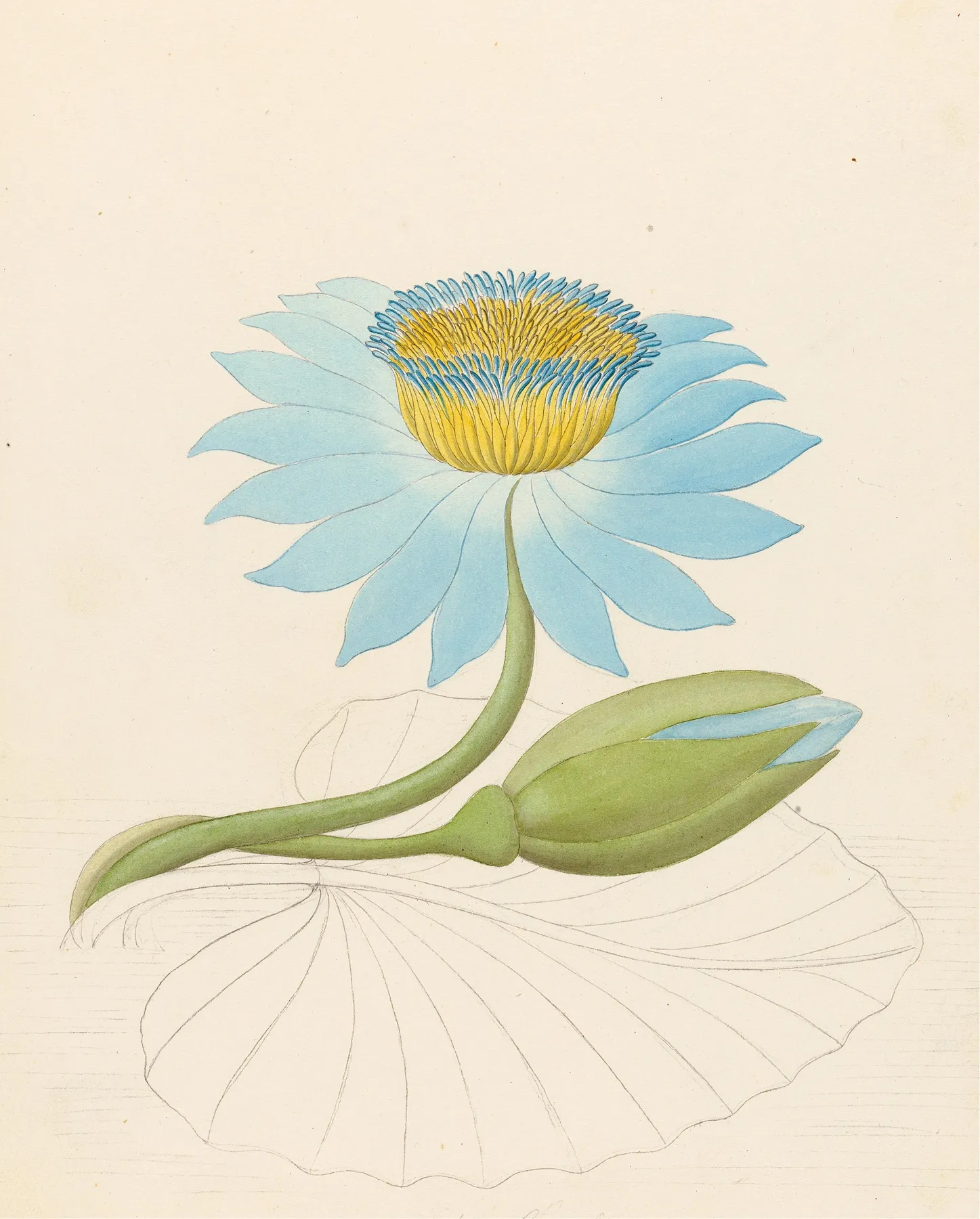
Nymphaea coerulea [Nymphaea nouchali] (1817)
南非蓝睡莲、延药睡莲
Nymphaea coerulea [Nymphaea nouchali] (1817)
Ten ways of seeing
- measured cast yellow-green
- slightly upright 1.24 : 1
First Look
论画以形似,见与儿童邻。
—— 宋·苏轼《书鄢陵王主簿所画折枝》
To judge painting by likeness alone is the view of a child.
Slightly taller than wide; the eye lands above centre. Then step in close: watch where colour meets line, and whether the line ever breaks. Third, find the darkest small patch: the whole tonal order is measured from there.
Name and Thing
Only the genus Nymphaea is given; species-level names came later. No established Chinese name exists, so it is cited by its binomial alone.
Form and Colour
Measured on this plate: flower colour covers 7.8% of the sheet, foliage 3.0%, the cast yellow-green with a second note of blue. No other plate shares exactly this measure. The sacred lotus lifts shield-shaped leaves above the water with a seed pod standing at the centre; waterlilies float their notched leaves and rest their flowers on the surface.No colour group is recorded. Read the outline, then the colour layers, then the brush.
Composition
The sheet is slightly tall. No details are appended: a plate for looking, not for keying out. The plant covers only 16% of the sheet, centred a little right of centre; the emptiness is where the eye rests.
Line and Colour
The first half of the nineteenth century moved from copper to steel to lithography; stipple could render the softest transition. Decide first whether it was printed or painted; only then discuss whether it is beautiful. If you mean to copy it: take its skeleton, its margins and the order of its colours; the burin's hatching is the language of copper — suggest it with pencil density, do not imitate it stroke for stroke.
Poetic Resonance
酒里春容抱离恨,水中莲子怀芳心。
—— 唐·温庭筠《苏小小歌》
The poem gives the mood first and the picture supplies the form; set the line beside the plate and the corolla becomes its resting point.
Symbolism
In China the lotus is the gentleman unstained by mud; in Buddhism it is the seat of the pure land. Meanings change their tune: the same flower can say opposite things within a century.
Season and Place
High summer, June to August. waterlilies are worldwide, and Victorian hybridists made hundreds of garden forms. The year 1817 on the plate is that of publication, not of flowering — the gathering came a year or two earlier. See this kind of plate in the flowering season if you can: once you have met the living flower, you stop reading only colour.
The Book and the Hand
“Drawings of plants collected at Cape Town” carries only Clemenz Heinrich Wehdemann's name. From drawing to plate the sheet passed through several hands — the engraver aimed at accuracy, the colourist at speed, and between them lies each plate's unevenness.
What to Take Away
Appreciation is not knowledge but habit — one more look each time. Two centuries on, the plant may still flower in some garden; the one on this sheet stopped in the season of 1817.
About this plate
Nymphaea coerulea [Nymphaea nouchali] (1817) is plate 11, from Drawings of plants collected at Cape Town, drawn by Clemenz Heinrich Wehdemann. This public-domain plate is reproduced at high resolution, free to view and download. Publication: 1817-1820.