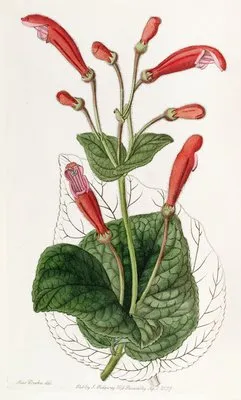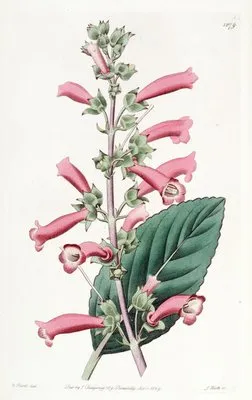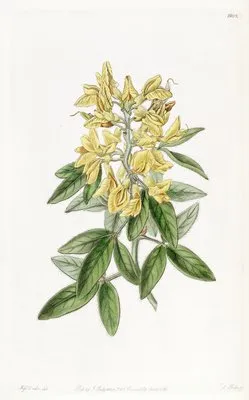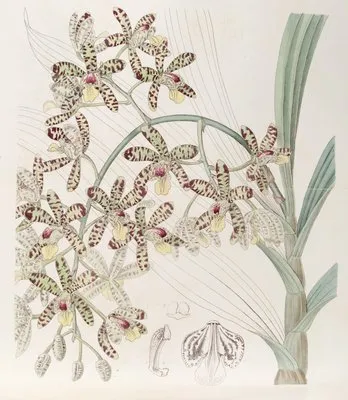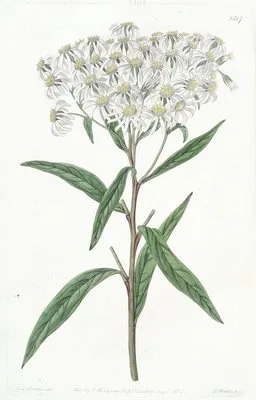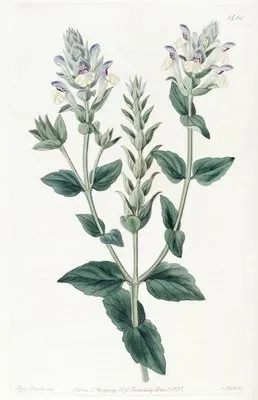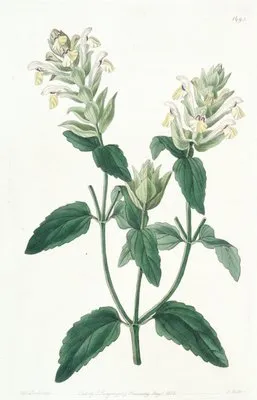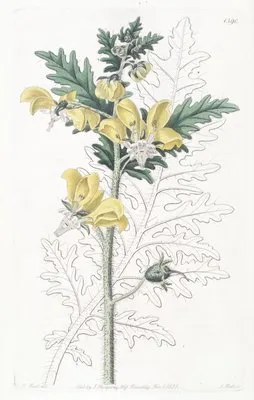
Brick-red hybrid Cactus
Brick-red hybrid Cactus
About this plate
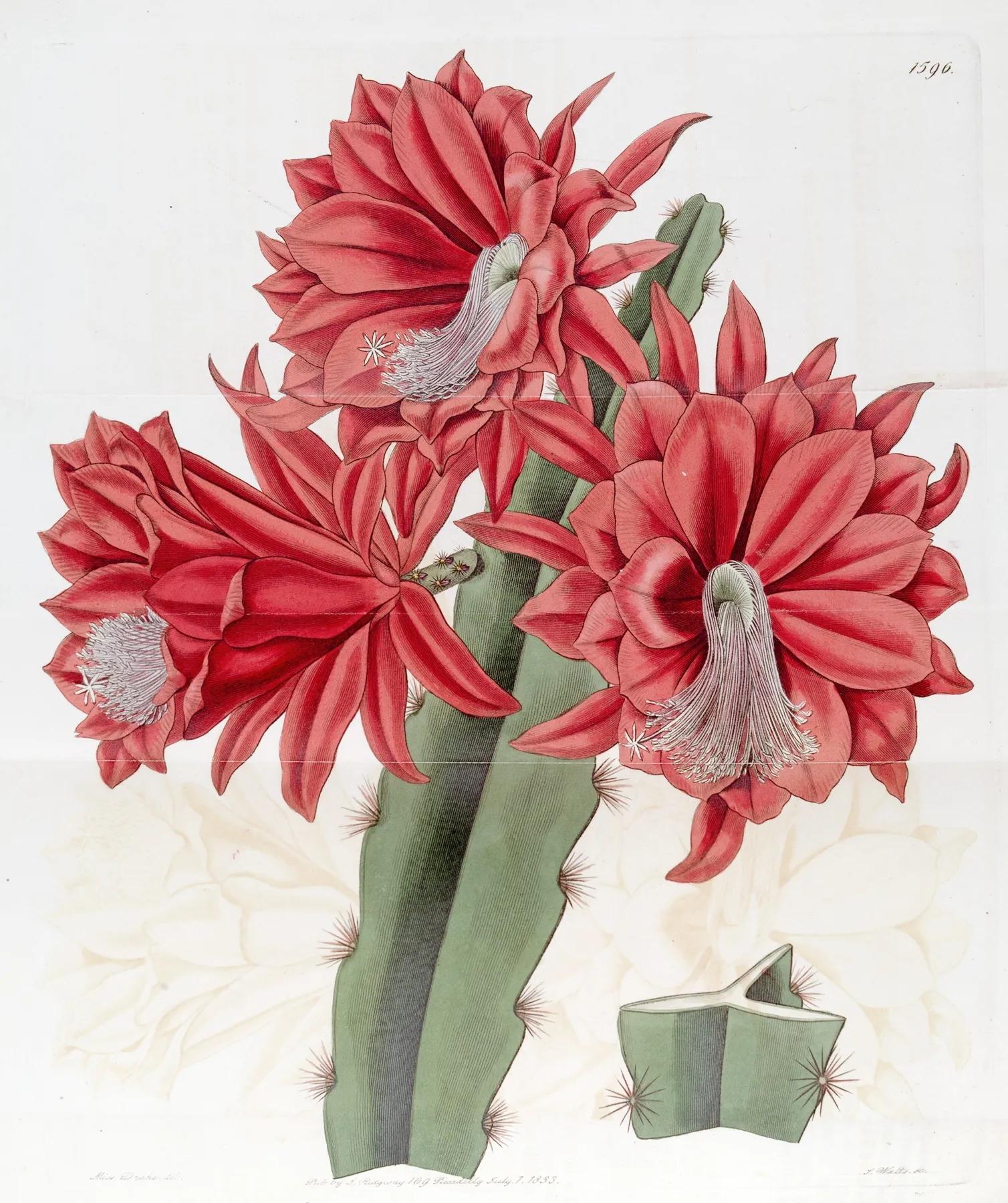
Brick-red hybrid Cactus is plate 96, from Edwards' Botanical Register, drawn by Sydenham Edwards, John Lindley. This public-domain plate is reproduced at high resolution, free to view and download. Publication: London, James Ridgway, 1829-1847.
Twelve ways of seeing
- measured cast red
- slightly upright 1.19 : 1
- published 1829
- Plate 96
Not a catalogue entry but a way of looking: how to stand, what to notice, how the line was cut, when it flowers, where it came from, who made it — and then the poems and the classics that taught China to see the same flower. Read the twelve in order and the plate opens.
-
First Look
论画以形似,见与儿童邻。
—— 宋·苏轼《书鄢陵王主簿所画折枝》
To judge painting by likeness alone is the view of a child.
Slightly taller than wide; the eye lands above centre. Then step in close: watch where colour meets line, and whether the line ever breaks. Third, find where the red is deepest: the whole tonal order is measured from that patch.
-
Name and Thing
Only the genus Cactus is given; species-level names came later. No established Chinese name exists, so it is cited by its binomial alone.
-
Form and Colour
Measured on this plate: flower colour covers 32.6% of the sheet, foliage 1.5%, the cast red. No other plate shares exactly this measure. Tropical plants defy temperate habits: heavy, saturated flowers with strong scent, leathery or dissected leaves, stems that climb, swell, or reduce to spines. Filed under red — a red close to carmine, built in washes from a pale ground. A single plant, laid out with nothing hidden.
-
Composition
Slightly taller than wide, the plant set a little above centre. (about 1.19 : 1) No details are appended: a plate for looking, not for keying out. The plant fills 46% of the sheet, centred near the centre — the herbarium way, drawn to be read whole. Old plates set the plant slightly off centre, with unequal margins — that small imbalance is what keeps it alive.
-
Line and Colour
The first half of the nineteenth century moved from copper to steel to lithography; stipple could render the softest transition. There is evidence on the back too: the plate mark pressed into the paper, the slight relief of the pigment, lines worn shallow in a later printing.
-
Season
The tropics have no four seasons, only wet and dry; flowering follows the first rains, so a month on the plate often means 'after the rain'. The year 1829 on the plate is that of publication, not of flowering — the gathering came a year or two earlier. The plate records ten days of peak; the other three hundred are leaf, fruit and rest.
-
Provenance
Central and South America, Southeast Asia, India, Ceylon. Eighteenth- and nineteenth-century artists either sailed with the ships or drew from living specimens under glass. The volume was made in 1829-1847, when most of this knowledge came from living plants under glass.
-
The Book and the Hand
“Edwards' Botanical Register” was drawn by Sydenham Edwards, John Lindley and published 1829-1847. This plate is Plate 96. The image is public domain; the hand-colouring is still one person's hand.
-
Poetic Resonance
日啖荔枝三百颗,不辞长作岭南人。
—— 宋·苏轼《食荔枝》
Three hundred lychees a day — I would not mind being a southerner all my life.
The poem gives the mood first and the picture supplies the form; set the line beside the plate and the red the corolla becomes its resting point.
-
The Written Tradition
论画以形似,见与儿童邻。
—— 宋·苏轼《书鄢陵王主簿所画折枝》
To judge a painting by likeness alone is the view of a child.
Ji Han's fourth-century Records of the Plants of the South is China's earliest regional flora; Europe's counterpart was the exotic flora brought home by voyages — both by-products of empire and trade. Keep the line; it will surface the next time you meet the same plant.
-
Symbolism
In China these plants carry no classical symbolism; their meaning is newness — new worlds, new species, new trade routes. They show natural history's expanding edge. This plate leans red, which in flower language adds one more degree of feeling. In a flora it is a species first and a symbol second; the order is worth keeping.
-
What to Take Away
Appreciation is not knowledge but habit — one more look each time. A flora exists to be consulted; look long enough and you forget to consult — someone in 1829 gave a whole day to a single flower.