Crimped-leaved Solanum
Drabe cdiel wacilly|Crimped-leaved Solanum
Crimped-leaved Solanum
Ten ways of seeing
- measured cast yellow-green
- upright 1.59 : 1
First Look
搜尽奇峰打草稿。
—— 清·石涛《苦瓜和尚画语录》
Exhaust the strange peaks, and then make the sketch.
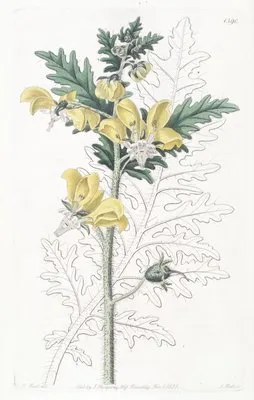
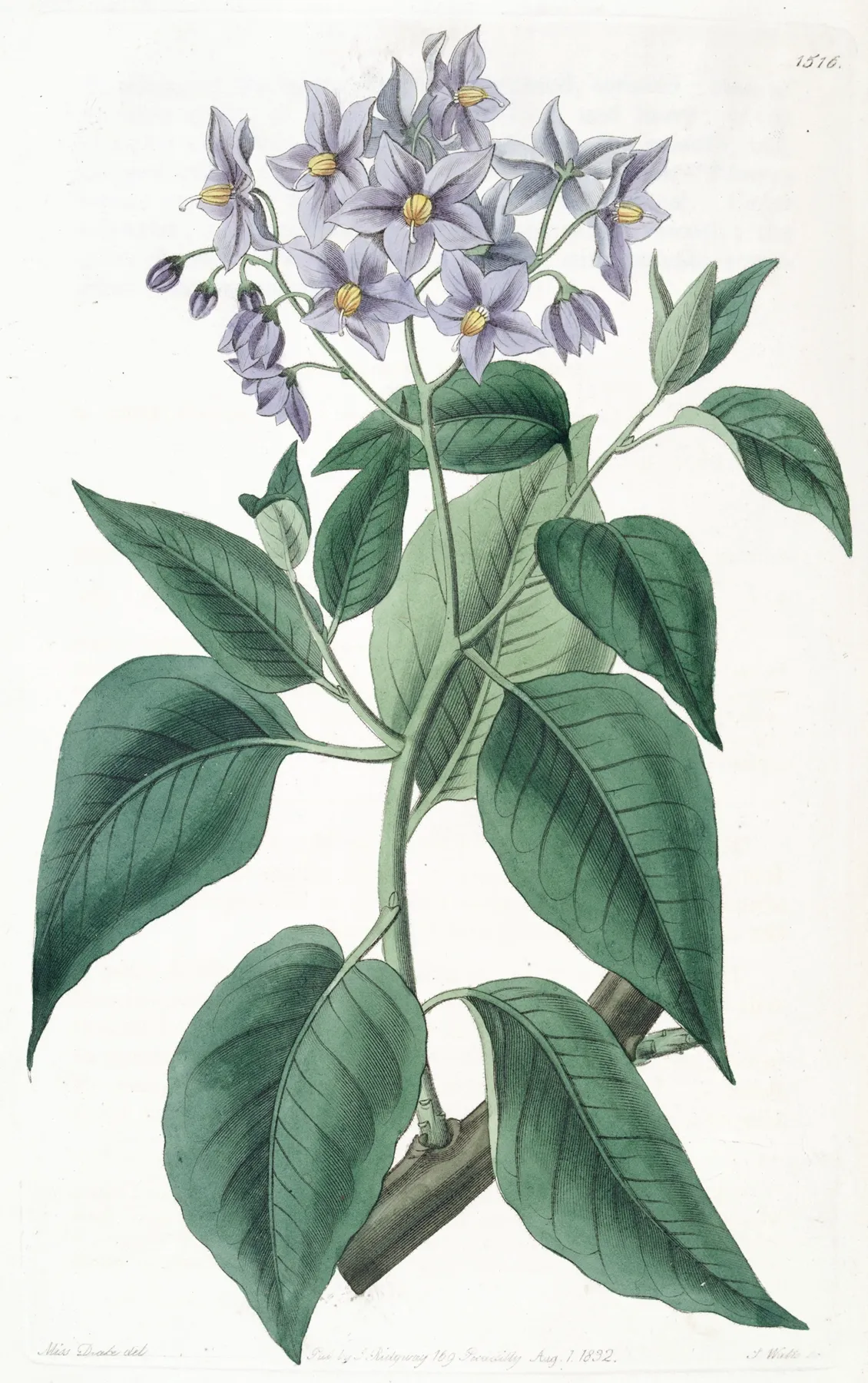
The sheet is vertical: the eye climbs and settles in the upper half. Let the plant stand before you look for detail. Then step in close: watch where colour meets line, and whether the line ever breaks. Third, find the darkest small patch: the whole tonal order is measured from there.
Name and Thing
Only the genus Solanum is given; species-level names came later. No established Chinese name exists, so it is cited by its binomial alone.
Form and Colour
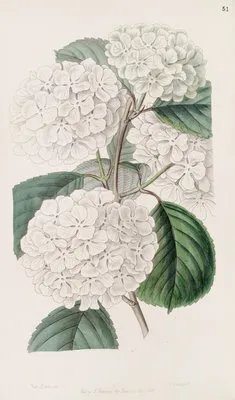
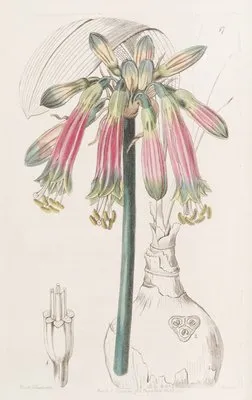
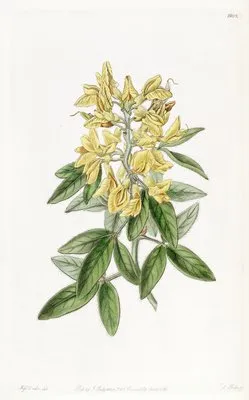
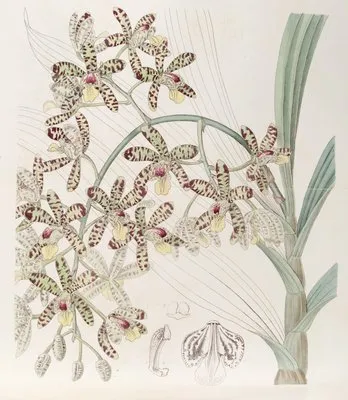
Measured on this plate: flower colour is sparing, 0.3% of the sheet against 24.5% of foliage, the cast tending yellow-green — as with pale or white blooms, outline and tone do the talking. Fruit plates pair the whole fruit with a section: the outline identifies the variety, the cut reveals skin thickness, core size and seed arrangement — the evidence of registration.No colour group is recorded. Three things fix the habit: leaf arrangement, tepal count, and how the flower is borne.
Composition
The sheet is tall. No details are appended: a plate for looking, not for keying out. The plant fills 45% of the sheet, centred near the centre — the herbarium way, drawn to be read whole.
Line and Colour
The first half of the nineteenth century moved from copper to steel to lithography; stipple could render the softest transition. There is evidence on the back too: the plate mark pressed into the paper, the slight relief of the pigment, lines worn shallow in a later printing. If you mean to copy it: take its skeleton, its margins and the order of its colours; the burin's hatching is the language of copper — suggest it with pencil density, do not imitate it stroke for stroke.
Poetic Resonance
杨柳荫中新酒店,葡萄架下小渔船。
—— 宋·杨万里《过杨村》
The poem gives the mood first and the picture supplies the form; set the line beside the plate and the fruit becomes its resting point.
Symbolism
In China the pomegranate means many sons, the peach long life, the orange good fortune; in Europe the apple is temptation and knowledge, the grape abundance and sacrifice. In a flora it is a species first and a symbol second; the order is worth keeping.
Season and Place
Late summer into autumn, variety by variety. Temperate fruits came mostly from Eurasia, later from the Americas. Nineteenth-century nurseries printed varietal albums for trade and exhibition: every fruit on the page was a saleable claim. The year 1829 on the plate is that of publication, not of flowering — the gathering came a year or two earlier. See this kind of plate in the flowering season if you can: once you have met the living flower, you stop reading only colour.
The Book and the Hand
“Edwards' Botanical Register” carries only Sydenham Edwards, John Lindley's name. The image is public domain; the hand-colouring is still one person's hand.
What to Take Away
Appreciation is not knowledge but habit — one more look each time. Two centuries on, the plant may still flower in some garden; the one on this sheet stopped in the season of 1829.
About this plate
Crimped-leaved Solanum is plate 221, from Edwards' Botanical Register, drawn by Sydenham Edwards, John Lindley. This public-domain plate is reproduced at high resolution, free to view and download. Publication: London, James Ridgway, 1829-1847.