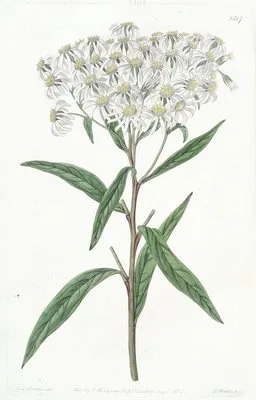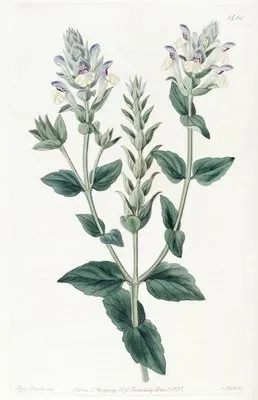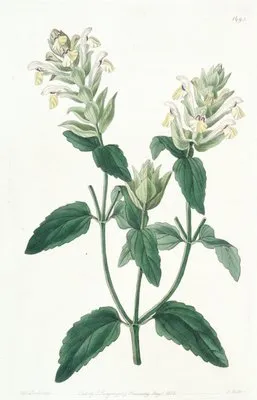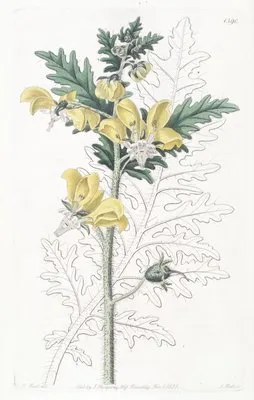
Crimson and Yellow Vanda
日本小檗
Crimson and Yellow Vanda
About this plate
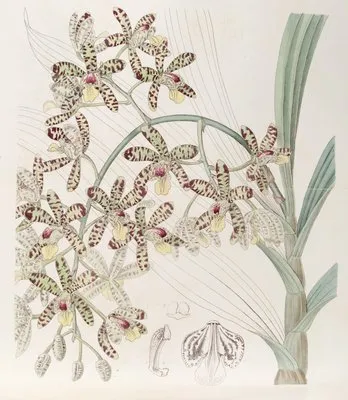
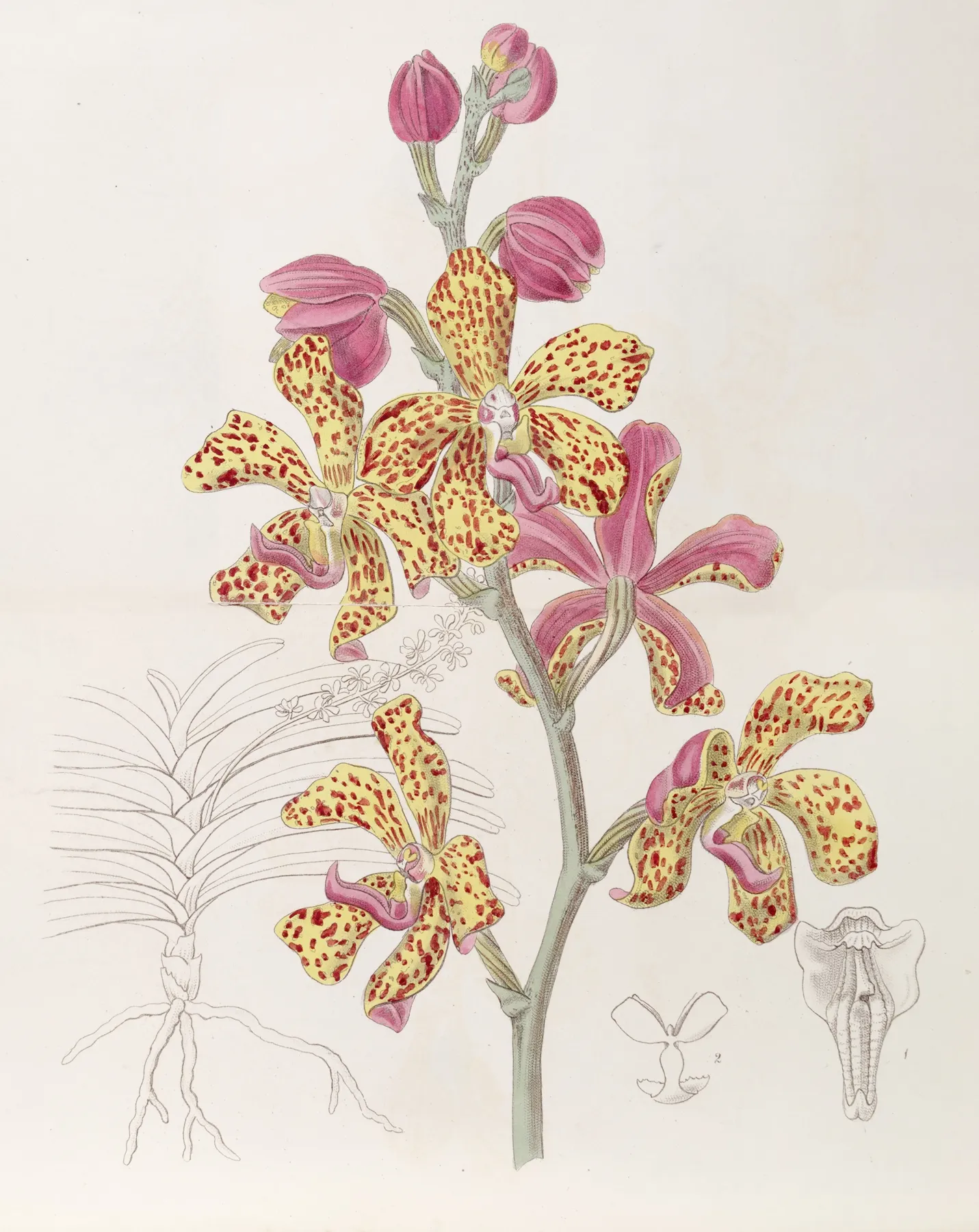
Crimson and Yellow Vanda is plate 223, from Edwards' Botanical Register, drawn by Sydenham Edwards, John Lindley. This public-domain plate is reproduced at high resolution, free to view and download. Publication: London, James Ridgway, 1829-1847.
Twelve ways of seeing
- measured cast yellow-green
- slightly upright 1.26 : 1
- published 1829
- Plate 223
Not a catalogue entry but a way of looking: how to stand, what to notice, how the line was cut, when it flowers, where it came from, who made it — and then the poems and the classics that taught China to see the same flower. Read the twelve in order and the plate opens.
-
First Look
凡画山水,意在笔先。
—— 唐·王维《山水论》
In painting, the intention precedes the brush.
Slightly taller than wide; the eye lands above centre. Then step in close: watch where colour meets line, and whether the line ever breaks. Third, find the darkest small patch: the whole tonal order is measured from there. The pose leans left: the upper half carries 9 points further left than the lower — a living thing, not a diagram.
-
Name and Thing
Only the genus Vanda is given; species-level names came later. The Chinese name 日本小檗 is a modern rendering of the Latin, not an old garden name.
-
Form and Colour
Measured on this plate: flower colour covers 16.4% of the sheet, foliage 0.0%, the cast yellow-green with a second note of red. No other plate shares exactly this measure. Orchids carry pseudobulbs or fleshy roots; six tepals, one modified into a lip that serves as a landing stage, and a column uniting stamens and pistil — a structure unique to the family.No colour group is recorded. Read the outline, then the colour layers, then the brush.
-
Composition
Slightly taller than wide, the plant set a little above centre. (about 1.26 : 1) No details are appended: a plate for looking, not for keying out. The plant covers only 22% of the sheet, centred near the centre; the emptiness is where the eye rests. Cover the margins with your thumb and the plate suffocates; uncover them and the flower breathes again.
-
Line and Colour
The first half of the nineteenth century moved from copper to steel to lithography; stipple could render the softest transition. Take a loupe to three places: petal edge, leaf vein, caption. An unbroken line means engraving; colour crossing the outline means a hand.
-
Season
Varies by genus: temperate terrestrials flower in spring and summer, tropical epiphytes almost year-round. The year 1829 on the plate is that of publication, not of flowering — the gathering came a year or two earlier. The best time to read such a plate is its flowering season: three minutes under the tree explains what no text can.
-
Provenance
Worldwide, richest on tropical mountains. Chinese cymbidiums come from the hills of the south; the orchids drawn for European portfolios came largely from the cloud forests of Central America and Southeast Asia. In the same volume the kin are shelved together; set several plates side by side.
-
The Book and the Hand
“Edwards' Botanical Register” was drawn by Sydenham Edwards, John Lindley and published 1829-1847. This plate is Plate 223. The image is public domain; the hand-colouring is still one person's hand.
-
Poetic Resonance
西风袅袅凌歌扇,秋期正与行兰远。
—— 《菩萨蛮·西风袅袅凌歌扇》
The poem gives the mood first and the picture supplies the form; set the line beside the plate and the corolla becomes its resting point.
-
The Written Tradition
写气图貌,既随物以宛转;属采附声,亦与心而徘徊。
—— 南朝梁·刘勰《文心雕龙·物色》
In tracing the spirit and drawing the shape one follows the object; in choosing colour and sound one lingers with the heart.
Confucius, finding an orchid flowering alone in a valley, is said to have composed the 'Lament for the Orchid'; in the Li Sao, orchids are worn as a girdle of virtue. The difference is not of quality but of question: Europe asks what it is, China asks whom it resembles.
-
Symbolism
In China the orchid is the gentleman who blooms unseen; in Victorian Europe it was luxury and obsession, a single new species worth a fortune. In a flora it is a species first and a symbol second; the order is worth keeping.
-
What to Take Away
Carry three rules away: whole before detail; line before colour; picture before book. Two centuries on, the plant may still flower in some garden; the one on this sheet stopped in the season of 1829.