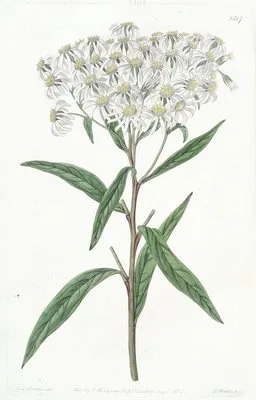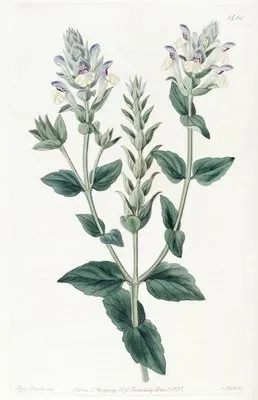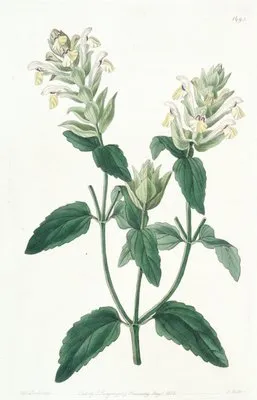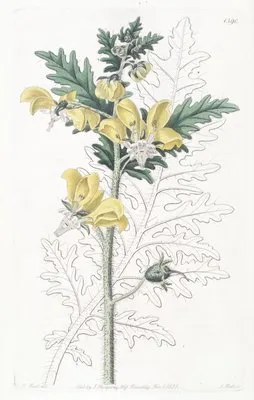
Mr. Hartweg’s Lupine
Mr. Hartweg’s Lupine
About this plate
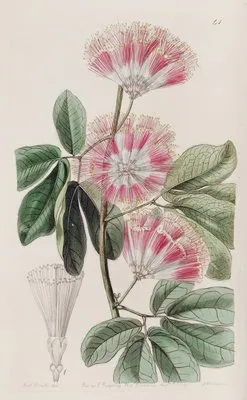
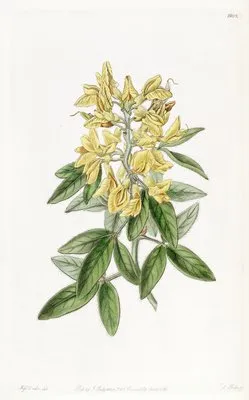
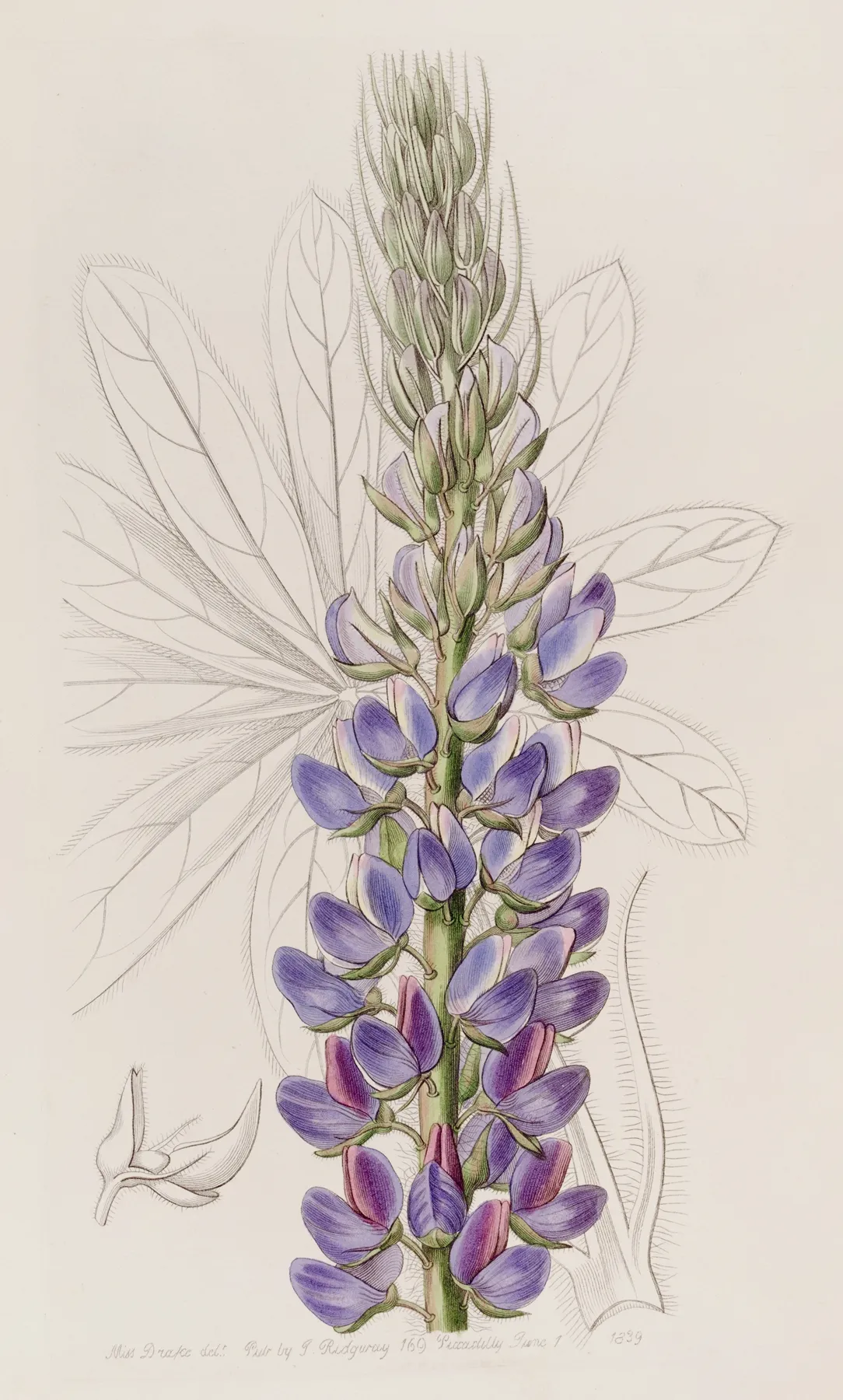
Mr. Hartweg’s Lupine is plate 716, from Edwards' Botanical Register, drawn by Sydenham Edwards, John Lindley. This public-domain plate is reproduced at high resolution, free to view and download. Publication: London, James Ridgway, 1829-1847.
Twelve ways of seeing
- measured cast purple
- upright 1.66 : 1
- published 1829
- Plate 716
Not a catalogue entry but a way of looking: how to stand, what to notice, how the line was cut, when it flowers, where it came from, who made it — and then the poems and the classics that taught China to see the same flower. Read the twelve in order and the plate opens.
-
First Look
真山水之川谷,远望之以取其势,近看之以取其质。
—— 宋·郭熙《林泉高致·山水训》
Mountains and valleys: from afar take their momentum, up close take their texture — the two distances from which any picture is read.
The sheet is vertical: the eye climbs and settles in the upper half. Let the plant stand before you look for detail. Then step in close: watch where colour meets line, and whether the line ever breaks. Third, find the darkest small patch: the whole tonal order is measured from there.
-
Name and Thing
No reliable binomial survives, so the printed title must serve. Neither name nor binomial survives: the printed title must do.
-
Form and Colour
Measured on this plate: flower colour covers 9.0% of the sheet, foliage 0.4%, the cast purple with a second note of yellow-green. No other plate shares exactly this measure. Wildflowers are rarely tidy: small blooms, slender stems, leaves imperfect and often chewed. That untidiness is exactly what records wind, light and soil.No colour group is recorded. Read the outline, then the colour layers, then the brush.
-
Composition
Tall and narrow, the plant rising in one movement with generous margins — the upright format of most floras. (about 1.66 : 1) No details are appended: a plate for looking, not for keying out. The plant covers only 23% of the sheet, centred below centre; the emptiness is where the eye rests. Blank paper is not unfinished work: it is where the eye rests.
-
Line and Colour
The first half of the nineteenth century moved from copper to steel to lithography; stipple could render the softest transition. Craft leaves franker evidence than inscriptions.
-
Season
By latitude and altitude; in the northeastern United States, April to August — each species for two or three weeks, so a wildflower book is arranged by month. The year 1829 on the plate is that of publication, not of flowering — the gathering came a year or two earlier. Note the season. Phenology is the most practical tool of appreciation.
-
Provenance
Native plants of woodland floor, bog, roadside and rock crevice; they resent transplanting and will not mass in a border — the difference between a wildflower and a garden flower. The volume was made in 1829-1847, when most of this knowledge came from living plants under glass.
-
The Book and the Hand
“Edwards' Botanical Register” was drawn by Sydenham Edwards, John Lindley and published 1829-1847. This plate is Plate 716. The image is public domain; the hand-colouring is still one person's hand.
-
Poetic Resonance
离离原上草,一岁一枯荣。野火烧不尽,春风吹又生。
—— 唐·白居易《赋得古原草送别》
Lush grass on the plain, once a year it withers and thrives; wildfire cannot burn it away — the spring wind blows and it grows again.
The poem gives the mood first and the picture supplies the form; set the line beside the plate and the corolla becomes its resting point.
-
The Written Tradition
山川之美,古来共谈。高峰入云,清流见底。
—— 南朝梁·陶弘景《答谢中书书》
The beauty of mountains and streams has been spoken of since olden times: peaks entering the clouds, clear water to the bottom.
The Book of Songs names more than 140 plants, most of them wild; Confucius said the Songs teach the names of birds, beasts and plants — natural history begins in the field. You need not parse every word: take the line, and the flower acquires a second face.
-
Symbolism
In Chinese verse wildflowers bloom unseen, owing nothing to praise; in the West they mark a place — one species, one landscape's character. In a flora it is a species first and a symbol second; the order is worth keeping.
-
What to Take Away
Appreciation is not knowledge but habit — one more look each time. Two centuries on, the plant may still flower in some garden; the one on this sheet stopped in the season of 1829.