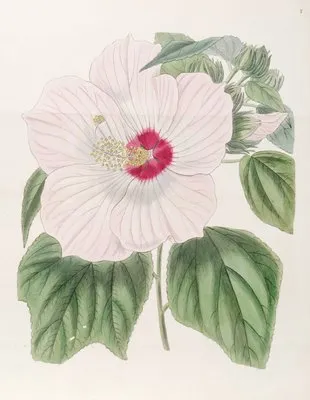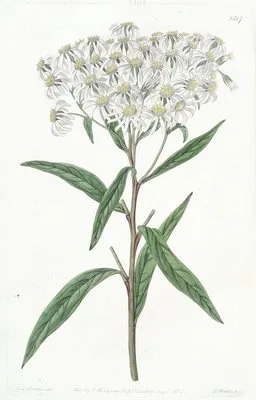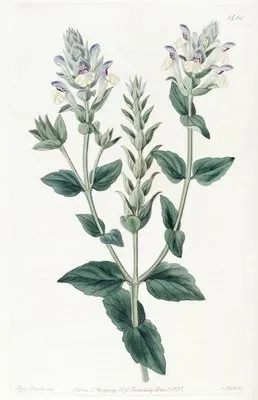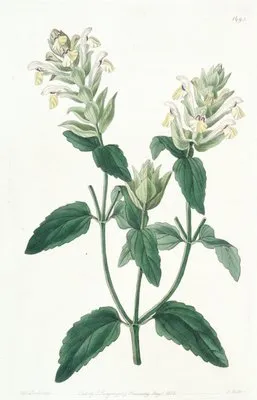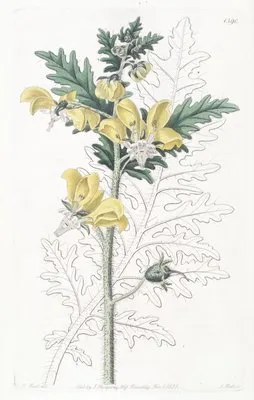
Mrs. Wray’s Hibiscus
Fpcc cudully|Mrs. Wray’s Hibiscus
About this plate
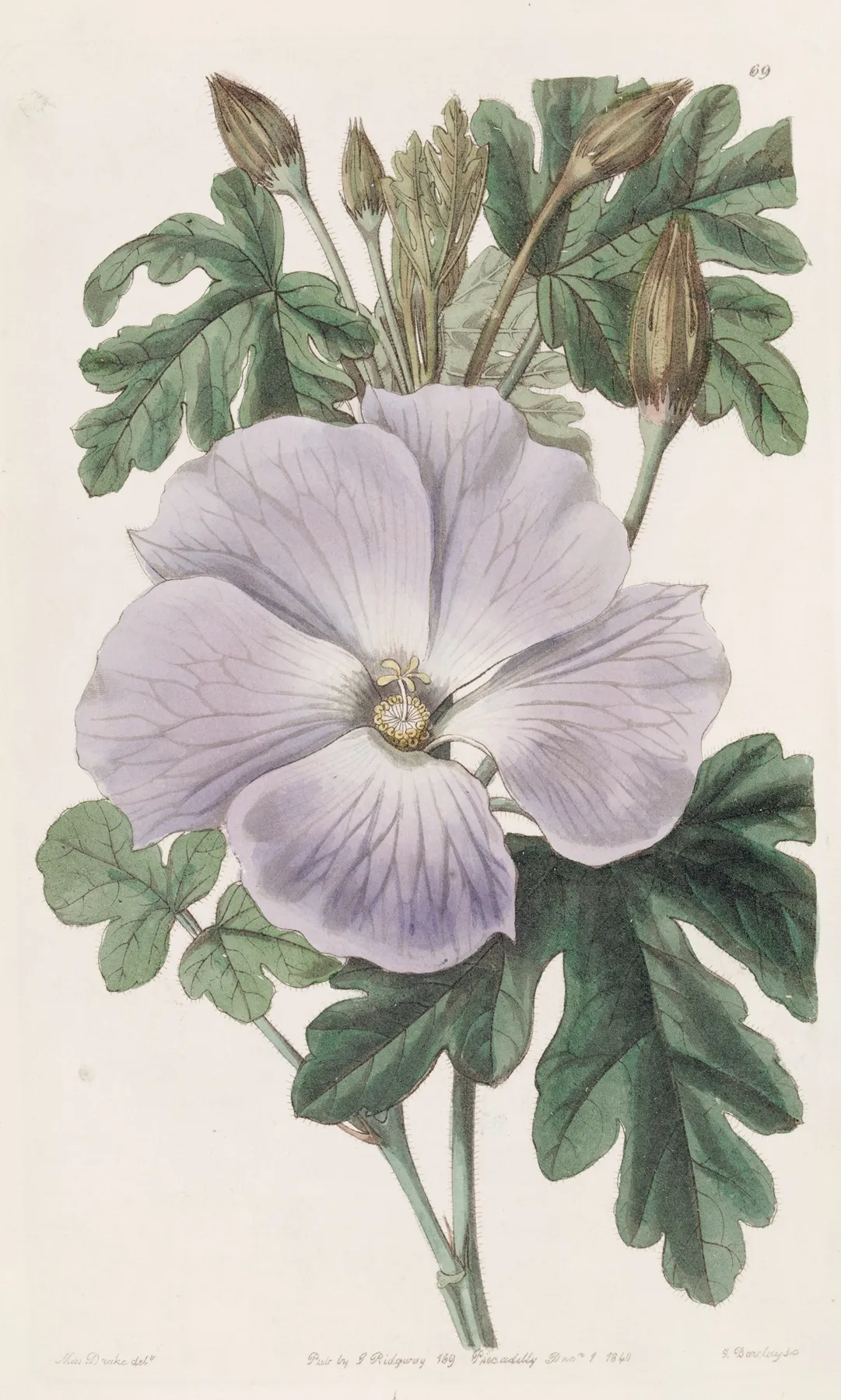
Mrs. Wray’s Hibiscus is plate 753, from Edwards' Botanical Register, drawn by Sydenham Edwards, John Lindley. This public-domain plate is reproduced at high resolution, free to view and download. Publication: London, James Ridgway, 1829-1847.
Twelve ways of seeing
- measured cast amber
- upright 1.67 : 1
- published 1829
- Plate 753
Not a catalogue entry but a way of looking: how to stand, what to notice, how the line was cut, when it flowers, where it came from, who made it — and then the poems and the classics that taught China to see the same flower. Read the twelve in order and the plate opens.
-
First Look
真山水之川谷,远望之以取其势,近看之以取其质。
—— 宋·郭熙《林泉高致·山水训》
Mountains and valleys: from afar take their momentum, up close take their texture — the two distances from which any picture is read.
The sheet is vertical: the eye climbs and settles in the upper half. Let the plant stand before you look for detail. Then step in close: watch where colour meets line, and whether the line ever breaks. Third, find the darkest small patch: the whole tonal order is measured from there.
-
Name and Thing
Only the genus Hibiscus is given; species-level names came later. No established Chinese name exists, so it is cited by its binomial alone.
-
Form and Colour
Measured on this plate: flower colour covers 3.8% of the sheet, foliage 1.9%, the cast amber with a second note of yellow-green. No other plate shares exactly this measure. Flowering trees and shrubs put out branches first; blossoms open before or with the leaves, usually five thin, translucent petals around a cluster of fine stamens.No colour group is recorded. A single plant, laid out with nothing hidden.
-
Composition
Tall and narrow, the plant rising in one movement with generous margins — the upright format of most floras. (about 1.67 : 1) No details are appended: a plate for looking, not for keying out. The plant fills 49% of the sheet, centred near the centre — the herbarium way, drawn to be read whole. Blank paper is not unfinished work: it is where the eye rests.
-
Line and Colour
The first half of the nineteenth century moved from copper to steel to lithography; stipple could render the softest transition. Take a loupe to three places: petal edge, leaf vein, caption. An unbroken line means engraving; colour crossing the outline means a hand.
-
Season
Mid spring: plum first, then peach and apricot, cherry last — the season keeps its order. The year 1829 on the plate is that of publication, not of flowering — the gathering came a year or two earlier. The plate records ten days of peak; the other three hundred are leaf, fruit and rest.
-
Provenance
East Asia and temperate Eurasia. Plum, peach and apricot are Chinese in origin, grown for three thousand years; cherry and crabapple went east to Japan and west to Europe. In the same volume the kin are shelved together; set several plates side by side.
-
The Book and the Hand
“Edwards' Botanical Register” was drawn by Sydenham Edwards, John Lindley and published 1829-1847. This plate is Plate 753. The image is public domain; the hand-colouring is still one person's hand.
-
Poetic Resonance
疏影横斜水清浅,暗香浮动月黄昏。
—— 宋·林逋《山园小梅》
Sparse shadows slant across the shallow water; hidden fragrance drifts in the dusk of the moon.
The poem gives the mood first and the picture supplies the form; set the line beside the plate and the corolla becomes its resting point.
-
The Written Tradition
主淤血,血闭瘕邪,杀小虫。桃花杀注恶鬼,令人好颜色。桃凫,微湿,主杀百鬼精物(初学记引云,枭桃在树不落,杀百鬼)。
—— 神农本草经·桃核仁第三百五十三
Lin Bu of Hangzhou famously took the plum as his wife and the crane as his son; the Book of Songs already used peach blossom to open a wedding song. You need not parse every word: take the line, and the flower acquires a second face.
-
Symbolism
Plum is solitude, peach is marriage, apricot is spring itself, crabapple is a fragile fate; the hibiscus, opening at dawn and falling at dusk, is impermanence. Flower language was added later; the flower knows nothing of it, and that innocence is part of its power.
-
What to Take Away
Carry three rules away: whole before detail; line before colour; picture before book. A flora exists to be consulted; look long enough and you forget to consult — someone in 1829 gave a whole day to a single flower.