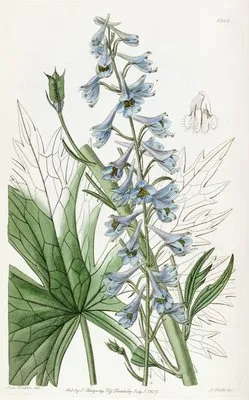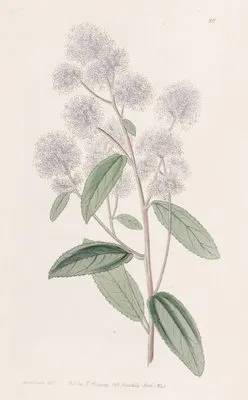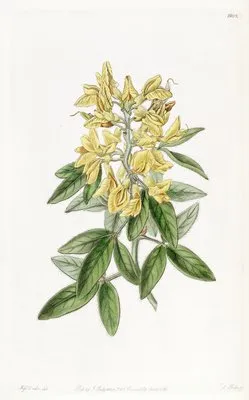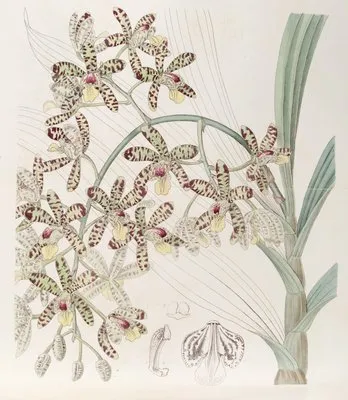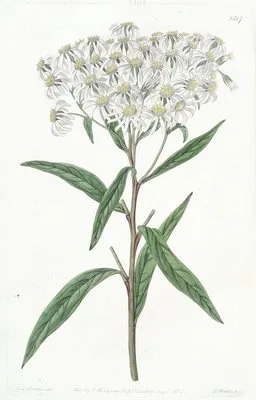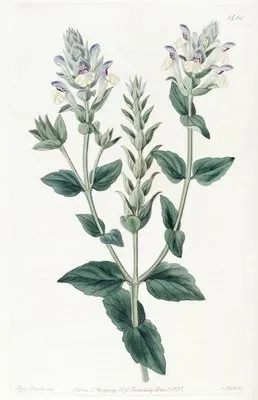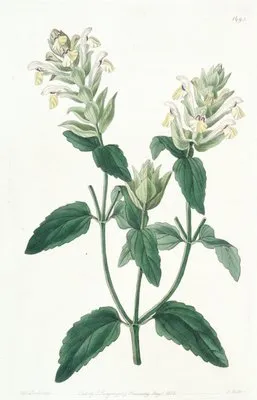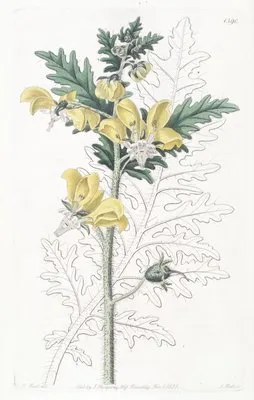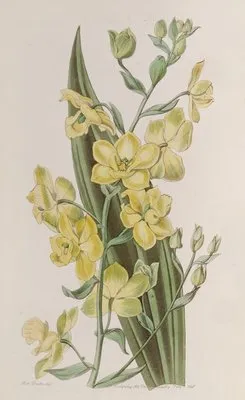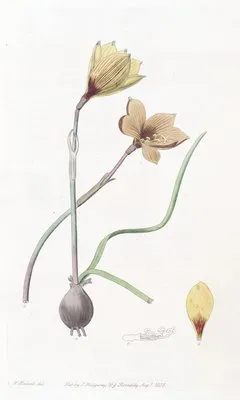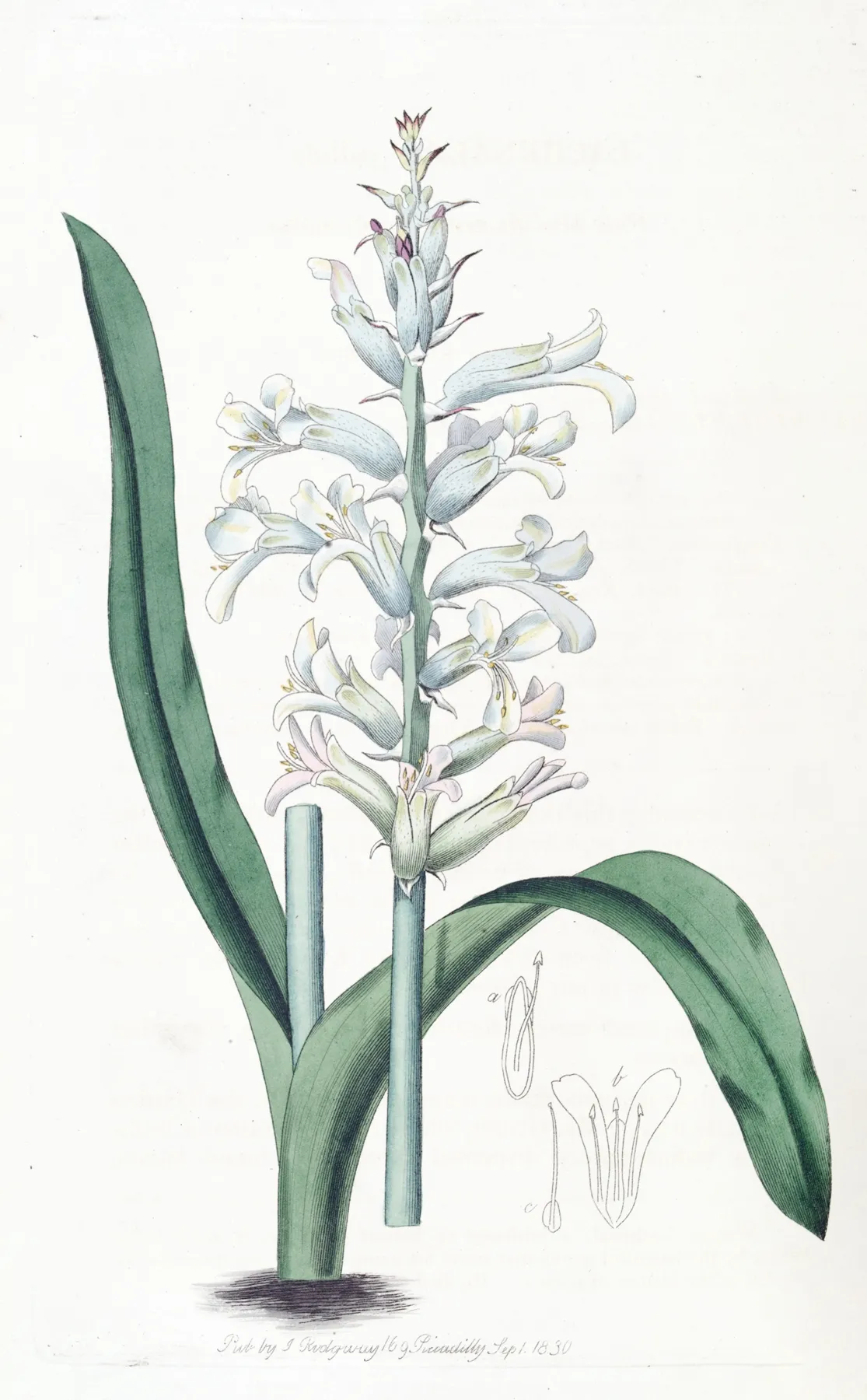
Pale-blue-flowered Lachenalia
Iiate bry|Pale-blue-flowered Lachenalia
Pale-blue-flowered Lachenalia
About this plate
Pale-blue-flowered Lachenalia is plate 821, from Edwards' Botanical Register, drawn by Sydenham Edwards, John Lindley. This public-domain plate is reproduced at high resolution, free to view and download. Publication: London, James Ridgway, 1829-1847.
Twelve ways of seeing
One plate, read twelve times over: its name, its colour, the burin and the brush, the shape of the sheet, the season, the soil it came from, the book it belongs to, its language of flowers, the poem it answers to, the lore behind it, how to look, and what remains.
-
The Name
The plate is titled “Pale-blue-flowered Lachenalia”, numbered Plate 821. The plate gives only the genus, Lachenalia; species-level names came later. No established Chinese name exists for this plate, so it is cited by its binomial alone.
-
Form and Colour
Bulbous plants store the year underground — bulb, corm or tuber — then send up a few thick leaves and a single scape, with six tepals in cup, funnel or star. No colour group is recorded for this plate, but the palette still belongs to its season. Three things fix the habit: leaf arrangement, tepal count, and how the flower is borne.
-
Line and Colour
The first half of the nineteenth century moved from copper to steel to lithography. Stipple could render the softest transition — Redouté's roses depend on it — while lithography suited broad, gentle washes. Look closely at the line and the colour: an unbroken line means engraving, colour crossing the outline by half a millimetre means hand-colouring. Craft leaves franker evidence than inscriptions.
-
Composition
Tall and narrow, the plant rising in one movement with generous margins above and below — the upright format of most floras. (about 1.61 : 1). No details are appended: this is a plate for looking, not for keying out.
-
Season
Early spring to early summer, genus by genus: tulips and hyacinths first, gladiolus and amaryllis later. The year 1829 on the plate is the year of publication, not of flowering — the gathering came a year or two earlier.
-
Provenance
Three homelands: the Mediterranean, Central Asia and South Africa. The tulip came from Ottoman gardens and became a Dutch mania; South African bulbs filled European glasshouses after 1800. In the same volume the kin are shelved together; set several plates side by side and the differences declare themselves.
-
The Book
“Edwards' Botanical Register” was drawn by Sydenham Edwards, John Lindley and published 1829-1847. This plate is Plate 821. The image is in the public domain; the hand-colouring on the paper is still one person's hand, two centuries ago.
-
Symbolism
The tulip was an imperial emblem in Istanbul and a speculative bubble in Amsterdam; the hyacinth sprang from a boy's blood in Greek myth. What bulbs share is concealment: next year kept underground. In a flora it is a species first and a symbol second; the order is worth keeping.
-
Poetic Resonance
兰陵美酒郁金香,玉碗盛来琥珀光。
—— 唐·李白《客中行》
Fine wine of Lanling, fragrant with turmeric; poured in a jade bowl, it glows like amber.
The poem gives the mood first and the picture supplies the form; set the line beside the plate and the corolla becomes its resting point.
-
Classical Lore
Li Bai's 'orchid wine, fragrant with yujin' is often misread as tulips; the Tang yujin was a turmeric-like root used to scent wine — same name, different plant. Chinese flower books ranked plants by character; European floras described them by form and name. This plate belongs to the second tradition, yet bears reading by the first. Printed in 1829, at the moment the two traditions began to see each other.
-
How to Look
Look at the base: tulips overlap in two whorls to make a cup, hyacinths pack small flowers into a spike, gladiolus sets its blooms in a single row facing one way. And read the caption and number: not part of the picture, but the door through which it entered knowledge.
-
Afterword
Two centuries on, the plant may still flower in some garden; the one on this sheet stopped in the season of 1829.