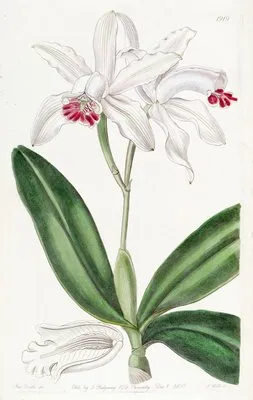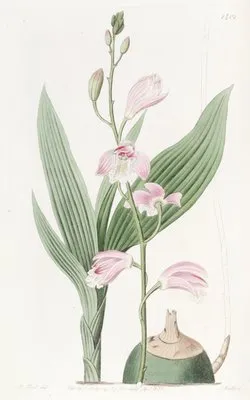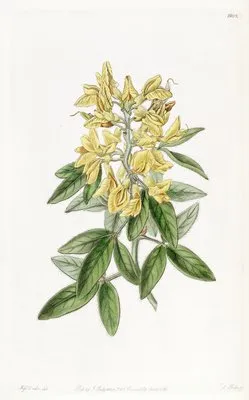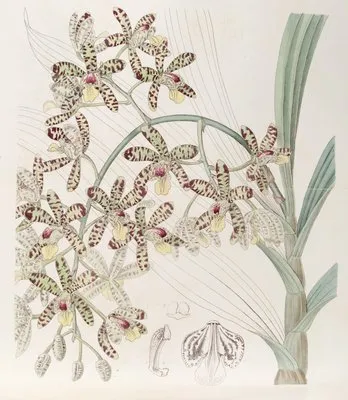
Pallid Aster
Pallid Aster
Pallid Aster
About this plate
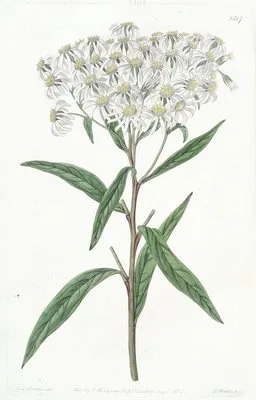
Pallid Aster is plate 824, from Edwards' Botanical Register, drawn by Sydenham Edwards, John Lindley. This public-domain plate is reproduced at high resolution, free to view and download. Publication: London, James Ridgway, 1829-1847.
Twelve ways of seeing
- measured cast yellow-green
- upright 1.60 : 1
- published 1829
- Plate 824
Not a catalogue entry but a way of looking: how to stand, what to notice, how the line was cut, when it flowers, where it came from, who made it — and then the poems and the classics that taught China to see the same flower. Read the twelve in order and the plate opens.
-
First Look
搜尽奇峰打草稿。
—— 清·石涛《苦瓜和尚画语录》
Exhaust the strange peaks, and then make the sketch.
The sheet is vertical: the eye climbs and settles in the upper half. Let the plant stand before you look for detail. Then step in close: watch where colour meets line, and whether the line ever breaks. Third, find the darkest small patch: the whole tonal order is measured from there.
-
Name and Thing
The binomial is Pallid aster: the first word is the genus it belongs among, the second the epithet that sets it apart. Two words carry a whole provenance. No established Chinese name exists, so it is cited by its binomial alone.
-
Form and Colour
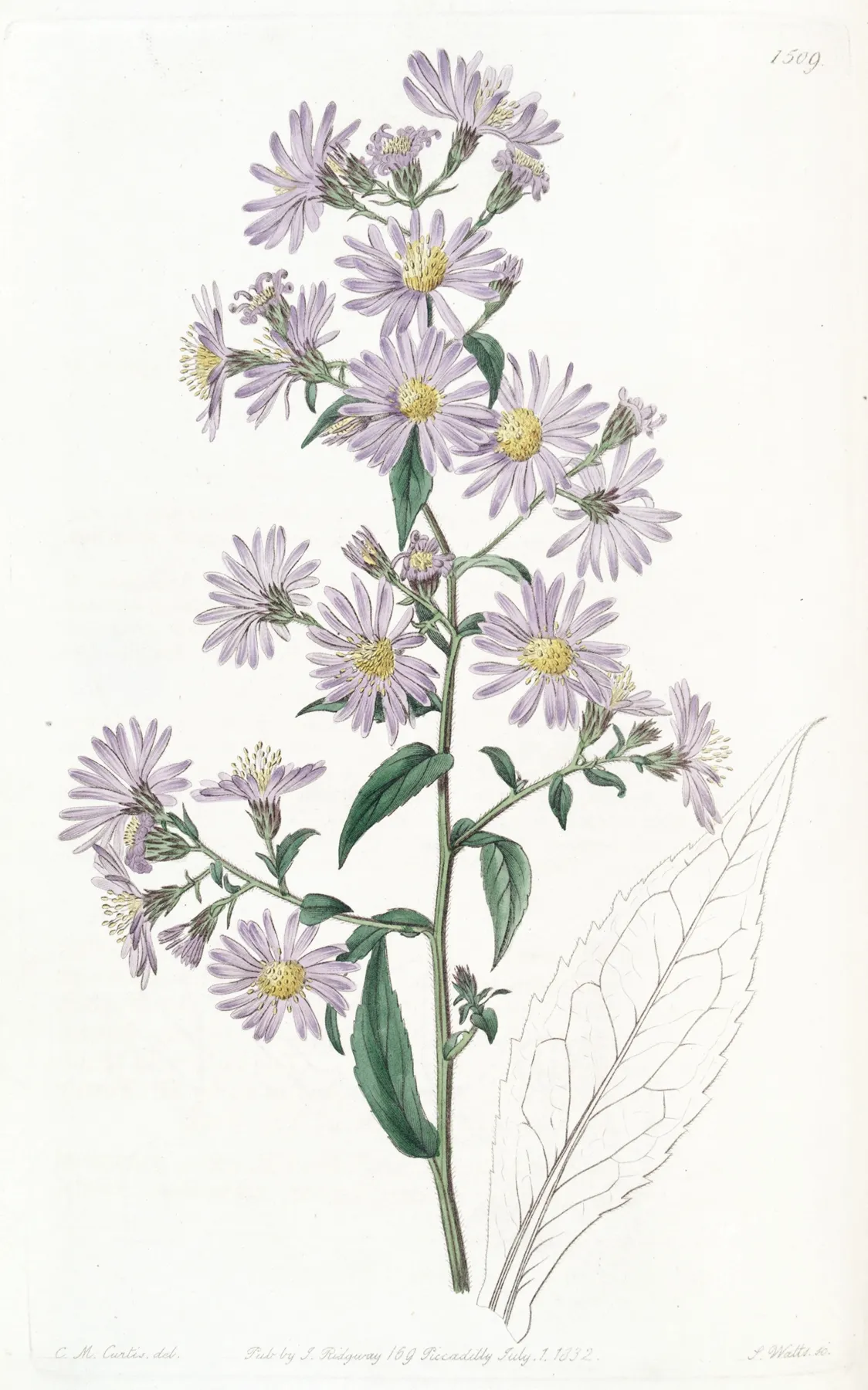
Measured on this plate: flower colour is sparing, 0.8% of the sheet against 1.2% of foliage, the cast tending yellow-green — as with pale or white blooms, outline and tone do the talking. Chrysanthemums are herbaceous with deeply lobed, downy leaves. Each 'flower' is a head — ray florets around the rim, disc florets in the centre, hundreds of small flowers in one.No colour group is recorded. A single plant, laid out with nothing hidden.
-
Composition
Tall and narrow, the plant rising in one movement with generous margins — the upright format of most floras. (about 1.60 : 1) No details are appended: a plate for looking, not for keying out. The plant covers only 18% of the sheet, centred near the centre; the emptiness is where the eye rests. Blank paper is not unfinished work: it is where the eye rests.
-
Line and Colour
The first half of the nineteenth century moved from copper to steel to lithography; stipple could render the softest transition. Craft leaves franker evidence than inscriptions.
-
Season
Deep autumn, around the Double Ninth in the ninth month — after the first frost, when everything else is gone. The year 1829 on the plate is that of publication, not of flowering — the gathering came a year or two earlier. The best time to read such a plate is its flowering season: three minutes under the tree explains what no text can.
-
Provenance
Native to China, adopted in Japan as the imperial crest, carried to Europe by the Dutch in the seventeenth century and remade by Victorian breeders. The volume was made in 1829-1847, when most of this knowledge came from living plants under glass.
-
The Book and the Hand
“Edwards' Botanical Register” was drawn by Sydenham Edwards, John Lindley and published 1829-1847. This plate is Plate 824. The image is public domain; the hand-colouring is still one person's hand.
-
Poetic Resonance
庭前甘菊移时晚,青蕊重阳不堪摘。
—— 唐·杜甫《叹庭前甘菊花》
The poem gives the mood first and the picture supplies the form; set the line beside the plate and the corolla becomes its resting point.
-
The Written Tradition
菊春生夏茂,秋花冬实,备受四气,饱经露霜,叶枯不落,花槁不零。
—— 明·李时珍《本草纲目·草部》
The chrysanthemum sprouts in spring, thrives in summer, flowers in autumn, seeds in winter; it takes all four seasons and all the frost, and its leaves wither without falling.
The Bencao Gangmu notes that the shoot may be eaten, the leaf steeped, the flower taken as food, the root used as medicine, the petals stuffed into a pillow, the whole brewed into wine. You need not parse every word: take the line, and the flower acquires a second face.
-
Symbolism
In China, seclusion and long life — and, after Tao Yuanming, the will to go home; in Japan, imperial authority. Meanings change their tune: the same flower can say opposite things within a century.
-
What to Take Away
Carry three rules away: whole before detail; line before colour; picture before book. A flora exists to be consulted; look long enough and you forget to consult — someone in 1829 gave a whole day to a single flower.