The Chinese Pear
Horb dkel|The Chinese Pear
The Chinese Pear
About this plate
The Chinese Pear is plate 1191, from Edwards' Botanical Register, drawn by Sydenham Edwards, John Lindley. This public-domain plate is reproduced at high resolution, free to view and download. Publication: London, James Ridgway, 1829-1847.
Twelve ways of seeing
- measured cast amber
- upright 1.63 : 1
- published 1829
- Plate 1191
Not a catalogue entry but a way of looking: how to stand, what to notice, how the line was cut, when it flowers, where it came from, who made it — and then the poems and the classics that taught China to see the same flower. Read the twelve in order and the plate opens.
-
First Look
夫象物必在于形似,形似须全其骨气。
—— 唐·张彦远《历代名画记》
Likeness is the threshold; bone-and-breath is the point.
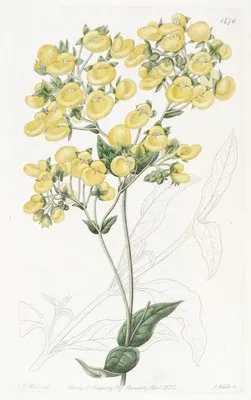
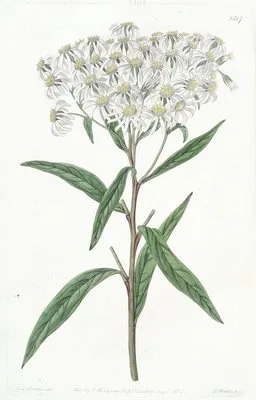
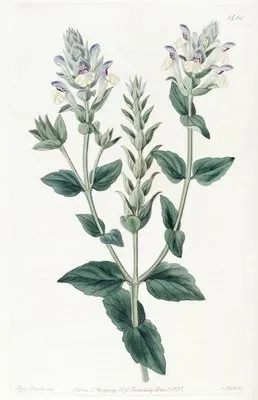
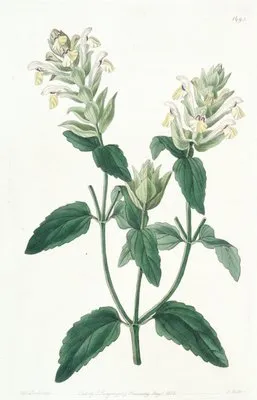
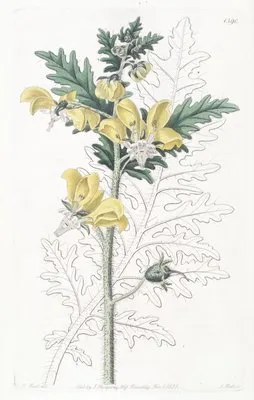
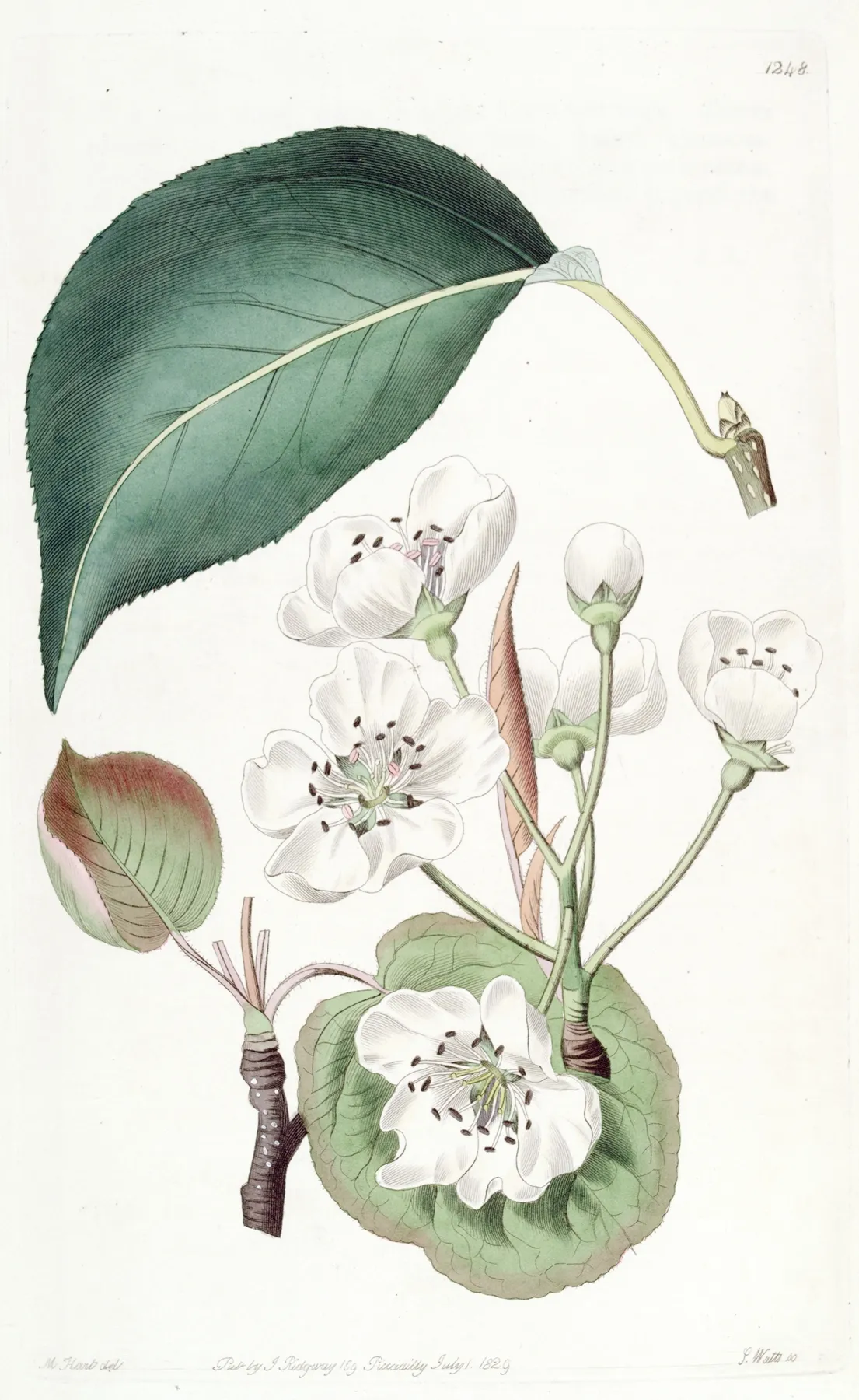
The sheet is vertical: the eye climbs and settles in the upper half. Let the plant stand before you look for detail. Then step in close: watch where colour meets line, and whether the line ever breaks. Third, find the darkest small patch: the whole tonal order is measured from there. The pose leans left: the upper half carries 14 points further left than the lower — a living thing, not a diagram.
-
Name and Thing
No reliable binomial survives, so the printed title must serve. Neither name nor binomial survives: the printed title must do.
-
Form and Colour
Measured on this plate: flower colour covers 2.3% of the sheet, foliage 8.3%, the cast amber with a second note of yellow-green. No other plate shares exactly this measure. Flowering trees and shrubs put out branches first; blossoms open before or with the leaves, usually five thin, translucent petals around a cluster of fine stamens.No colour group is recorded. A single plant, laid out with nothing hidden.
-
Composition
Tall and narrow, the plant rising in one movement with generous margins — the upright format of most floras. (about 1.63 : 1) No details are appended: a plate for looking, not for keying out. The plant takes about 29% of the sheet, centred a little left of centre — the easy measure most florists kept to. Cover the margins with your thumb and the plate suffocates; uncover them and the flower breathes again.
-
Line and Colour
The first half of the nineteenth century moved from copper to steel to lithography; stipple could render the softest transition. Decide first whether it was printed or painted; only then discuss whether it is beautiful.
-
Season
Mid spring: plum first, then peach and apricot, cherry last — the season keeps its order. The year 1829 on the plate is that of publication, not of flowering — the gathering came a year or two earlier. Note the season. Phenology is the most practical tool of appreciation.
-
Provenance
East Asia and temperate Eurasia. Plum, peach and apricot are Chinese in origin, grown for three thousand years; cherry and crabapple went east to Japan and west to Europe. The volume was made in 1829-1847, when most of this knowledge came from living plants under glass.
-
The Book and the Hand
“Edwards' Botanical Register” was drawn by Sydenham Edwards, John Lindley and published 1829-1847. This plate is Plate 1191. The image is public domain; the hand-colouring is still one person's hand.
-
Poetic Resonance
水作青龙盘石堤,桃花夹岸鲁门西。
—— 唐·李白《东鲁门泛舟二首》
The poem gives the mood first and the picture supplies the form; set the line beside the plate and the corolla becomes its resting point.
-
The Written Tradition
多识于鸟兽草木之名。
—— 《论语·阳货》
…and from the Songs one learns the names of birds, beasts, plants and trees.
Lin Bu of Hangzhou famously took the plum as his wife and the crane as his son; the Book of Songs already used peach blossom to open a wedding song. You need not parse every word: take the line, and the flower acquires a second face.
-
Symbolism
Plum is solitude, peach is marriage, apricot is spring itself, crabapple is a fragile fate; the hibiscus, opening at dawn and falling at dusk, is impermanence. Flower language was added later; the flower knows nothing of it, and that innocence is part of its power.
-
What to Take Away
Next time you stand before a flowering plant, give it three minutes: leaf arrangement, direction of the flower, the darkest patch. A flora exists to be consulted; look long enough and you forget to consult — someone in 1829 gave a whole day to a single flower.