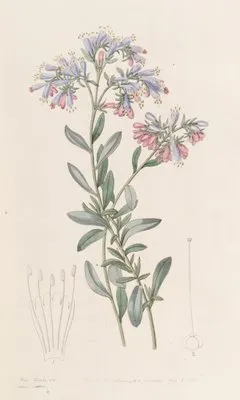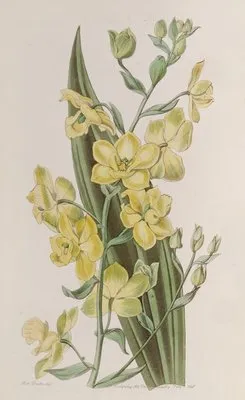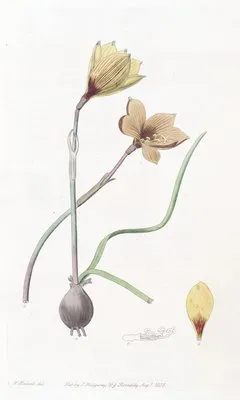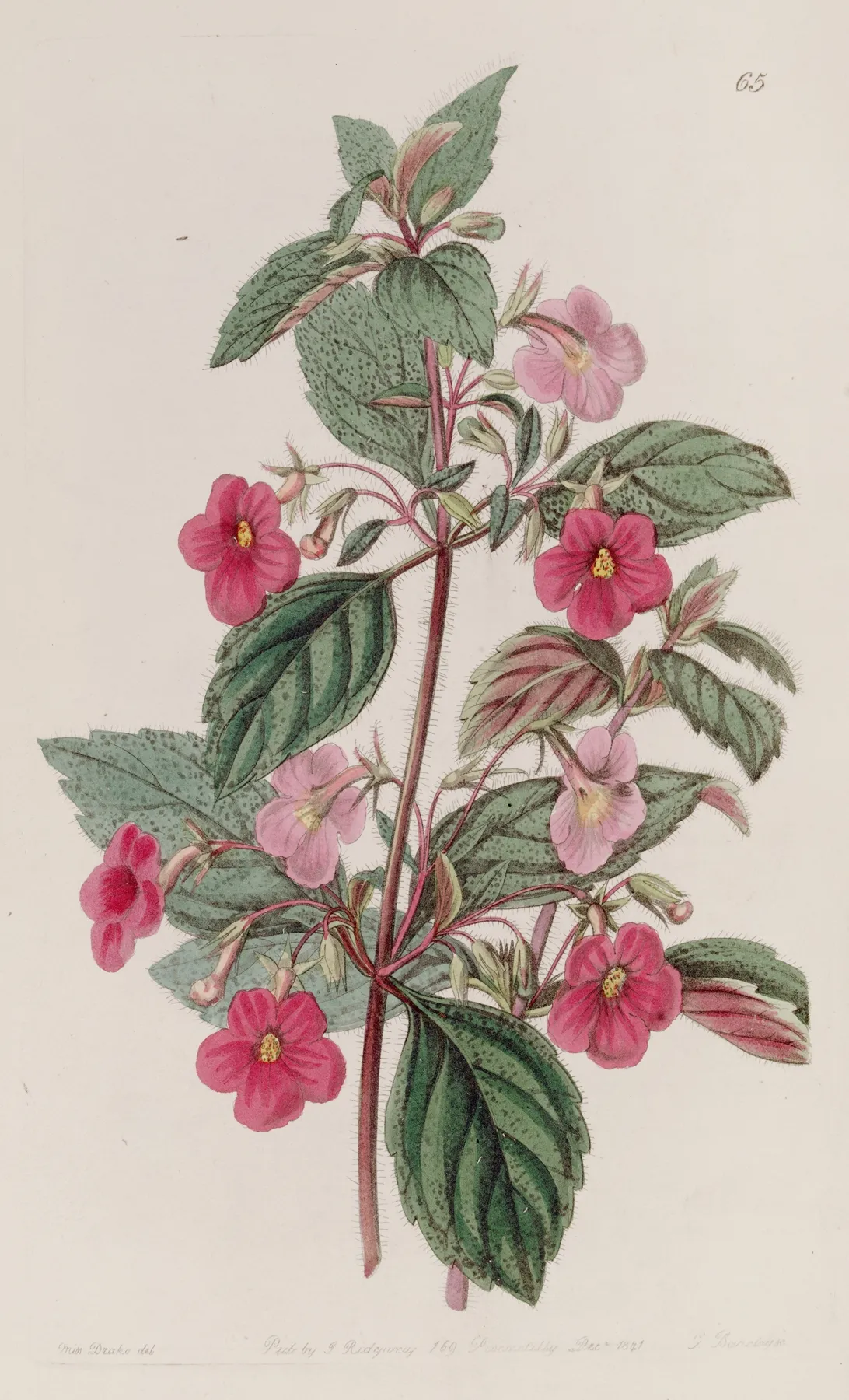
The Rose-coloured Achimenes
Drako del|The Rose-coloured Achimenes
The Rose-coloured Achimenes
About this plate
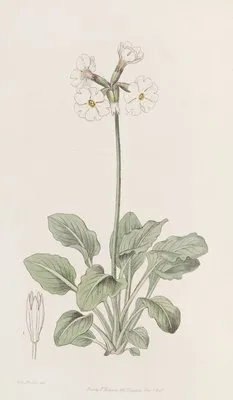
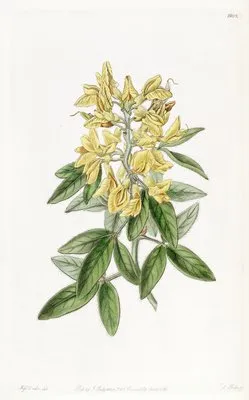
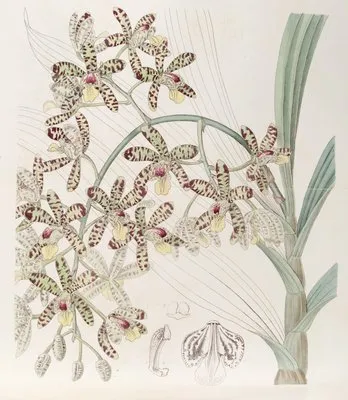
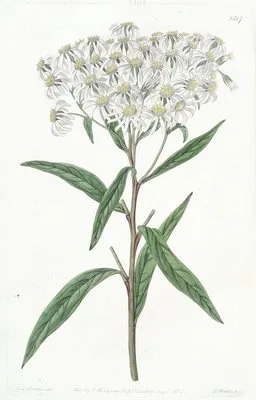
The Rose-coloured Achimenes is plate 1247, from Edwards' Botanical Register, drawn by Sydenham Edwards, John Lindley. This public-domain plate is reproduced at high resolution, free to view and download. Publication: London, James Ridgway, 1829-1847.
Twelve ways of seeing
One plate, read twelve times over: its name, its colour, the burin and the brush, the shape of the sheet, the season, the soil it came from, the book it belongs to, its language of flowers, the poem it answers to, the lore behind it, how to look, and what remains.
-
The Name
The plate is titled “The Rose-coloured Achimenes”, numbered Plate 1247. No reliable binomial survives on the plate, so it must be cited by its original title. Neither a Chinese name nor a reliable binomial survives: the plate can only be cited by its printed title, and left to speak for itself.
-
Form and Colour
Roses are shrubs or scramblers with pinnate leaves of three to seven serrated leaflets; the double flowers open in crumpled, inward-curling layers around a small knot of yellow stamens. No colour group is recorded for this plate, but the palette still belongs to its season. A single plant, laid out on the sheet with nothing hidden.
-
Line and Colour
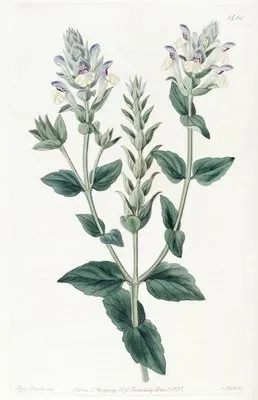
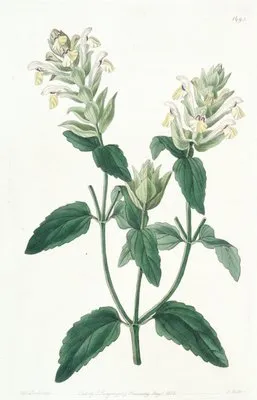
The first half of the nineteenth century moved from copper to steel to lithography. Stipple could render the softest transition — Redouté's roses depend on it — while lithography suited broad, gentle washes. Look closely at the line and the colour: an unbroken line means engraving, colour crossing the outline by half a millimetre means hand-colouring. Craft leaves franker evidence than inscriptions.
-
Composition
Tall and narrow, the plant rising in one movement with generous margins above and below — the upright format of most floras. (about 1.65 : 1). No details are appended: this is a plate for looking, not for keying out.
-
Season
Late spring into early summer, peaking in May — the first flush of the garden year. The year 1829 on the plate is the year of publication, not of flowering — the gathering came a year or two earlier.
-
Provenance
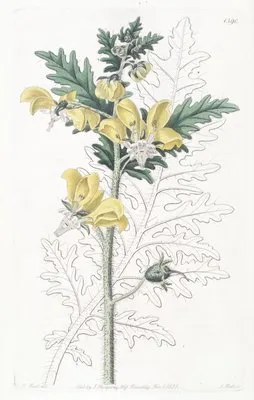
Widespread in the temperate north. Chinese gardeners knew roses since the Han; the ever-blooming modern rose is a nineteenth-century crossing of European and Chinese stock. In the same volume the kin are shelved together; set several plates side by side and the differences declare themselves.
-
The Book
“Edwards' Botanical Register” was drawn by Sydenham Edwards, John Lindley and published 1829-1847. This plate is Plate 1247. The image is in the public domain; the hand-colouring on the paper is still one person's hand, two centuries ago.
-
Symbolism
In Europe the rose means love and secrecy ('sub rosa'); in Chinese verse the rambling rose leans and clings — lingering attachment rather than ardour. Meanings change their tune: the same flower can say opposite things within a century.
-
Poetic Resonance
水晶帘动微风起,满架蔷薇一院香。
—— 唐·高骈《山亭夏日》
The crystal blind stirs as a breeze rises; a trellis of roses perfumes the whole courtyard.
The poem gives the mood first and the picture supplies the form; set the line beside the plate and the corolla becomes its resting point.
-
Classical Lore
Tradition places roses in the Han imperial park; Song and Ming manuals named the double forms 'Baoxiang' and 'Ten Sisters', and Qing compendia separated rose, rugosa and monthly rose. Chinese flower books ranked plants by character; European floras described them by form and name. This plate belongs to the second tradition, yet bears reading by the first. Printed in 1829, at the moment the two traditions began to see each other.
-
How to Look
Read the petals first — outer ones reflexed, inner ones still clasped. Then the thorns and serrations: their sharpness betrays the engraver's hand. If you look at one thing, look at how flower meets stem; that joint is the hardest to draw and the surest to identify.
-
Afterword
A flora exists to be consulted; look long enough and you forget to consult — someone in 1829 gave a whole day to a single flower.