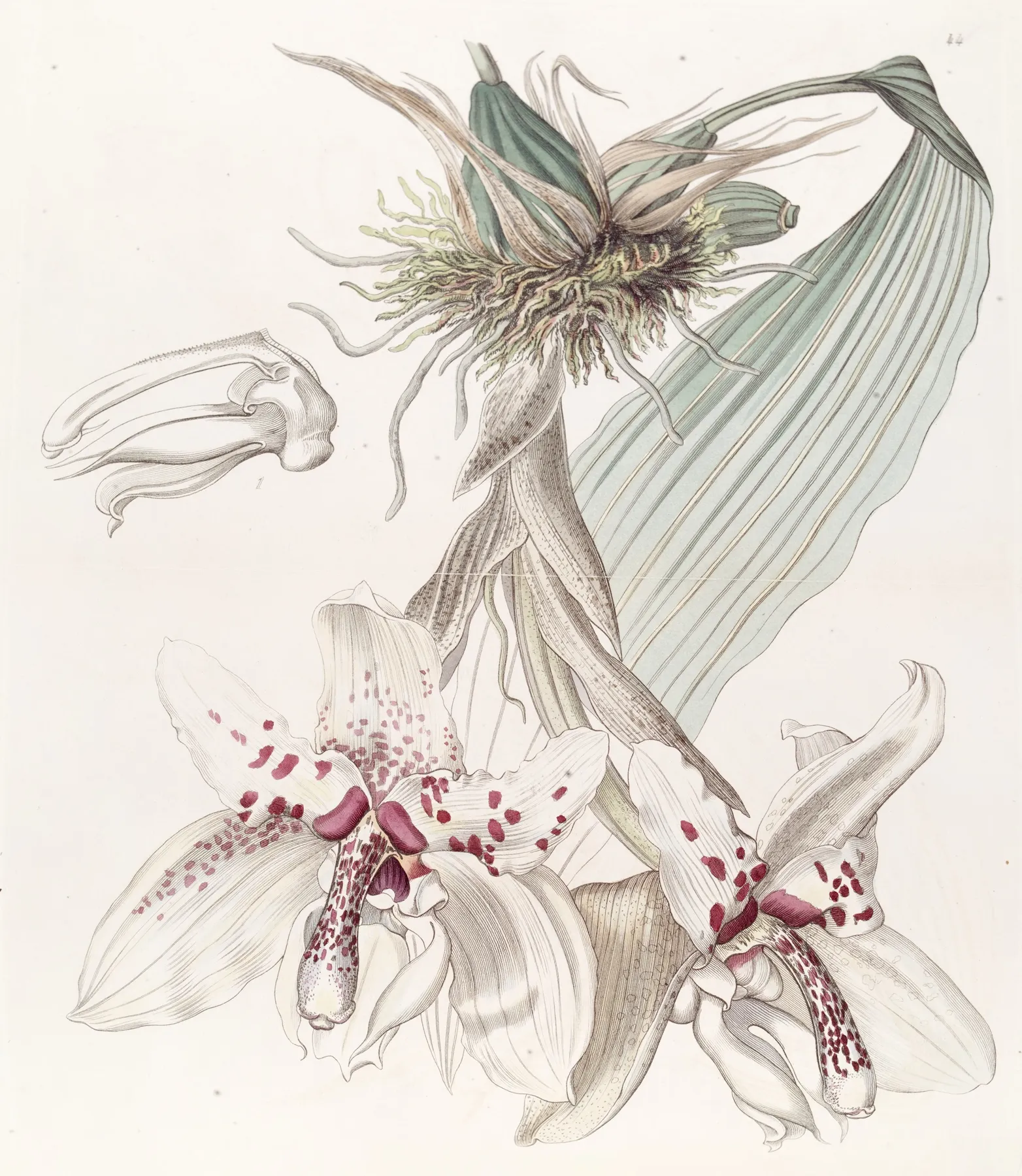
Two-coloured Von Martius’ Stanhopea
Two-coloured Von Martius’ Stanhopea
About this plate
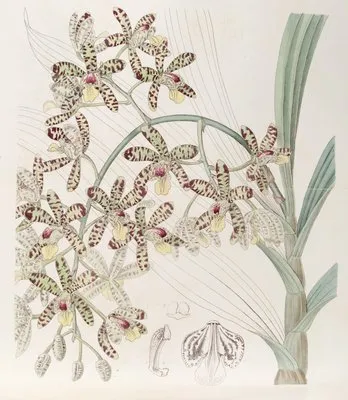
Two-coloured Von Martius’ Stanhopea is plate 1355, from Edwards' Botanical Register, drawn by Sydenham Edwards, John Lindley. This public-domain plate is reproduced at high resolution, free to view and download. Publication: London, James Ridgway, 1829-1847.
Ten ways of seeing
- measured cast red
- slightly upright 1.15 : 1
- published 1829
- Plate 1355
Not a catalogue entry but a way of looking: how to stand, what to notice, how the line was cut — then, halfway, a line of Chinese poetry: how the ancients saw this same flower. After it, the flower's language, its season and homeland, its book; and at the end one line of classical prose — and a pair of eyes to take away.
-
First Look
江馆清秋,晨起看竹,烟光日影露气,皆浮动于疏枝密叶之间。
—— 清·郑板桥《题画竹》
On an autumn morning at the river lodge I looked at the bamboo: mist, sunlight, dew, all drifting among the sparse and dense leaves.
Slightly taller than wide; the eye lands above centre. Then step in close: watch where colour meets line, and whether the line ever breaks. Third, find the darkest small patch: the whole tonal order is measured from there.
-
Name and Thing
Only the genus Stanhopea is given; species-level names came later. No established Chinese name exists, so it is cited by its binomial alone.
-
Form and Colour
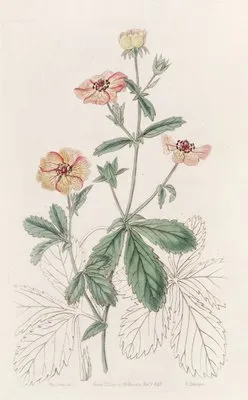
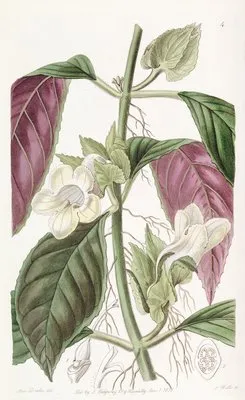
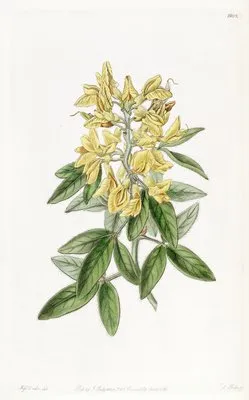
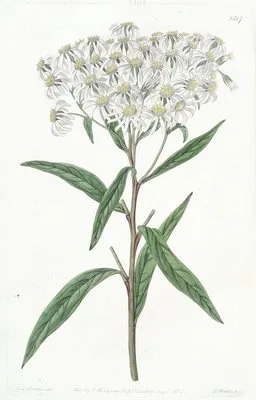
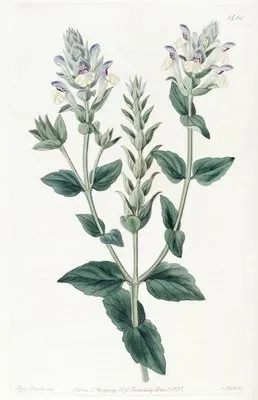
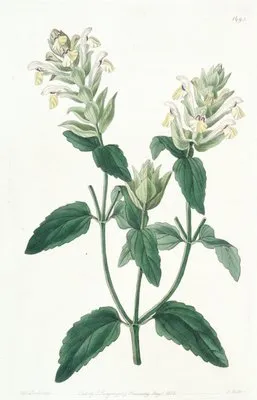
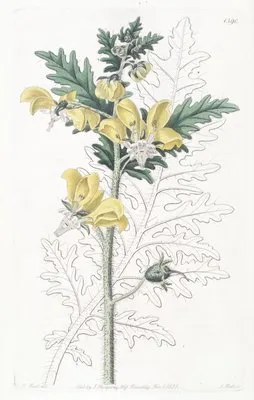
Measured on this plate: flower colour covers 3.1% of the sheet, foliage 0.0%, the cast red with a second note of amber. No other plate shares exactly this measure. Orchids carry pseudobulbs or fleshy roots; six tepals, one modified into a lip that serves as a landing stage, and a column uniting stamens and pistil — a structure unique to the family.No colour group is recorded. Three things fix the habit: leaf arrangement, tepal count, and how the flower is borne.
-
Composition
Slightly taller than wide, the plant set a little above centre. (about 1.15 : 1) No details are appended: a plate for looking, not for keying out. The plant covers only 26% of the sheet, centred a little right of centre; the emptiness is where the eye rests. Cover the margins with your thumb and the plate suffocates; uncover them and the flower breathes again.
-
Line and Colour
The first half of the nineteenth century moved from copper to steel to lithography; stipple could render the softest transition. Craft leaves franker evidence than inscriptions. If you mean to copy it: take its skeleton, its margins and the order of its colours; the burin's hatching is the language of copper — suggest it with pencil density, do not imitate it stroke for stroke.
-
Poetic Resonance
青丝系船向江木,兰芽出土吴江曲。
—— 唐·温庭筠《晚归曲》
The poem gives the mood first and the picture supplies the form; set the line beside the plate and the corolla becomes its resting point.
-
Symbolism
In China the orchid is the gentleman who blooms unseen; in Victorian Europe it was luxury and obsession, a single new species worth a fortune. In a flora it is a species first and a symbol second; the order is worth keeping.
-
Season and Place
Varies by genus: temperate terrestrials flower in spring and summer, tropical epiphytes almost year-round. Worldwide, richest on tropical mountains. Chinese cymbidiums come from the hills of the south. The year 1829 on the plate is that of publication, not of flowering — the gathering came a year or two earlier. The bud and the ripe fruit on one branch tell the season; the name in the title often tells the journey.
-
The Book and the Hand
“Edwards' Botanical Register” was drawn by Sydenham Edwards, John Lindley and published 1829-1847. This plate is Plate 1355. The image is public domain; the hand-colouring is still one person's hand.
-
The Written Tradition
气之动物,物之感人,故摇荡性情,形诸舞咏。
—— 南朝梁·钟嵘《诗品序》
The vital breath moves things, things move men, and the stirred heart takes shape in song.
Confucius, finding an orchid flowering alone in a valley, is said to have composed the 'Lament for the Orchid'; in the Li Sao, orchids are worn as a girdle of virtue. The difference is not of quality but of question: Europe asks what it is, China asks whom it resembles.
What to Take Away
Carry three rules away: whole before detail; line before colour; picture before book. The flower of that year is dust, yet its image on paper has outlived every living cousin.