Yellow Perennial Lupine
Yellow Perennial Lupine
Yellow Perennial Lupine
About this plate
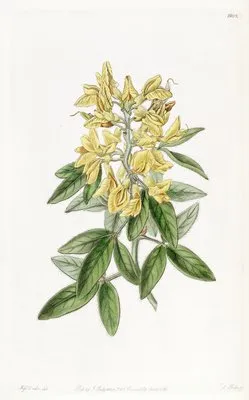
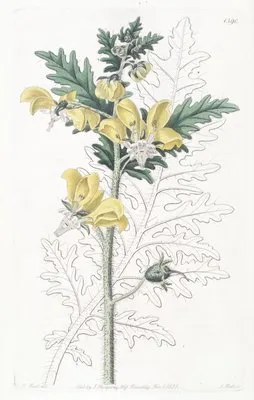
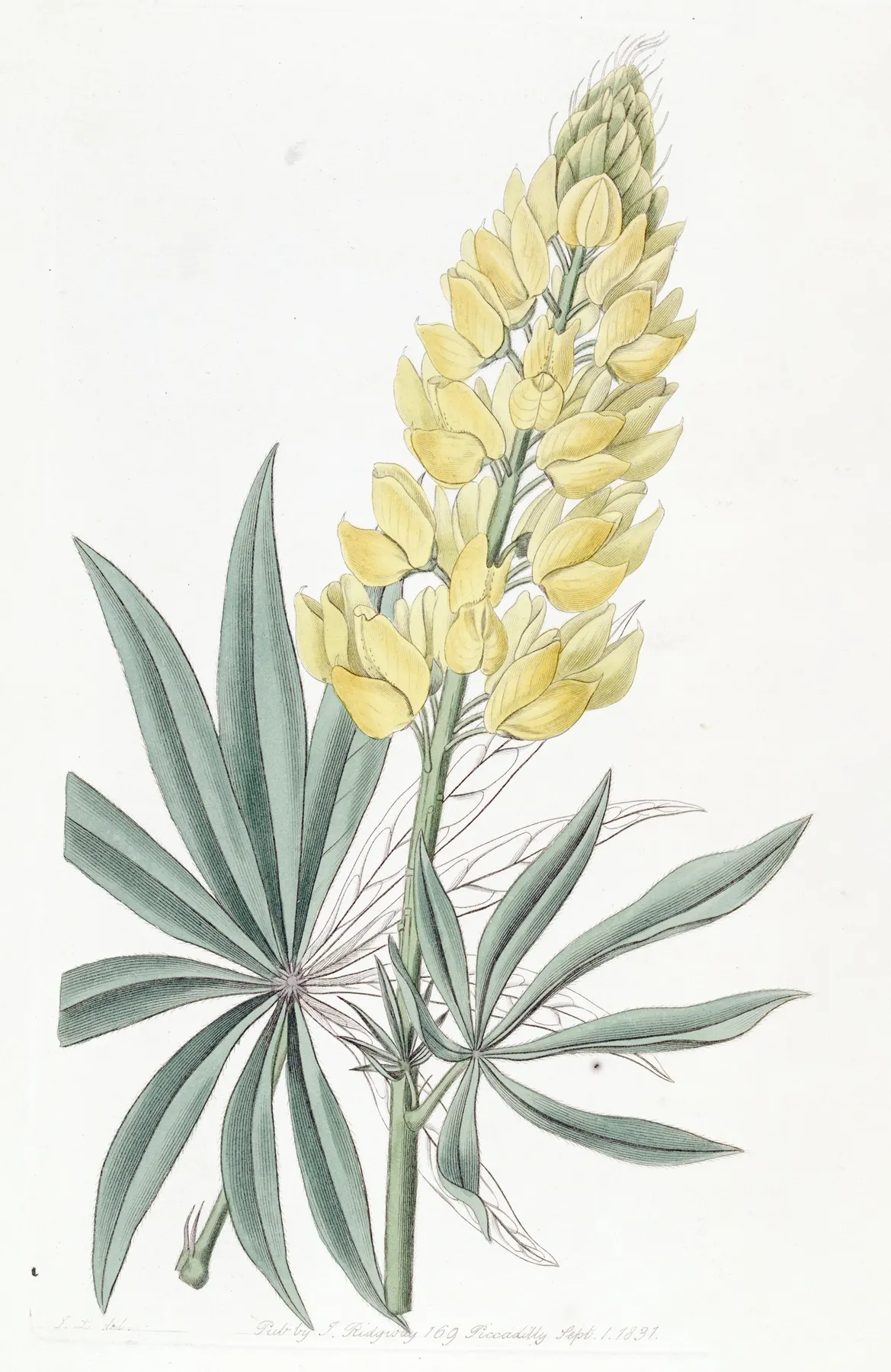
Yellow Perennial Lupine is plate 1465, from Edwards' Botanical Register, drawn by Sydenham Edwards, John Lindley. This public-domain plate is reproduced at high resolution, free to view and download. Publication: London, James Ridgway, 1829-1847.
Twelve ways of seeing
- measured cast yellow-green
- upright 1.54 : 1
- published 1829
- Plate 1465
Not a catalogue entry but a way of looking: how to stand, what to notice, how the line was cut, when it flowers, where it came from, who made it — and then the poems and the classics that taught China to see the same flower. Read the twelve in order and the plate opens.
-
First Look
夫象物必在于形似,形似须全其骨气。
—— 唐·张彦远《历代名画记》
Likeness is the threshold; bone-and-breath is the point.
The sheet is vertical: the eye climbs and settles in the upper half. Let the plant stand before you look for detail. Then step in close: watch where colour meets line, and whether the line ever breaks. Third, find the darkest small patch: the whole tonal order is measured from there. The pose leans right: the upper half carries 14 points further right than the lower — a living thing, not a diagram.
-
Name and Thing
No reliable binomial survives, so the printed title must serve. Neither name nor binomial survives: the printed title must do.
-
Form and Colour
Measured on this plate: flower colour covers 7.6% of the sheet, foliage 0.5%, the cast yellow-green. No other plate shares exactly this measure. Wildflowers are rarely tidy: small blooms, slender stems, leaves imperfect and often chewed. That untidiness is exactly what records wind, light and soil.No colour group is recorded. Three things fix the habit: leaf arrangement, tepal count, and how the flower is borne.
-
Composition
Tall and narrow, the plant rising in one movement with generous margins — the upright format of most floras. (about 1.54 : 1) No details are appended: a plate for looking, not for keying out. The plant takes about 28% of the sheet, centred below centre — the easy measure most florists kept to. Blank paper is not unfinished work: it is where the eye rests.
-
Line and Colour
The first half of the nineteenth century moved from copper to steel to lithography; stipple could render the softest transition. There is evidence on the back too: the plate mark pressed into the paper, the slight relief of the pigment, lines worn shallow in a later printing.
-
Season
By latitude and altitude; in the northeastern United States, April to August — each species for two or three weeks, so a wildflower book is arranged by month. The year 1829 on the plate is that of publication, not of flowering — the gathering came a year or two earlier. The plate records ten days of peak; the other three hundred are leaf, fruit and rest.
-
Provenance
Native plants of woodland floor, bog, roadside and rock crevice; they resent transplanting and will not mass in a border — the difference between a wildflower and a garden flower. The volume was made in 1829-1847, when most of this knowledge came from living plants under glass.
-
The Book and the Hand
“Edwards' Botanical Register” was drawn by Sydenham Edwards, John Lindley and published 1829-1847. This plate is Plate 1465. The image is public domain; the hand-colouring is still one person's hand.
-
Poetic Resonance
白日不到处,青春恰自来。苔花如米小,也学牡丹开。
—— 清·袁枚《苔》
Where sunlight never reaches, spring arrives all the same; moss flowers, tiny as grains of rice, still learn to bloom like peonies.
The poem gives the mood first and the picture supplies the form; set the line beside the plate and the corolla becomes its resting point.
-
The Written Tradition
山川之美,古来共谈。高峰入云,清流见底。
—— 南朝梁·陶弘景《答谢中书书》
The beauty of mountains and streams has been spoken of since olden times: peaks entering the clouds, clear water to the bottom.
The Book of Songs names more than 140 plants, most of them wild; Confucius said the Songs teach the names of birds, beasts and plants — natural history begins in the field. You need not parse every word: take the line, and the flower acquires a second face.
-
Symbolism
In Chinese verse wildflowers bloom unseen, owing nothing to praise; in the West they mark a place — one species, one landscape's character. Meanings change their tune: the same flower can say opposite things within a century.
-
What to Take Away
Carry three rules away: whole before detail; line before colour; picture before book. The flower of that year is dust, yet its image on paper has outlived every living cousin.