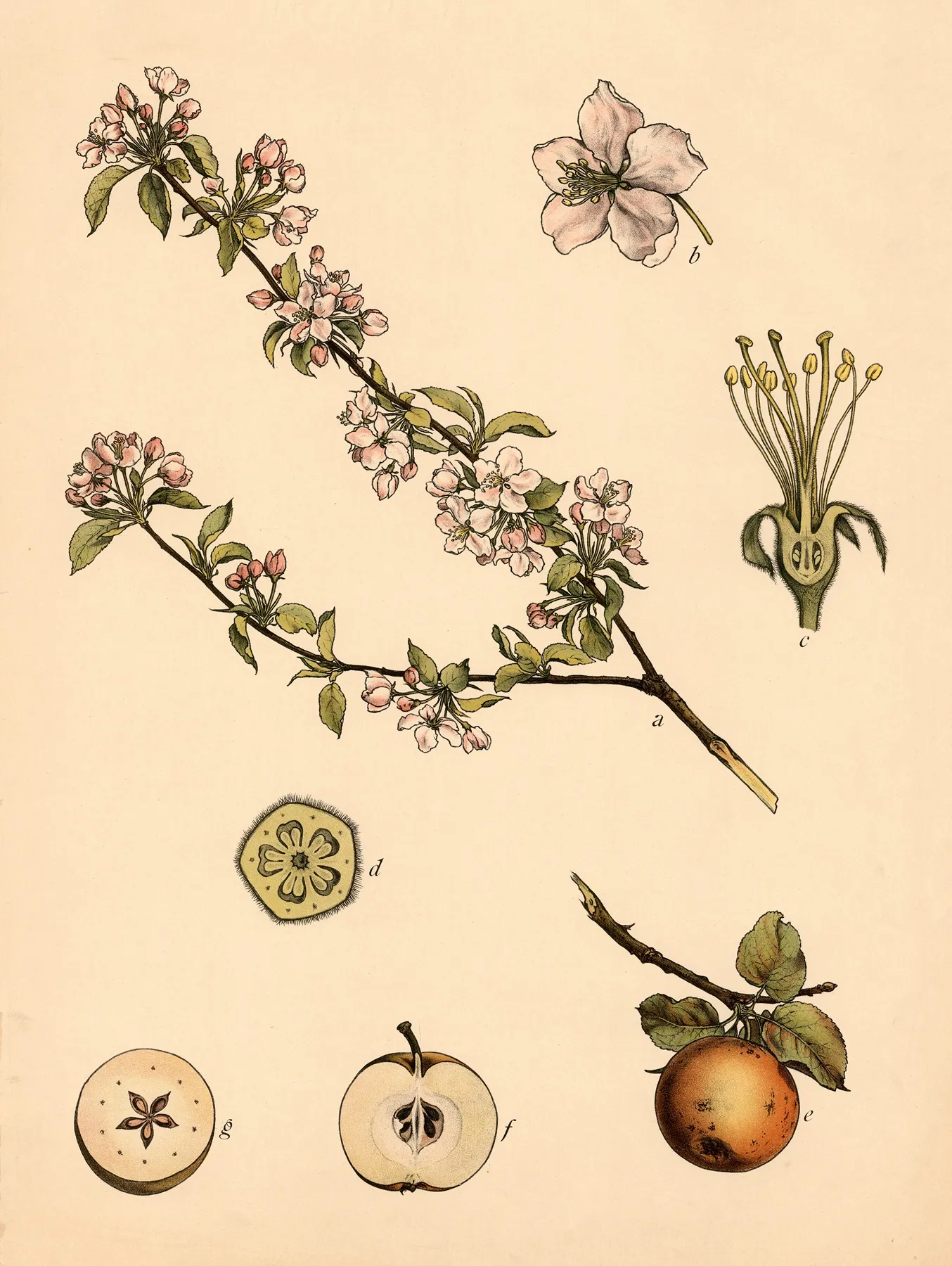
Apple (1911)
Ten ways of seeing
- upright 1.33 : 1
First Look
竖划三寸,当千仞之高;横墨数尺,体百里之迥。
—— 南朝宋·宗炳《画山水序》
A vertical stroke of three inches stands for a cliff of a thousand fathoms; a few feet of ink holds a hundred li.
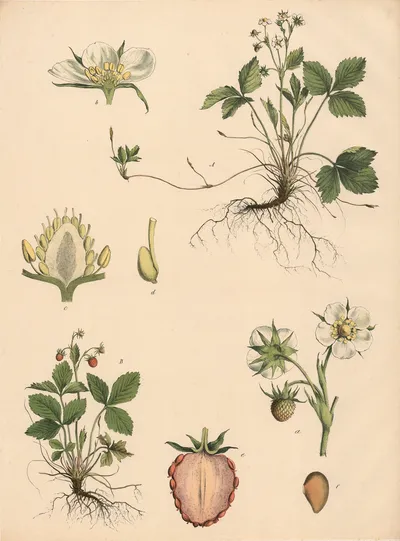
The sheet is vertical: the eye climbs and settles in the upper half. Let the plant stand before you look for detail. Then step in close: watch where colour meets line, and whether the line ever breaks. Third, find the darkest small patch: the whole tonal order is measured from there.
Name and Thing
No reliable binomial survives, so the printed title must serve. Neither name nor binomial survives: the printed title must do.
Form and Colour
Flowering trees and shrubs put out branches first; blossoms open before or with the leaves, usually five thin, translucent petals around a cluster of fine stamens.No colour group is recorded. Read the outline, then the colour layers, then the brush.
Composition
Tall and narrow, the plant rising in one movement with generous margins — the upright format of most floras. No details are appended: a plate for looking, not for keying out. Old plates set the plant slightly off centre, with unequal margins — that small imbalance is what keeps it alive.
Line and Colour
After 1900 photography and colour reproduction ran alongside watercolour: accuracy rose, the cut of the burin disappeared. Take a loupe to three places: petal edge, leaf vein, caption. An unbroken line means engraving; colour crossing the outline means a hand. If you mean to copy it: this is a photomechanical record — match the colours directly, do not imitate the printing grain.
Poetic Resonance
疏影横斜水清浅,暗香浮动月黄昏。
—— 宋·林逋《山园小梅》
Sparse shadows slant across the shallow water; hidden fragrance drifts in the dusk of the moon.
The poem gives the mood first and the picture supplies the form; set the line beside the plate and the corolla becomes its resting point.
Symbolism
Plum is solitude, peach is marriage, apricot is spring itself, crabapple is a fragile fate; the hibiscus, opening at dawn and falling at dusk, is impermanence. Flower language was added later; the flower knows nothing of it, and that innocence is part of its power.
Season and Place
Mid spring: plum first, then peach and apricot, cherry last — the season keeps its order. cherry and crabapple went east to Japan and west to Europe. The year 1911 on the plate is that of publication, not of flowering — the gathering came a year or two earlier. See this kind of plate in the flowering season if you can: once you have met the living flower, you stop reading only colour.
The Book and the Hand
“Engleder's Natural History Atlas” carries only Franz Engleder's name. A plate is collective work: drawer, engraver and colourist were different hands, and the unnamed ones decided how good it looks.
What to Take Away
Next time you stand before a flowering plant, give it three minutes: leaf arrangement, direction of the flower, the darkest patch. The flower of that year is dust, yet its image on paper has outlived every living cousin.