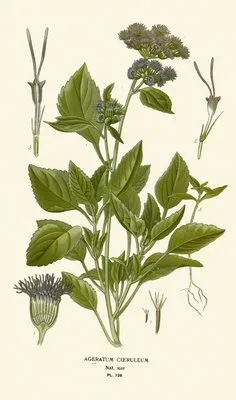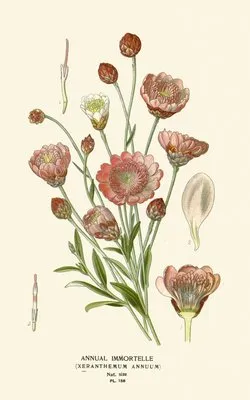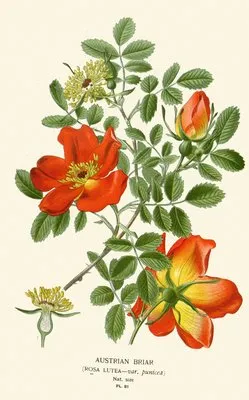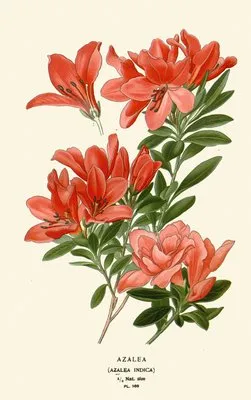
Harlequin Monkey Flower
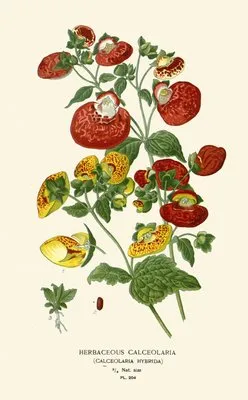
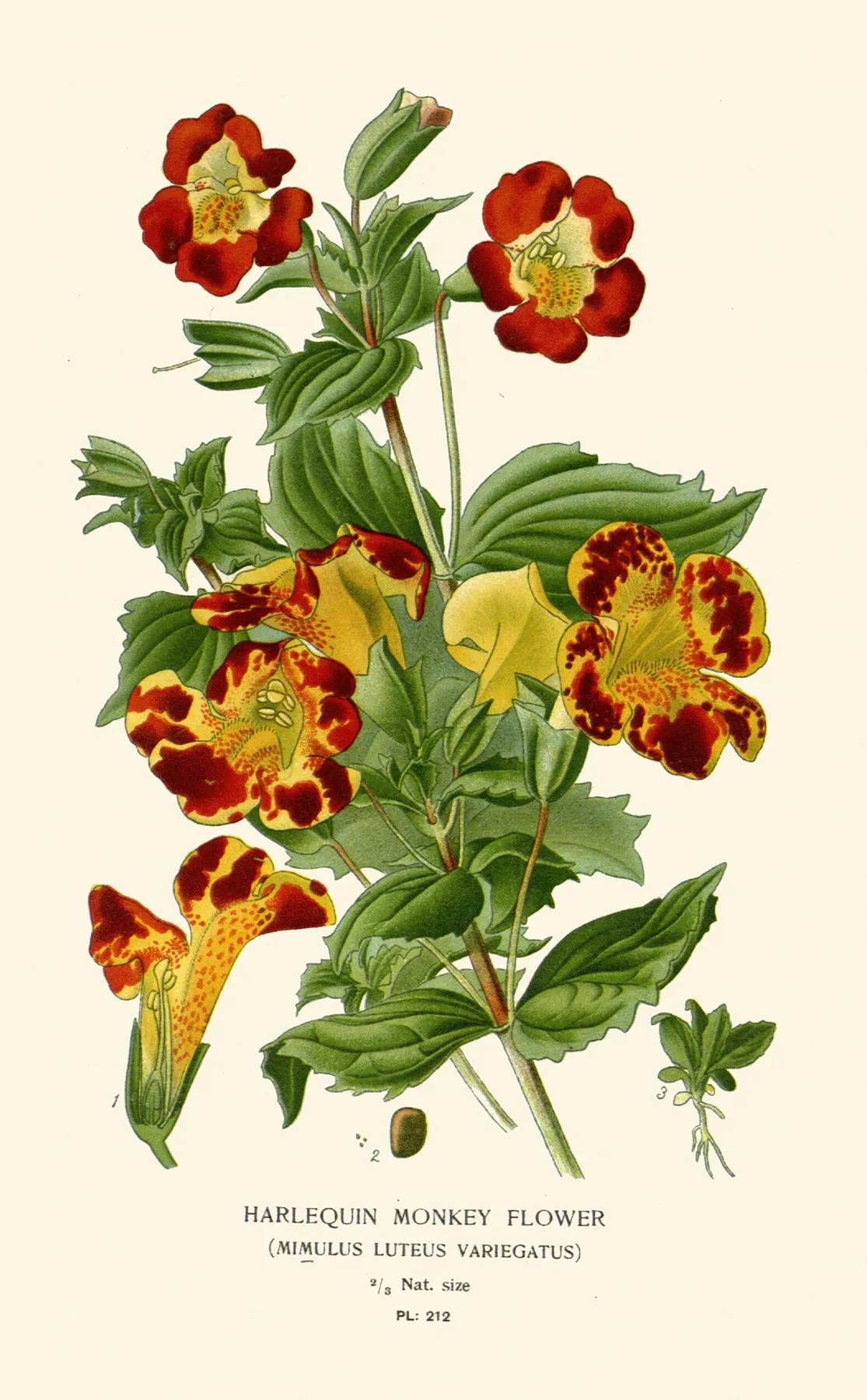
HARLEQUIN MONKEY FLOWER (s∩YrAA SNNT SnwIW) 2/₃ Nat. size
Harlequin Monkey Flower
Ten ways of seeing
- measured cast red
- upright 1.61 : 1
First Look
真山水之川谷,远望之以取其势,近看之以取其质。
—— 宋·郭熙《林泉高致·山水训》
Mountains and valleys: from afar take their momentum, up close take their texture — the two distances from which any picture is read.
The sheet is vertical: the eye climbs and settles in the upper half. Let the plant stand before you look for detail. Then step in close: watch where colour meets line, and whether the line ever breaks. Third, find where the green is deepest: the whole tonal order is measured from that patch.
Name and Thing
No reliable binomial survives, so the printed title must serve. Neither name nor binomial survives: the printed title must do.
Form and Colour
Measured on this plate: flower colour covers 16.7% of the sheet, foliage 18.8%, the cast red with a second note of yellow-green. No other plate shares exactly this measure. Garden annuals and low perennials: many small, brilliantly coloured flowers to a stem, with leaves palmately lobed, pinnate or entire — the mainstay of the Victorian bedding scheme. a moss green. Read the outline, then the colour layers, then the brush.
Composition
The sheet is tall. No details are appended: a plate for looking, not for keying out. The plant takes about 36% of the sheet, centred near the centre — the easy measure most florists kept to.
Line and Colour
In the later nineteenth century chromolithography took over: colour printed rather than painted, line demoted. Take a loupe to three places: petal edge, leaf vein, caption. An unbroken line means engraving; colour crossing the outline means a hand. If you mean to copy it: block in the broad shapes and colours first, detail last; lithographic softness comes from thin washes — two or three pale layers will get you close.
Poetic Resonance
不嫌野外无供给,乘兴还来看药栏。
—— 唐·杜甫《有客》
The poem gives the mood first and the picture supplies the form; set the line beside the plate and the green the corolla becomes its resting point.
Symbolism
Bedding plants carry no imperial weight; they mean the everyday — window sill, border, festival, gift. Victorian floriography grew up among exactly these flowers. Meanings change their tune: the same flower can say opposite things within a century.
Season and Place
under glass they could be had from March. Gathered from everywhere by plant hunters and the glasshouse trade: pelargoniums from South Africa, campanulas from European mountains, lobelias from North America, fuchsias from Chile. The year 1896 on the plate is that of publication, not of flowering — the gathering came a year or two earlier. The bud and the ripe fruit on one branch tell the season; the name in the title often tells the journey.
The Book and the Hand
“Favourite flowers of garden and greenhouse” carries only Edward Step's name. From drawing to plate the sheet passed through several hands — the engraver aimed at accuracy, the colourist at speed, and between them lies each plate's unevenness.
What to Take Away
Appreciation is not knowledge but habit — one more look each time. The flower of that year is dust, yet its image on paper has outlived every living cousin.
About this plate
Harlequin Monkey Flower is plate 66, from Favourite flowers of garden and greenhouse, drawn by Edward Step. This public-domain plate is reproduced at high resolution, free to view and download. Publication: New York, Frederick Warne & Co, 1896-1897.