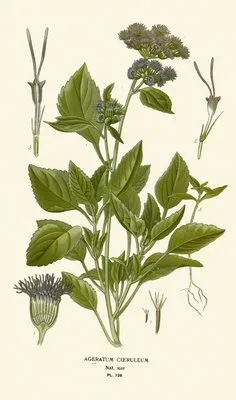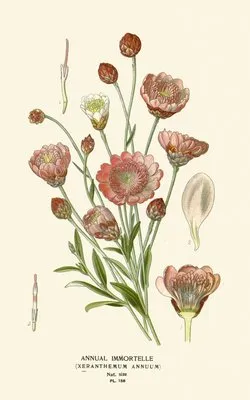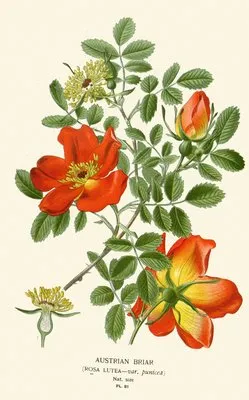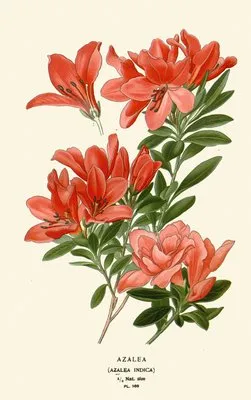
Hibiscus Roseus
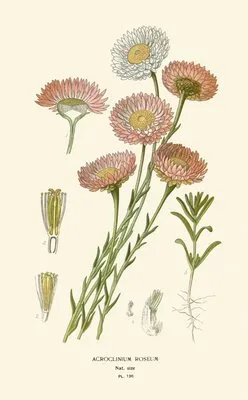
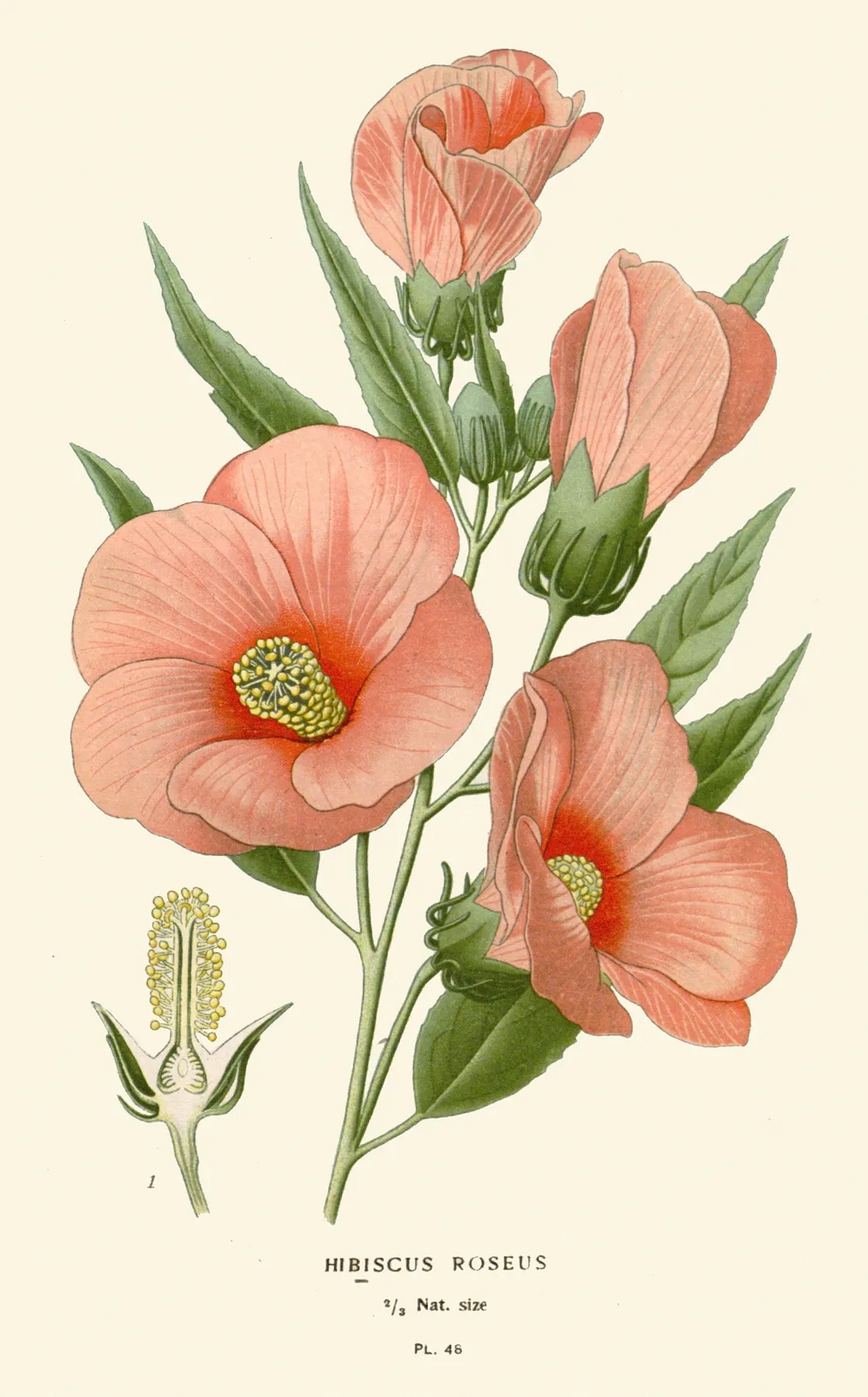
HIBISCUS ROSEUS 2/₃ Nat. size
Hibiscus Roseus
Ten ways of seeing
- measured cast amber
- upright 1.61 : 1
First Look
论画以形似,见与儿童邻。
—— 宋·苏轼《书鄢陵王主簿所画折枝》
To judge painting by likeness alone is the view of a child.
The sheet is vertical: the eye climbs and settles in the upper half. Let the plant stand before you look for detail. Then step in close: watch where colour meets line, and whether the line ever breaks. Third, find where the orange is deepest: the whole tonal order is measured from that patch.
Name and Thing
The binomial is Hibiscus roseus: the first word is the genus it belongs among, the second the epithet that sets it apart. The genus name Hibiscus: Hibiscus was the Greek name for a mallow. No established Chinese name exists, so it is cited by its binomial alone.
Form and Colour
Measured on this plate: flower colour covers 26.6% of the sheet, foliage 9.3%, the cast amber. No other plate shares exactly this measure. Flowering trees and shrubs put out branches first; blossoms open before or with the leaves, usually five thin, translucent petals around a cluster of fine stamens. Filed under orange — an amber orange, built in washes from a pale ground. Read the outline, then the colour layers, then the brush.
Composition
The sheet is tall. No details are appended: a plate for looking, not for keying out. The plant takes about 38% of the sheet, centred near the centre — the easy measure most florists kept to.
Line and Colour
In the later nineteenth century chromolithography took over: colour printed rather than painted, line demoted. Take a loupe to three places: petal edge, leaf vein, caption. An unbroken line means engraving; colour crossing the outline means a hand. If you mean to copy it: block in the broad shapes and colours first, detail last; lithographic softness comes from thin washes — two or three pale layers will get you close.
Poetic Resonance
矜红掩素似多才,不待樱桃不逐梅。
—— 唐·杜牧《见穆三十宅中庭海榴花谢》
The poem gives the mood first and the picture supplies the form; set the line beside the plate and the orange the corolla becomes its resting point.
Symbolism
Plum is solitude, peach is marriage, apricot is spring itself, crabapple is a fragile fate; the hibiscus, opening at dawn and falling at dusk, is impermanence. This plate leans orange, which in flower language adds one more degree of feeling. Flower language was added later; the flower knows nothing of it, and that innocence is part of its power.
Season and Place
Mid spring: plum first, then peach and apricot, cherry last — the season keeps its order. East Asia and temperate Eurasia. Plum, peach and apricot are Chinese in origin, grown for three thousand years. The year 1896 on the plate is that of publication, not of flowering — the gathering came a year or two earlier. Read the locality and the flowering season both with a discount: one is hearsay, the other a ten-day peak.
The Book and the Hand
“Favourite flowers of garden and greenhouse” carries only Edward Step's name. A plate is collective work: drawer, engraver and colourist were different hands, and the unnamed ones decided how good it looks.
What to Take Away
Appreciation is not knowledge but habit — one more look each time. A flora exists to be consulted; look long enough and you forget to consult — someone in 1896 gave a whole day to a single flower.
About this plate
Hibiscus Roseus is plate 68, from Favourite flowers of garden and greenhouse, drawn by Edward Step. This public-domain plate is reproduced at high resolution, free to view and download. Publication: New York, Frederick Warne & Co, 1896-1897.