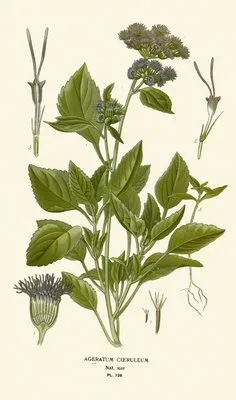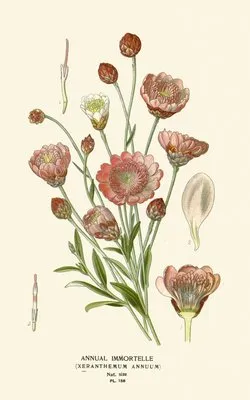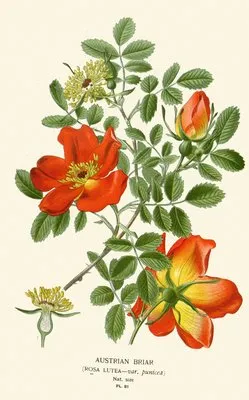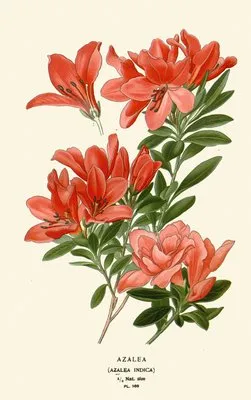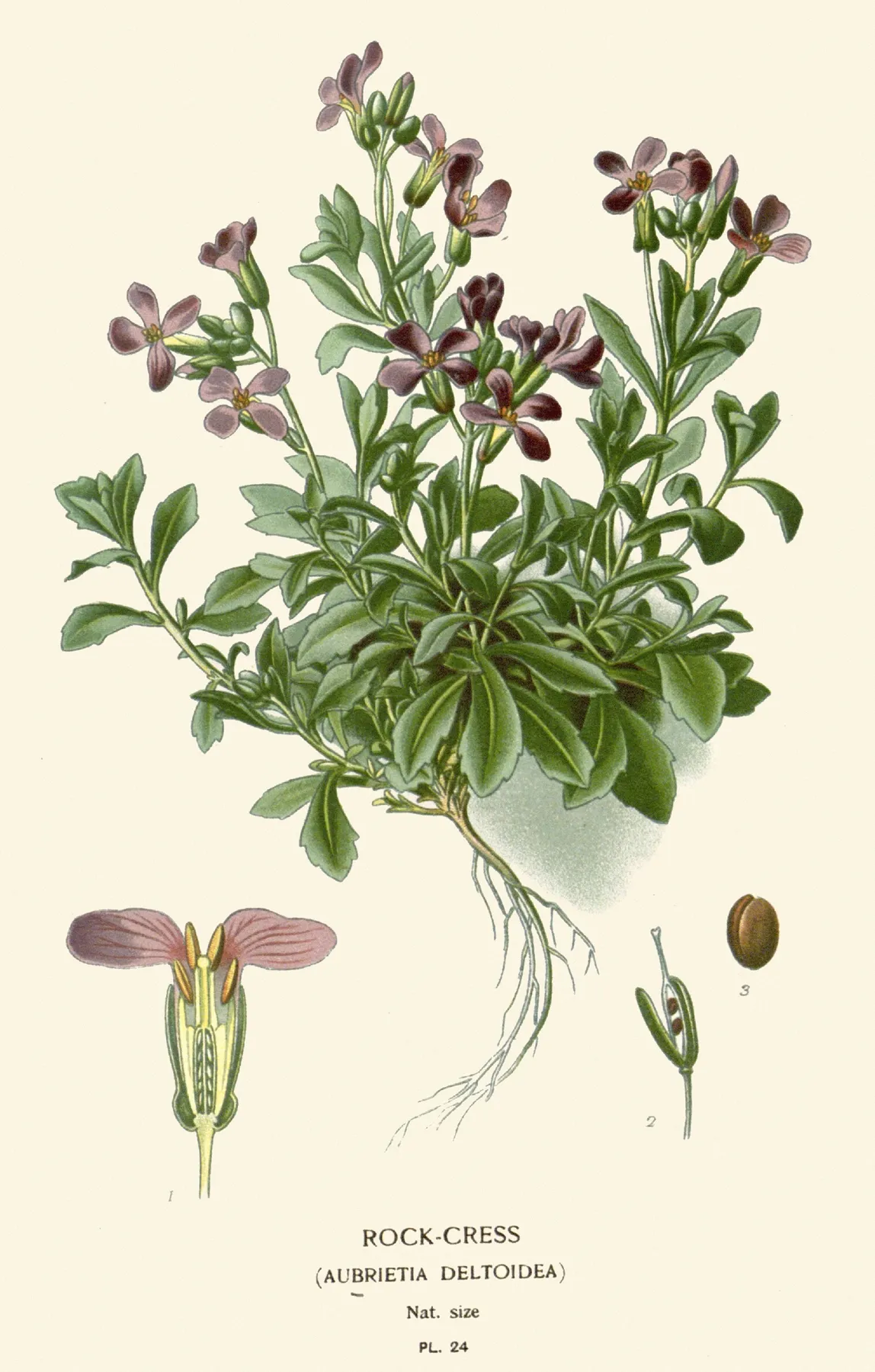
Rock-Cress
Rock-Cress
Rock-Cress
Ten ways of seeing
- upright 1.57 : 1
First Look
竖划三寸,当千仞之高;横墨数尺,体百里之迥。
—— 南朝宋·宗炳《画山水序》
A vertical stroke of three inches stands for a cliff of a thousand fathoms; a few feet of ink holds a hundred li.
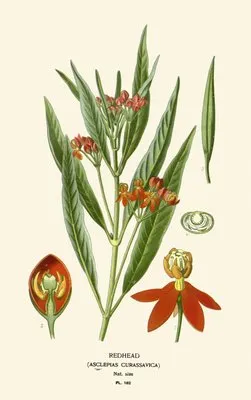
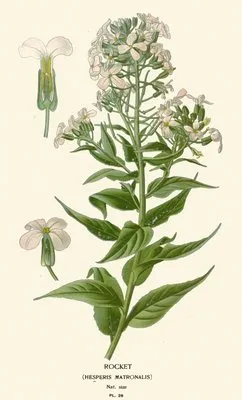
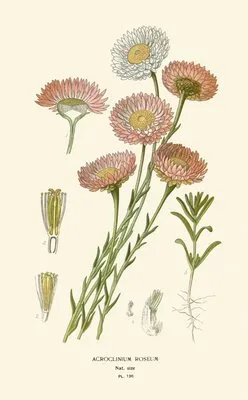
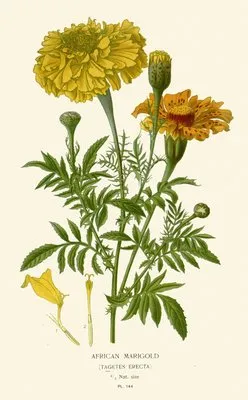
The sheet is vertical: the eye climbs and settles in the upper half. Let the plant stand before you look for detail. Then step in close: watch where colour meets line, and whether the line ever breaks. Third, find the darkest small patch: the whole tonal order is measured from there.
Name and Thing
No reliable binomial survives, so the printed title must serve. Neither name nor binomial survives: the printed title must do.
Form and Colour
Garden annuals and low perennials: many small, brilliantly coloured flowers to a stem, with leaves palmately lobed, pinnate or entire — the mainstay of the Victorian bedding scheme.No colour group is recorded. Three things fix the habit: leaf arrangement, tepal count, and how the flower is borne.
Composition
Tall and narrow, the plant rising in one movement with generous margins — the upright format of most floras. No details are appended: a plate for looking, not for keying out. Blank paper is not unfinished work: it is where the eye rests.
Line and Colour
In the later nineteenth century chromolithography took over: colour printed rather than painted, line demoted. Craft leaves franker evidence than inscriptions. If you mean to copy it: block in the broad shapes and colours first, detail last; lithographic softness comes from thin washes — two or three pale layers will get you close.
Poetic Resonance
余既滋兰之九畹兮,又树蕙之百亩。
—— 战国·屈原《离骚》
I have planted nine acres of orchids and set out a hundred acres of sweet flag.
The poem gives the mood first and the picture supplies the form; set the line beside the plate and the corolla becomes its resting point.
Symbolism
Bedding plants carry no imperial weight; they mean the everyday — window sill, border, festival, gift. Victorian floriography grew up among exactly these flowers. Meanings change their tune: the same flower can say opposite things within a century.
Season and Place
Late spring to early autumn, June through September. Gathered from everywhere by plant hunters and the glasshouse trade: pelargoniums from South Africa, campanulas from European mountains, lobelias from North America, fuchsias from Chile. The year 1896 on the plate is that of publication, not of flowering — the gathering came a year or two earlier. Read the locality and the flowering season both with a discount: one is hearsay, the other a ten-day peak.
The Book and the Hand
“Favourite flowers of garden and greenhouse” carries only Edward Step's name. A plate is collective work: drawer, engraver and colourist were different hands, and the unnamed ones decided how good it looks.
What to Take Away
Carry three rules away: whole before detail; line before colour; picture before book. Two centuries on, the plant may still flower in some garden; the one on this sheet stopped in the season of 1896.
About this plate
Rock-Cress is plate 116, from Favourite flowers of garden and greenhouse, drawn by Edward Step. This public-domain plate is reproduced at high resolution, free to view and download. Publication: New York, Frederick Warne & Co, 1896-1897.