Chrysanthemum Sinense (1829)
Chrysanthemum Sinense (1829)
Chrysanthemum Sinense (1829)
Ten ways of seeing
- measured cast yellow-green
- upright 1.78 : 1
First Look
夫象物必在于形似,形似须全其骨气。
—— 唐·张彦远《历代名画记》
Likeness is the threshold; bone-and-breath is the point.
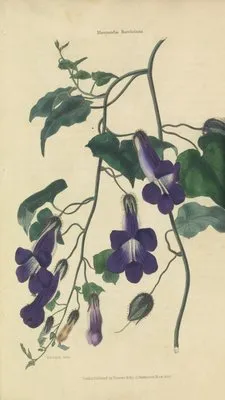
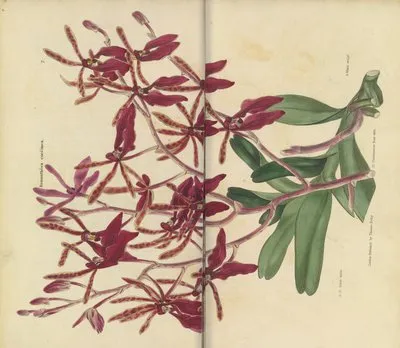
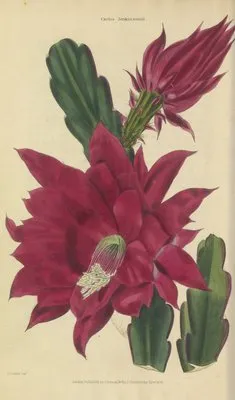
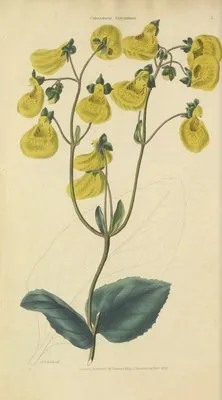
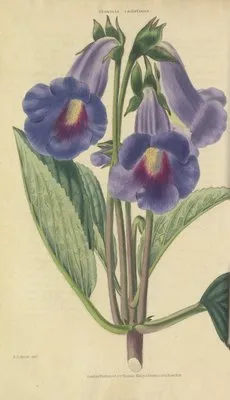
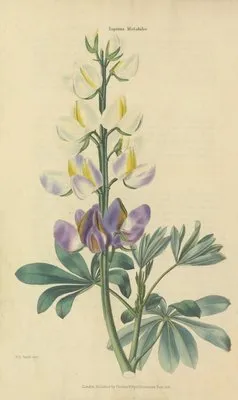
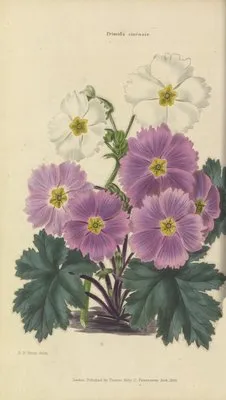
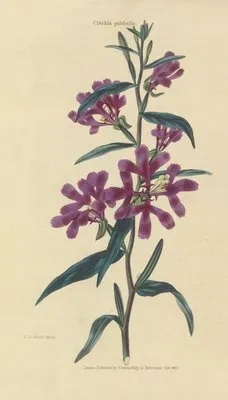
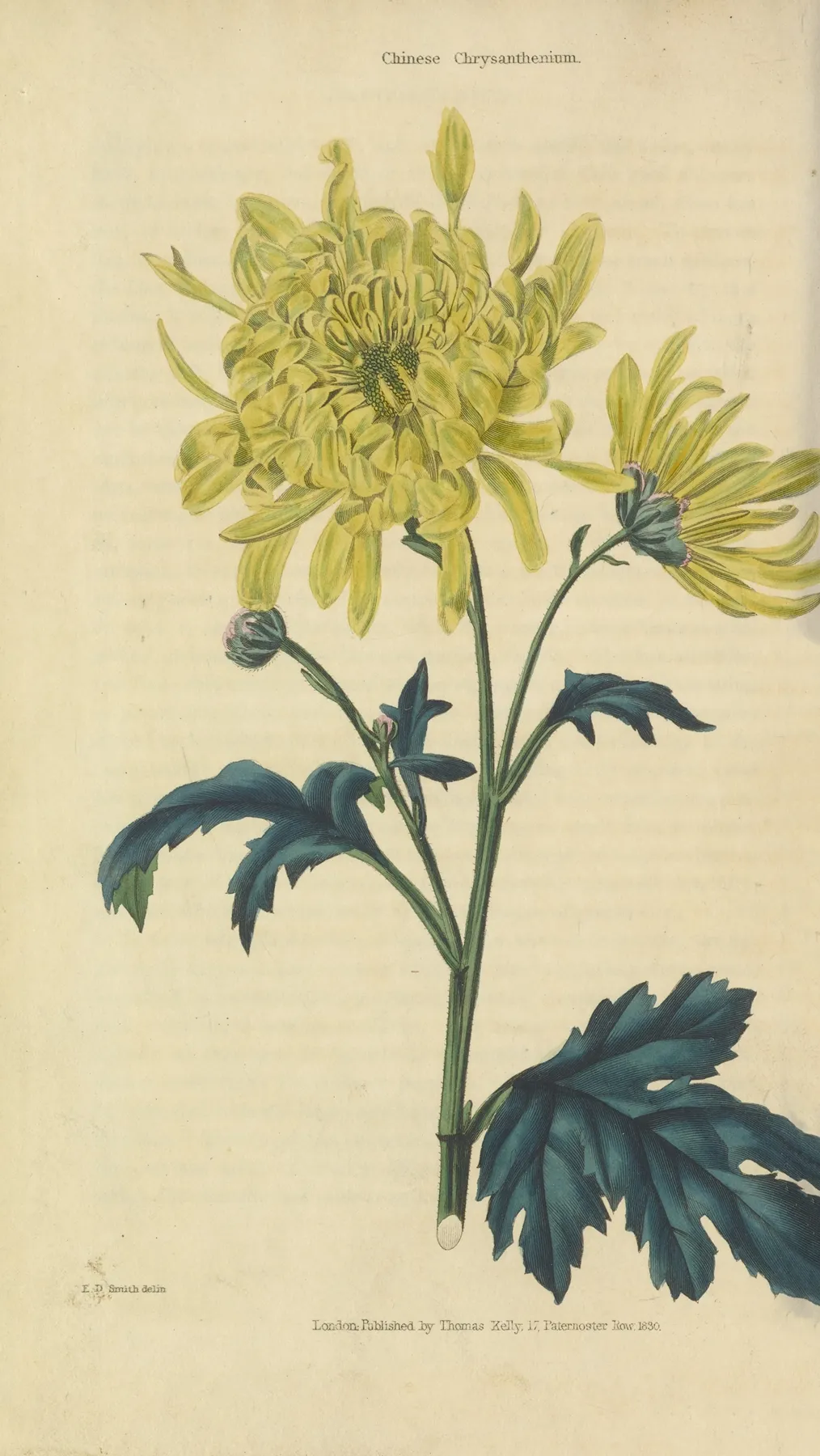
The sheet is vertical: the eye climbs and settles in the upper half. Let the plant stand before you look for detail. Then step in close: watch where colour meets line, and whether the line ever breaks. Third, find where the yellow is deepest: the whole tonal order is measured from that patch. The pose leans left: the upper half carries 9 points further left than the lower — a living thing, not a diagram.
Name and Thing
The binomial is Chrysanthemum sinense: the first word is the genus it belongs among, the second the epithet that sets it apart. The genus name Chrysanthemum: Chrysanthemum means 'golden flower' in Greek. No established Chinese name exists, so it is cited by its binomial alone.
Form and Colour
Measured on this plate: flower colour covers 13.1% of the sheet, foliage 5.1%, the cast yellow-green. No other plate shares exactly this measure. Chrysanthemums are herbaceous with deeply lobed, downy leaves. Each 'flower' is a head — ray florets around the rim, disc florets in the centre, hundreds of small flowers in one. Filed under yellow — a honey-yellow, built in washes from a pale ground. Read the outline, then the colour layers, then the brush.
Composition
The sheet is tall. No details are appended: a plate for looking, not for keying out. The plant covers only 24% of the sheet, centred a little right of centre; the emptiness is where the eye rests.
Line and Colour
The first half of the nineteenth century moved from copper to steel to lithography; stipple could render the softest transition. Decide first whether it was printed or painted; only then discuss whether it is beautiful. If you mean to copy it: take its skeleton, its margins and the order of its colours; the burin's hatching is the language of copper — suggest it with pencil density, do not imitate it stroke for stroke.
Poetic Resonance
平原池阁在谁家,双塔丛台野菊花。
—— 唐·王建《九日登丛台》
The poem gives the mood first and the picture supplies the form; set the line beside the plate and the yellow the corolla becomes its resting point.
Symbolism
In China, seclusion and long life — and, after Tao Yuanming, the will to go home; in Japan, imperial authority. This plate leans yellow, which in flower language adds one more degree of feeling. In a flora it is a species first and a symbol second; the order is worth keeping.
Season and Place
Deep autumn, around the Double Ninth in the ninth month — after the first frost, when everything else is gone. Native to China, adopted in Japan as the imperial crest, carried to Europe by the Dutch in the seventeenth century and remade by Victorian breeders. The year 1829 on the plate is that of publication, not of flowering — the gathering came a year or two earlier. Read the locality and the flowering season both with a discount: one is hearsay, the other a ten-day peak.
The Book and the Hand
“Flora and pomona, or, the British fruit and flower garden” carries only Charles McIntosh's name. The image is public domain; the hand-colouring is still one person's hand.
What to Take Away
Next time you stand before a flowering plant, give it three minutes: leaf arrangement, direction of the flower, the darkest patch. The flower of that year is dust, yet its image on paper has outlived every living cousin.
About this plate
Chrysanthemum Sinense (1829) is plate 6, from Flora and pomona, or, the British fruit and flower garden, drawn by Charles McIntosh. This public-domain plate is reproduced at high resolution, free to view and download. Publication: London, T. Kelly, 1829.