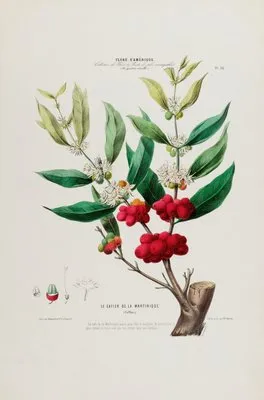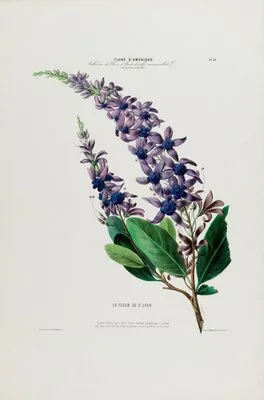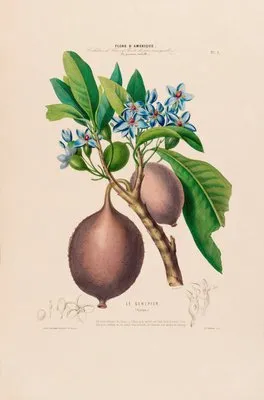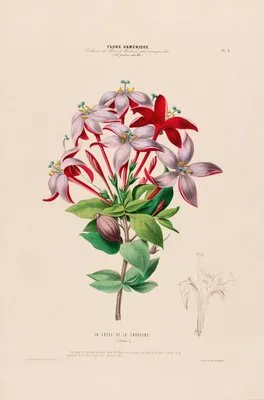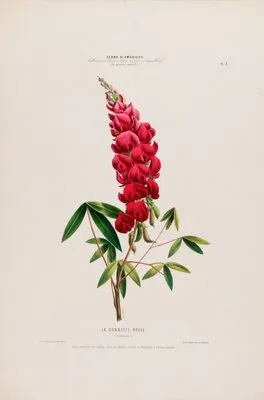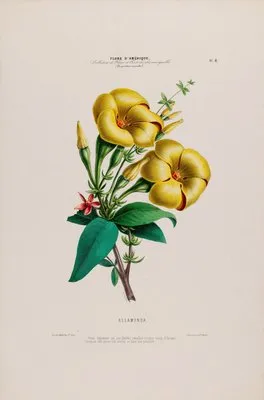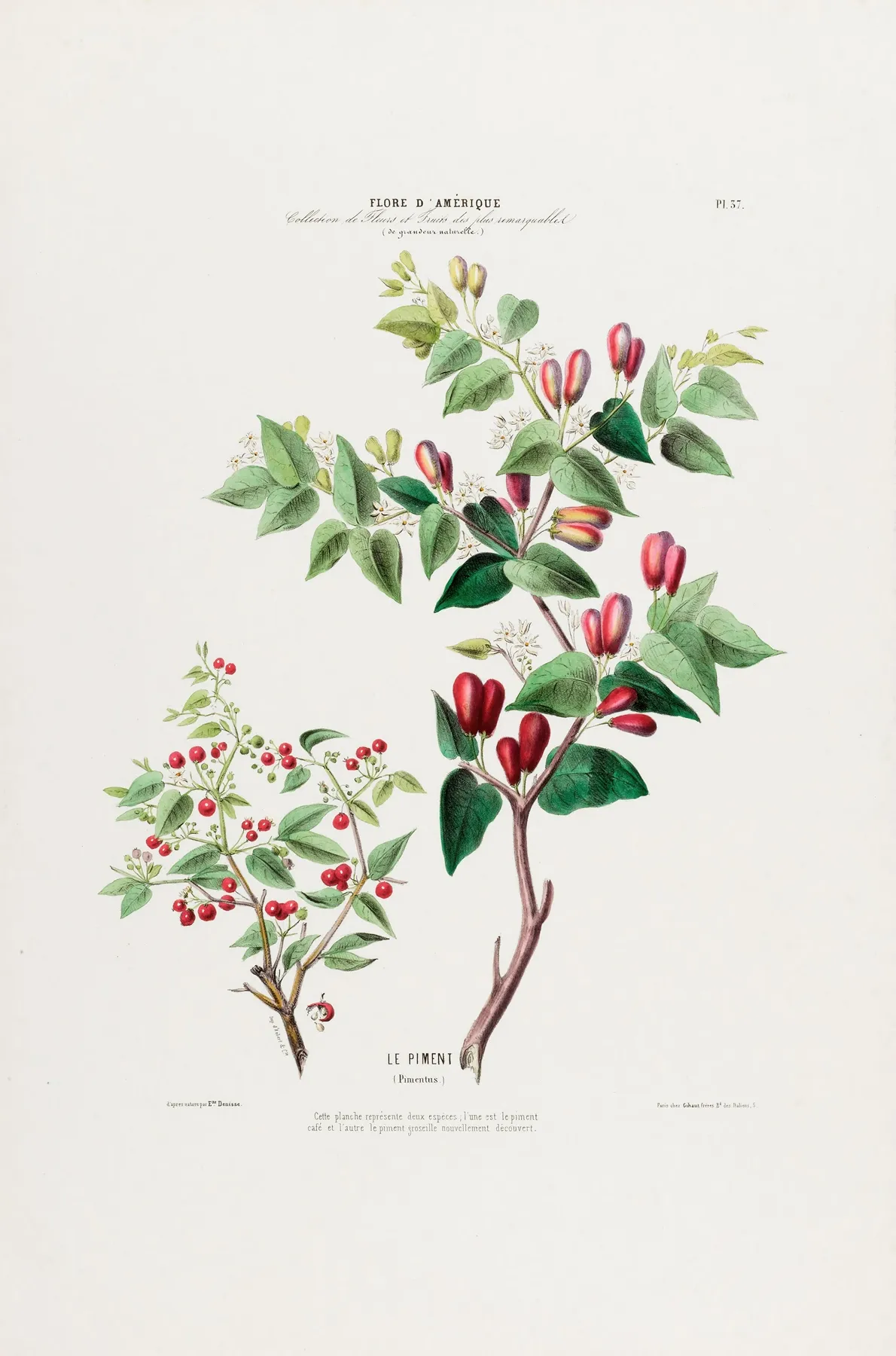
Flore d’Amérique, dessinée d’après nature sur les lieux Pl.037 (1843)
FLORE D AMERIQUE PI.37. Collechon de Tteurw it Druue dis ( de grandewr natureite.) LE PIMENT (Pimentus.) dayres witerepr E" Deniss Cette planche représente deux espéces ;l'une est le piment café
Ten ways of seeing
- measured cast red
- upright 1.51 : 1
First Look
真山水之川谷,远望之以取其势,近看之以取其质。
—— 宋·郭熙《林泉高致·山水训》
Mountains and valleys: from afar take their momentum, up close take their texture — the two distances from which any picture is read.
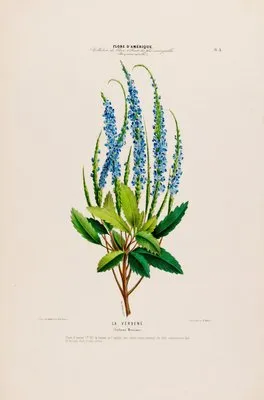
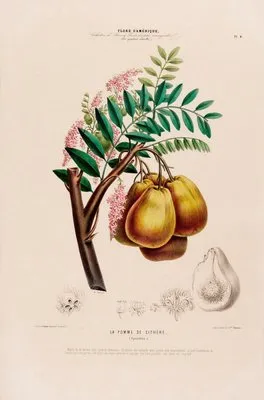
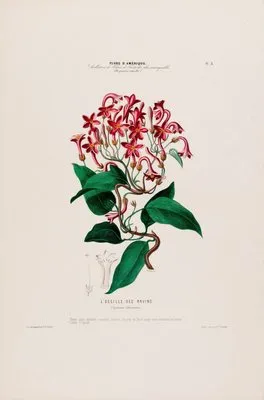
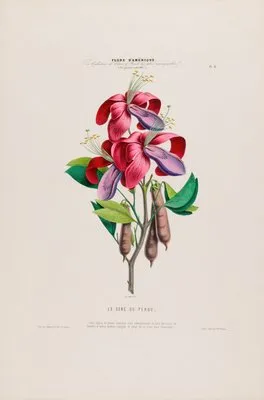
The sheet is vertical: the eye climbs and settles in the upper half. Let the plant stand before you look for detail. Then step in close: watch where colour meets line, and whether the line ever breaks. Third, find the darkest small patch: the whole tonal order is measured from there. The pose leans right: the upper half carries 14 points further right than the lower — a living thing, not a diagram.
Name and Thing
No reliable binomial survives, so the printed title must serve. Neither name nor binomial survives: the printed title must do.
Form and Colour
Measured on this plate: flower colour covers 3.1% of the sheet, foliage 6.4%, the cast red with a second note of yellow-green. No other plate shares exactly this measure. Tropical plants defy temperate habits: heavy, saturated flowers with strong scent, leathery or dissected leaves, stems that climb, swell, or reduce to spines.No colour group is recorded. Read the outline, then the colour layers, then the brush.
Composition
The sheet is tall. No details are appended: a plate for looking, not for keying out. The plant covers only 13% of the sheet, centred near the centre; the emptiness is where the eye rests.
Line and Colour
The first half of the nineteenth century moved from copper to steel to lithography; stipple could render the softest transition. There is evidence on the back too: the plate mark pressed into the paper, the slight relief of the pigment, lines worn shallow in a later printing. If you mean to copy it: take its skeleton, its margins and the order of its colours; the burin's hatching is the language of copper — suggest it with pencil density, do not imitate it stroke for stroke.
Poetic Resonance
桄榔面碜槟榔涩,海气常昏海日微。
—— 唐·元稹《送嶺南崔侍御》
The poem gives the mood first and the picture supplies the form; set the line beside the plate and the corolla becomes its resting point.
Symbolism
In China these plants carry no classical symbolism; their meaning is newness — new worlds, new species, new trade routes. They show natural history's expanding edge. Flower language was added later; the flower knows nothing of it, and that innocence is part of its power.
Season and Place
flowering follows the first rains, so a month on the plate often means 'after the rain'. Central and South America, Southeast Asia, India, Ceylon. Eighteenth- and nineteenth-century artists either sailed with the ships or drew from living specimens under glass. The year 1843 on the plate is that of publication, not of flowering — the gathering came a year or two earlier. The bud and the ripe fruit on one branch tell the season; the name in the title often tells the journey.
The Book and the Hand
“Flore d'Amérique, dessinée d'après nature sur les lieux” carries only Etienne Denisse's name. From drawing to plate the sheet passed through several hands — the engraver aimed at accuracy, the colourist at speed, and between them lies each plate's unevenness.
What to Take Away
If you keep one line, keep Guo Xi's: from afar its momentum, up close its texture. A flora exists to be consulted; look long enough and you forget to consult — someone in 1843 gave a whole day to a single flower.
About this plate
Flore d’Amérique, dessinée d’après nature sur les lieux Pl.037 (1843) is plate 37, from Flore d'Amérique, dessinée d'après nature sur les lieux, drawn by Etienne Denisse. This public-domain plate is reproduced at high resolution, free to view and download. Publication: Paris, Gihaut, 1843-1846.