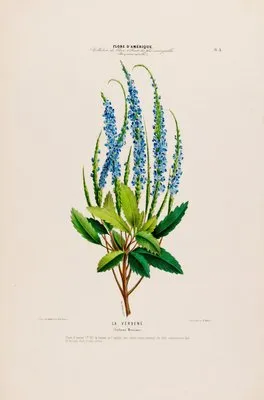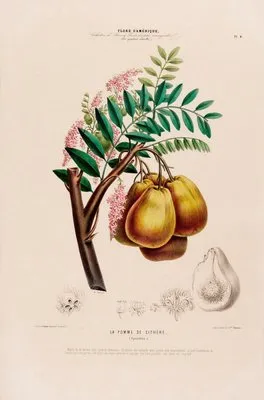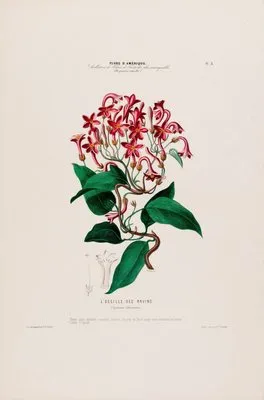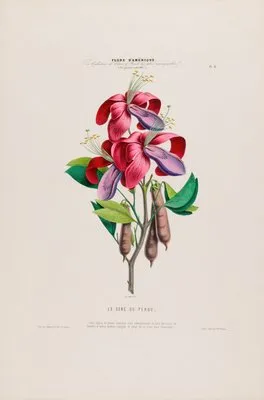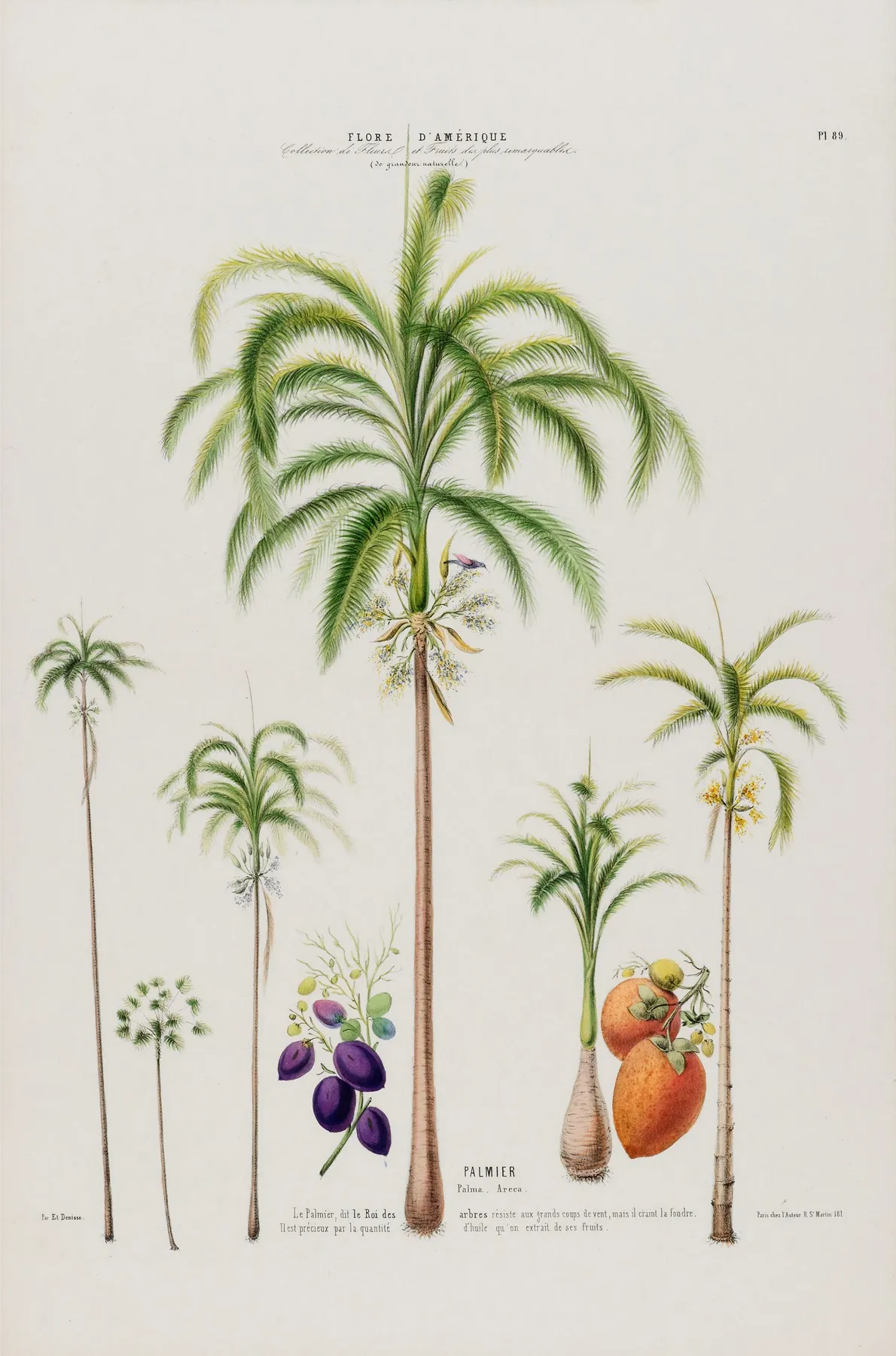
Flore d’Amérique, dessinée d’après nature sur les lieux Pl.089 (1843)
FLORE D'AMERIQUE Colleetion de Fteurvs etFu hlusum (de gpa PALMIER Palma, Areca. le Et Denis Le Palmier, ait le Roi des arbres résiste aux rands coups de vent, masil crait a foudre. che Aher R S
Ten ways of seeing
- measured cast amber
- upright 1.51 : 1
First Look
竖划三寸,当千仞之高;横墨数尺,体百里之迥。
—— 南朝宋·宗炳《画山水序》
A vertical stroke of three inches stands for a cliff of a thousand fathoms; a few feet of ink holds a hundred li.
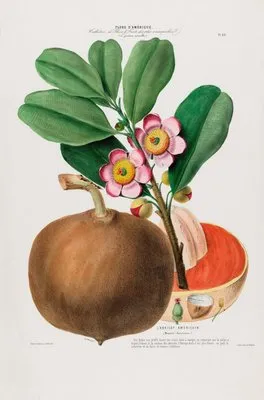
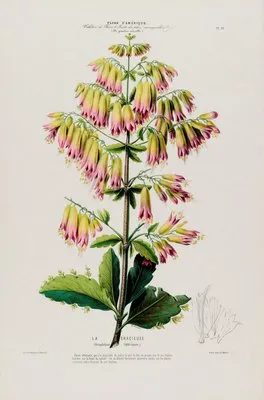
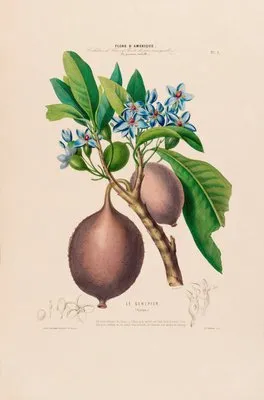
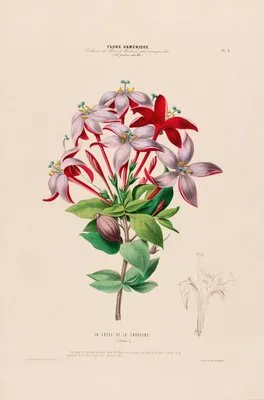
The sheet is vertical: the eye climbs and settles in the upper half. Let the plant stand before you look for detail. Then step in close: watch where colour meets line, and whether the line ever breaks. Third, find the darkest small patch: the whole tonal order is measured from there. The pose leans left: the upper half carries 8 points further left than the lower — a living thing, not a diagram.
Name and Thing
No reliable binomial survives, so the printed title must serve. Neither name nor binomial survives: the printed title must do.
Form and Colour
Measured on this plate: flower colour covers 5.7% of the sheet, foliage 6.4%, the cast amber with a second note of yellow-green. No other plate shares exactly this measure. Tropical plants defy temperate habits: heavy, saturated flowers with strong scent, leathery or dissected leaves, stems that climb, swell, or reduce to spines.No colour group is recorded. Three things fix the habit: leaf arrangement, tepal count, and how the flower is borne.
Composition
The sheet is tall. No details are appended: a plate for looking, not for keying out. The plant covers only 16% of the sheet, centred near the centre; the emptiness is where the eye rests.
Line and Colour
The first half of the nineteenth century moved from copper to steel to lithography; stipple could render the softest transition. There is evidence on the back too: the plate mark pressed into the paper, the slight relief of the pigment, lines worn shallow in a later printing. If you mean to copy it: take its skeleton, its margins and the order of its colours; the burin's hatching is the language of copper — suggest it with pencil density, do not imitate it stroke for stroke.
Poetic Resonance
一夜不眠孤客耳,主人窗外有芭蕉。
—— 唐·杜牧《雨》
The poem gives the mood first and the picture supplies the form; set the line beside the plate and the corolla becomes its resting point.
Symbolism
In China these plants carry no classical symbolism; their meaning is newness — new worlds, new species, new trade routes. They show natural history's expanding edge. Meanings change their tune: the same flower can say opposite things within a century.
Season and Place
flowering follows the first rains, so a month on the plate often means 'after the rain'. Central and South America, Southeast Asia, India, Ceylon. Eighteenth- and nineteenth-century artists either sailed with the ships or drew from living specimens under glass. The year 1843 on the plate is that of publication, not of flowering — the gathering came a year or two earlier. See this kind of plate in the flowering season if you can: once you have met the living flower, you stop reading only colour.
The Book and the Hand
“Flore d'Amérique, dessinée d'après nature sur les lieux” carries only Etienne Denisse's name. The image is public domain; the hand-colouring is still one person's hand.
What to Take Away
Next time you stand before a flowering plant, give it three minutes: leaf arrangement, direction of the flower, the darkest patch. The flower of that year is dust, yet its image on paper has outlived every living cousin.
About this plate
Flore d’Amérique, dessinée d’après nature sur les lieux Pl.089 (1843) is plate 89, from Flore d'Amérique, dessinée d'après nature sur les lieux, drawn by Etienne Denisse. This public-domain plate is reproduced at high resolution, free to view and download. Publication: Paris, Gihaut, 1843-1846.