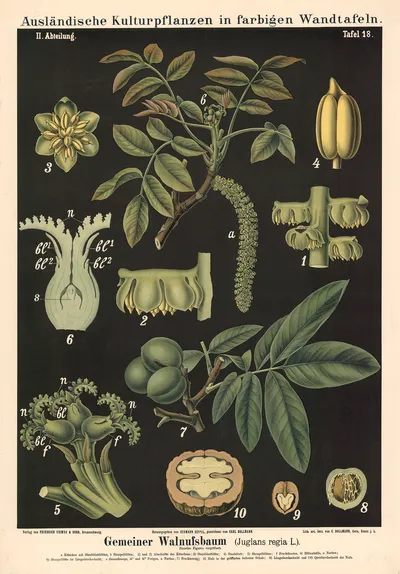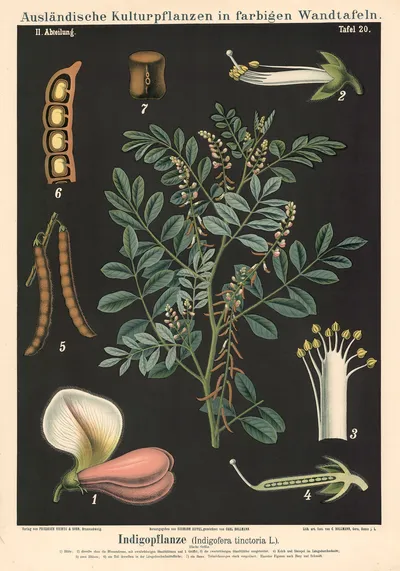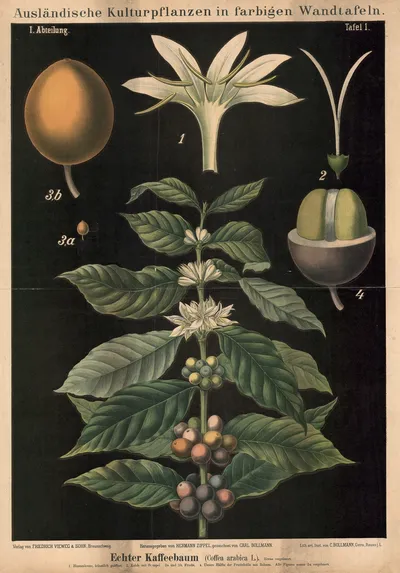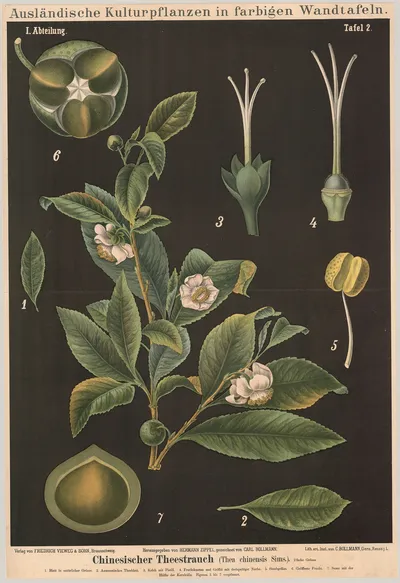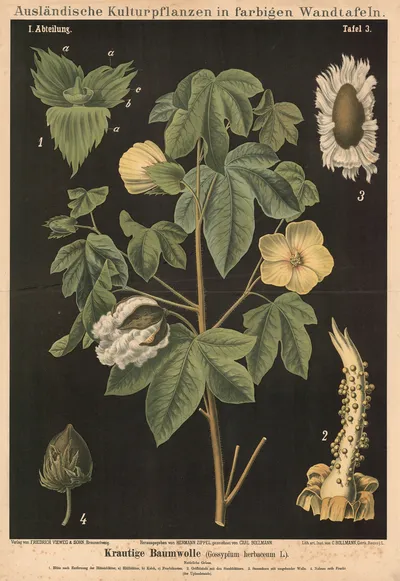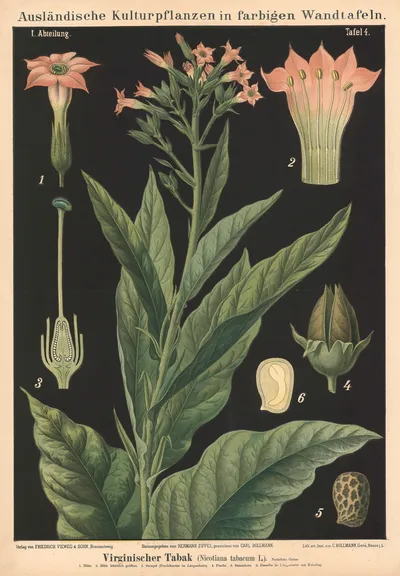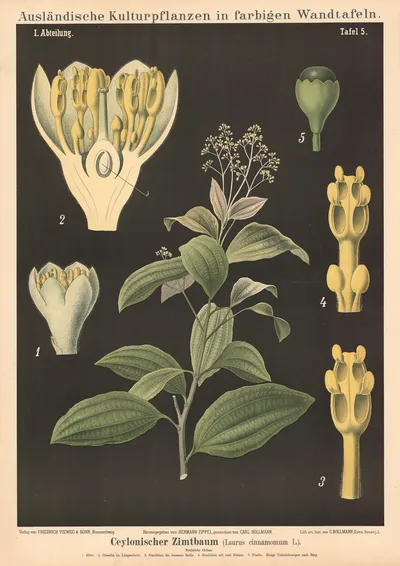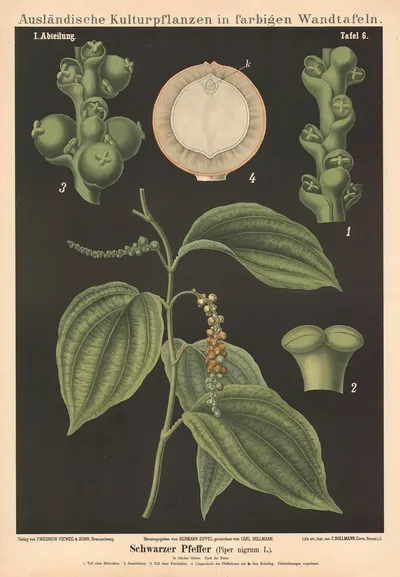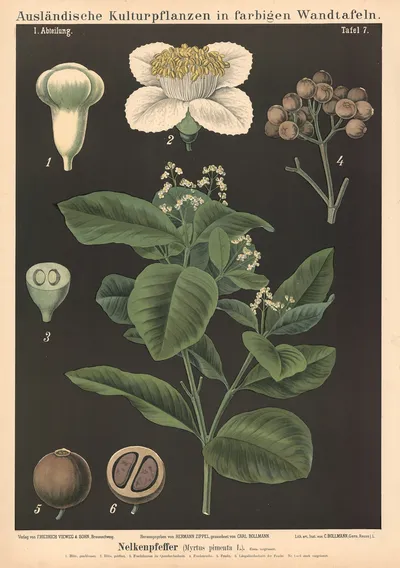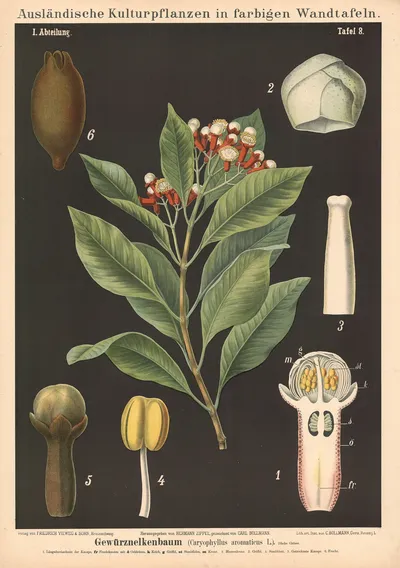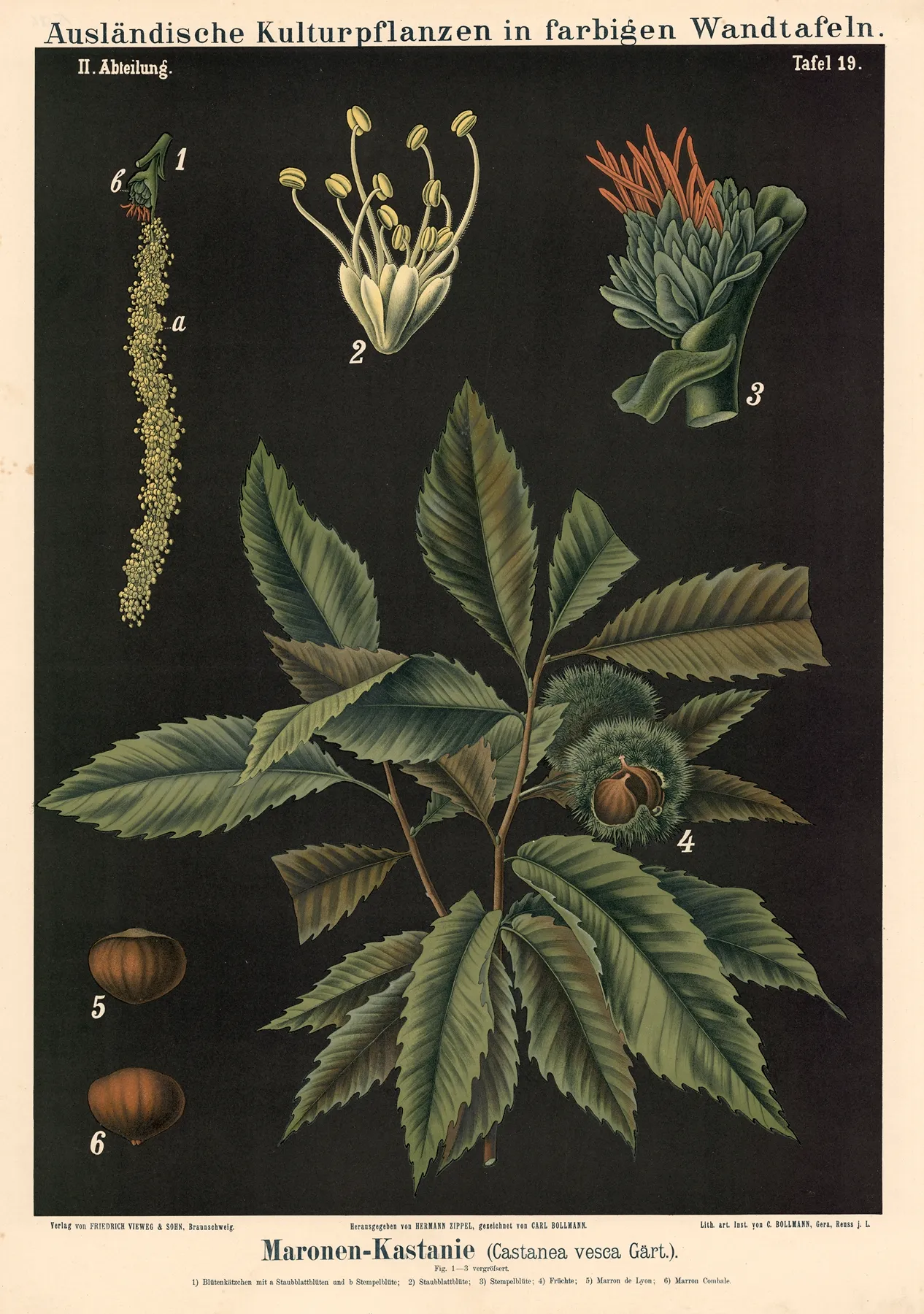
Maronen-Kastanie (Castanea vesca Gärt.) (1880)
Ten ways of seeing
- upright 1.42 : 1
First Look
六法者何?一、气韵生动是也;二、骨法用笔是也;三、应物象形是也;四、随类赋彩是也;五、经营位置是也;六、传移模写是也。
—— 南齐·谢赫《古画品录》
The six laws: spirit resonance alive; bone-method in the brush; matching form; colour by kind; planning the placing; copying the masters.
The sheet is vertical: the eye climbs and settles in the upper half. Let the plant stand before you look for detail. Then step in close: watch where colour meets line, and whether the line ever breaks. Third, find the darkest small patch: the whole tonal order is measured from there.
Name and Thing
Only the genus Castanea is given; species-level names came later. No established Chinese name exists, so it is cited by its binomial alone.
Form and Colour
Fruit plates pair the whole fruit with a section: the outline identifies the variety, the cut reveals skin thickness, core size and seed arrangement — the evidence of registration.No colour group is recorded. A single plant, laid out with nothing hidden.
Composition
Tall and narrow, the plant rising in one movement with generous margins — the upright format of most floras. No details are appended: a plate for looking, not for keying out. Old plates set the plant slightly off centre, with unequal margins — that small imbalance is what keeps it alive.
Line and Colour
In the later nineteenth century chromolithography took over: colour printed rather than painted, line demoted. Take a loupe to three places: petal edge, leaf vein, caption. An unbroken line means engraving; colour crossing the outline means a hand. If you mean to copy it: block in the broad shapes and colours first, detail last; lithographic softness comes from thin washes — two or three pale layers will get you close.
Poetic Resonance
一年好景君须记,最是橙黄橘绿时。
—— 宋·苏轼《赠刘景文》
Remember the best of the year: the time of yellow oranges and green tangerines.
The poem gives the mood first and the picture supplies the form; set the line beside the plate and the fruit becomes its resting point.
Symbolism
In China the pomegranate means many sons, the peach long life, the orange good fortune; in Europe the apple is temptation and knowledge, the grape abundance and sacrifice. Meanings change their tune: the same flower can say opposite things within a century.
Season and Place
Late summer into autumn, variety by variety. Temperate fruits came mostly from Eurasia, later from the Americas. Nineteenth-century nurseries printed varietal albums for trade and exhibition: every fruit on the page was a saleable claim. The year 1880 on the plate is that of publication, not of flowering — the gathering came a year or two earlier. See this kind of plate in the flowering season if you can: once you have met the living flower, you stop reading only colour.
The Book and the Hand
“Foreign cultivated plants in color” carries only Carl Bollmann's name. A plate is collective work: drawer, engraver and colourist were different hands, and the unnamed ones decided how good it looks.
What to Take Away
If you keep one line, keep Guo Xi's: from afar its momentum, up close its texture. Two centuries on, the plant may still flower in some garden; the one on this sheet stopped in the season of 1880.