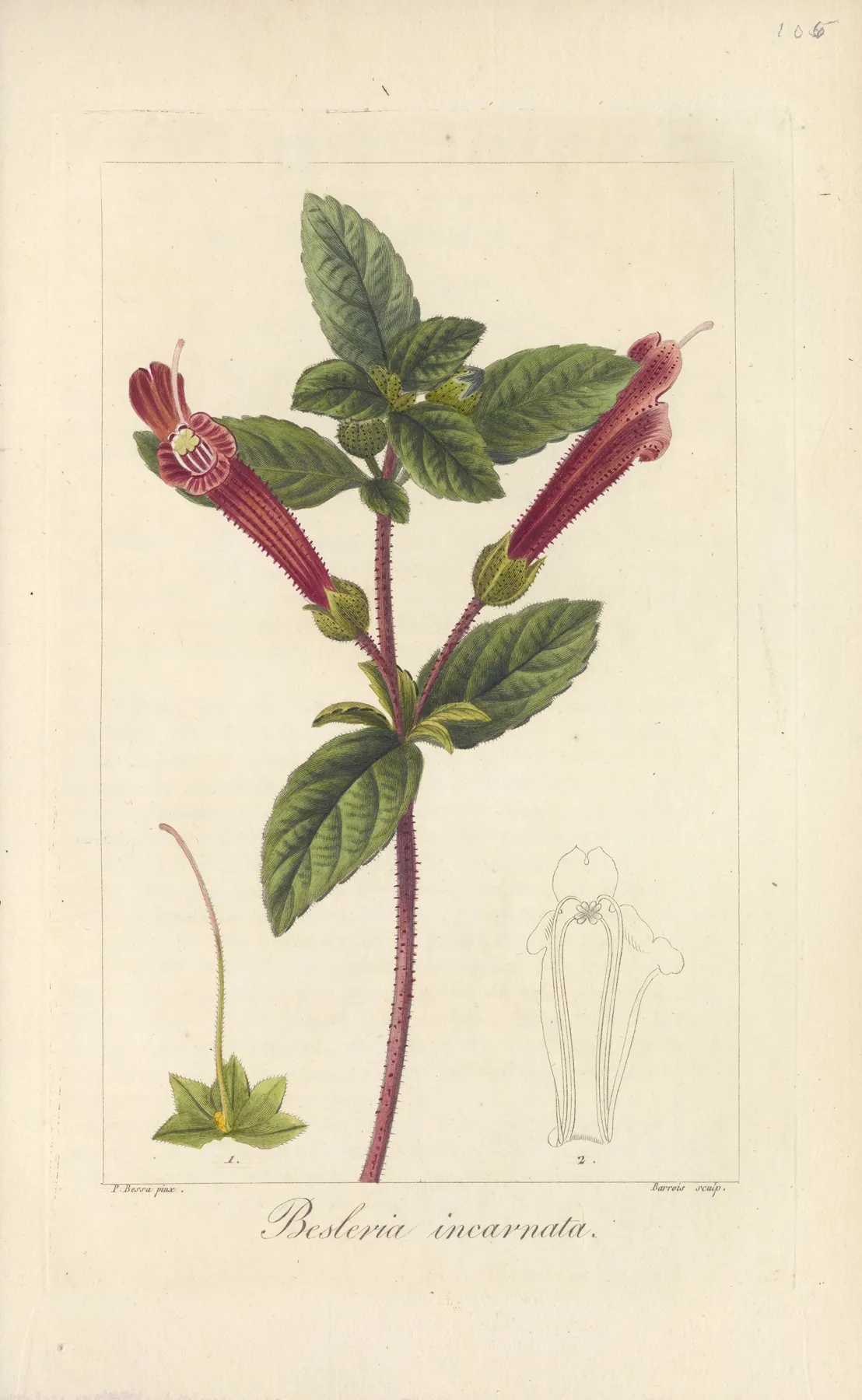
Besleria incarnata
Besteria incarnata|浆果岩桐属
Besleria incarnata
Ten ways of seeing
- measured cast yellow-green
- upright 1.62 : 1
First Look
搜尽奇峰打草稿。
—— 清·石涛《苦瓜和尚画语录》
Exhaust the strange peaks, and then make the sketch.
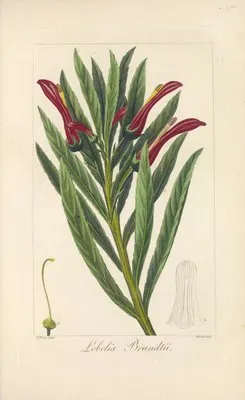
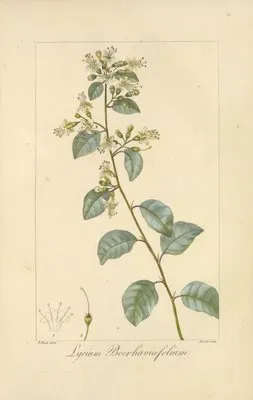
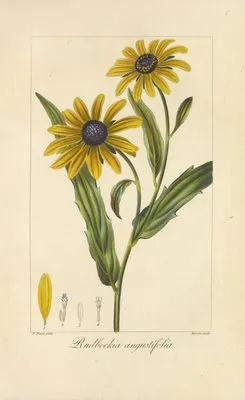
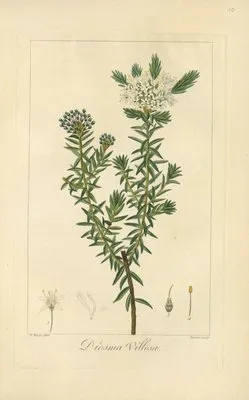
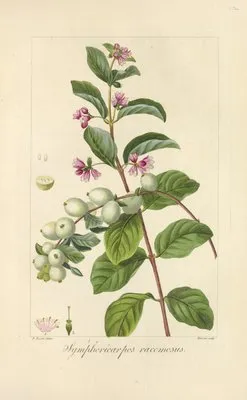
The sheet is vertical: the eye climbs and settles in the upper half. Let the plant stand before you look for detail. Then step in close: watch where colour meets line, and whether the line ever breaks. Third, find the darkest small patch: the whole tonal order is measured from there. The pose leans right: the upper half carries 8 points further right than the lower — a living thing, not a diagram.
Name and Thing
The binomial is Besleria incarnata: the first word is the genus it belongs among, the second the epithet that sets it apart. Here the epithet incarnata means “flesh-red” — the name records the feature the namer noticed first. The Chinese name 浆果岩桐属 is a modern rendering of the Latin, not an old garden name.
Form and Colour
Measured on this plate: flower colour covers 7.8% of the sheet, foliage 3.6%, the cast yellow-green with a second note of red. No other plate shares exactly this measure. Fruit plates pair the whole fruit with a section: the outline identifies the variety, the cut reveals skin thickness, core size and seed arrangement — the evidence of registration.No colour group is recorded. A single plant, laid out with nothing hidden.
Composition
The sheet is tall. No details are appended: a plate for looking, not for keying out. The plant covers only 14% of the sheet, centred above centre; the emptiness is where the eye rests.
Line and Colour
The first half of the nineteenth century moved from copper to steel to lithography; stipple could render the softest transition. Decide first whether it was printed or painted; only then discuss whether it is beautiful. If you mean to copy it: take its skeleton, its margins and the order of its colours; the burin's hatching is the language of copper — suggest it with pencil density, do not imitate it stroke for stroke.
Poetic Resonance
窗怜返照缘书小,庭喜新霜为橘红。
—— 唐·陆龟蒙《和袭美初冬偶作寄南阳润卿次韵》
The poem gives the mood first and the picture supplies the form; set the line beside the plate and the fruit becomes its resting point.
Symbolism
In China the pomegranate means many sons, the peach long life, the orange good fortune; in Europe the apple is temptation and knowledge, the grape abundance and sacrifice. In a flora it is a species first and a symbol second; the order is worth keeping.
Season and Place
Late summer into autumn, variety by variety. Temperate fruits came mostly from Eurasia, later from the Americas. Nineteenth-century nurseries printed varietal albums for trade and exhibition: every fruit on the page was a saleable claim. The year 1816 on the plate is that of publication, not of flowering — the gathering came a year or two earlier. Read the locality and the flowering season both with a discount: one is hearsay, the other a ten-day peak.
The Book and the Hand
“Herbier général de l'amateur” carries only Jean Claude Michel Mordant de Launay's name. From drawing to plate the sheet passed through several hands — the engraver aimed at accuracy, the colourist at speed, and between them lies each plate's unevenness.
What to Take Away
Appreciation is not knowledge but habit — one more look each time. A flora exists to be consulted; look long enough and you forget to consult — someone in 1816 gave a whole day to a single flower.
About this plate
Besleria incarnata is plate 53, from Herbier général de l'amateur, drawn by Jean Claude Michel Mordant de Launay. This public-domain plate is reproduced at high resolution, free to view and download. Publication: Paris, Audot, Libraire, 1816-1827.