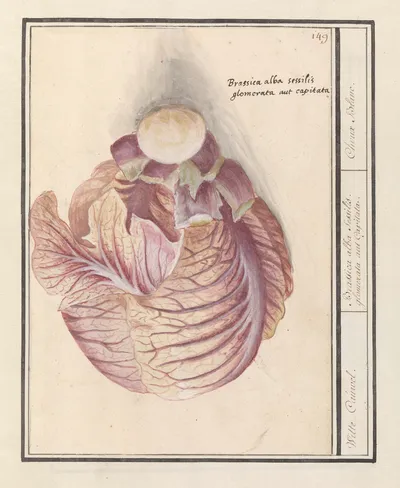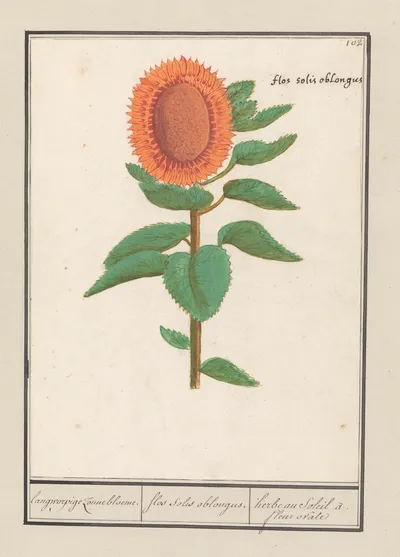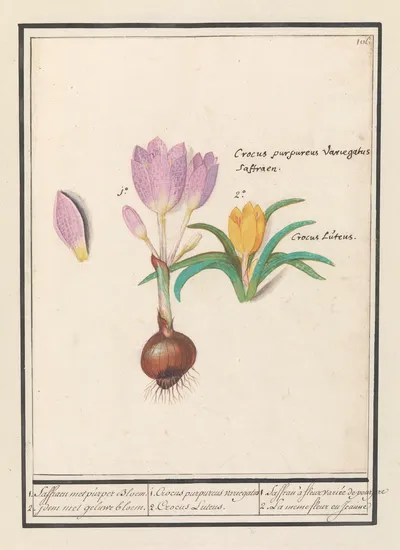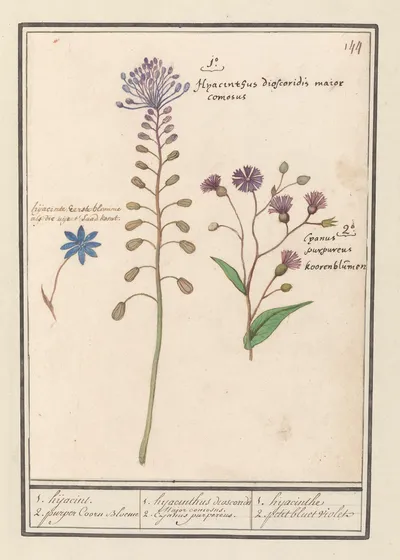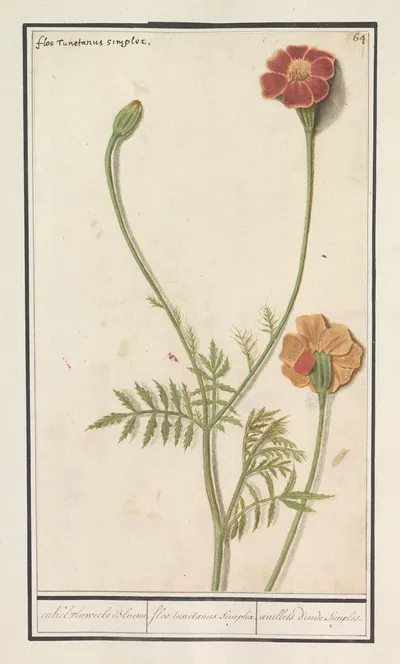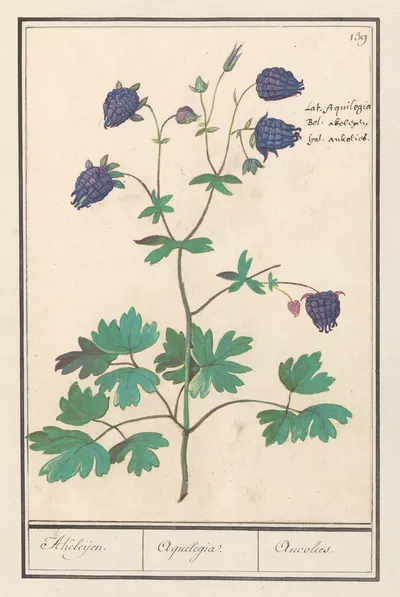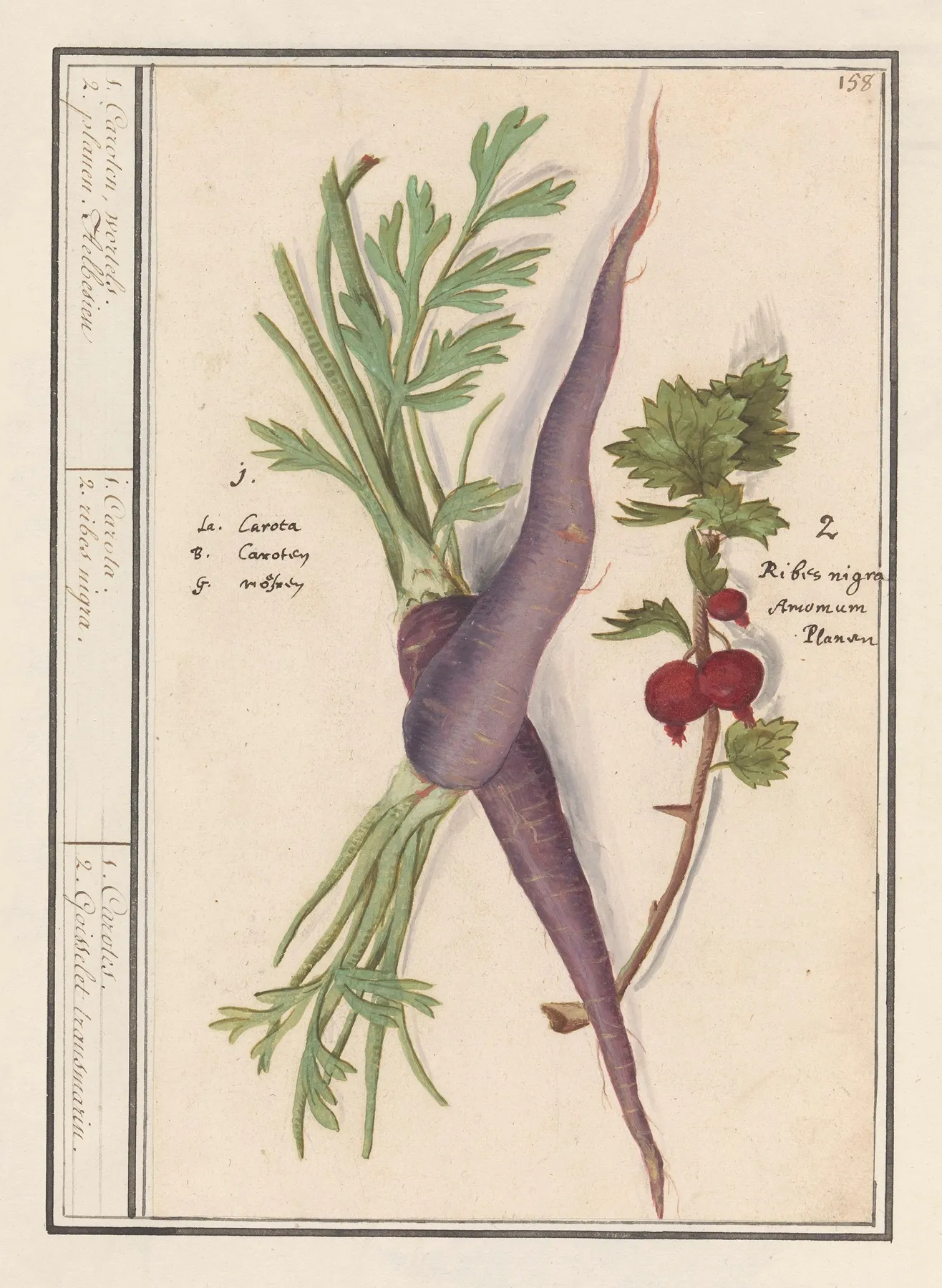
Wortel (Daucus carota) en rode bes (Ribes rubrum) 1. Caroten, wortels. 2. planen Aelbesien (1596-1610)
Ten ways of seeing
- upright 1.37 : 1
First Look
搜尽奇峰打草稿。
—— 清·石涛《苦瓜和尚画语录》
Exhaust the strange peaks, and then make the sketch.
The sheet is vertical: the eye climbs and settles in the upper half. Let the plant stand before you look for detail. Then step in close: watch where colour meets line, and whether the line ever breaks. Third, find the darkest small patch: the whole tonal order is measured from there.
Name and Thing
Only the genus Ribes is given; species-level names came later. No established Chinese name exists, so it is cited by its binomial alone.
Form and Colour
Fruit plates pair the whole fruit with a section: the outline identifies the variety, the cut reveals skin thickness, core size and seed arrangement — the evidence of registration.No colour group is recorded. Three things fix the habit: leaf arrangement, tepal count, and how the flower is borne.
Composition
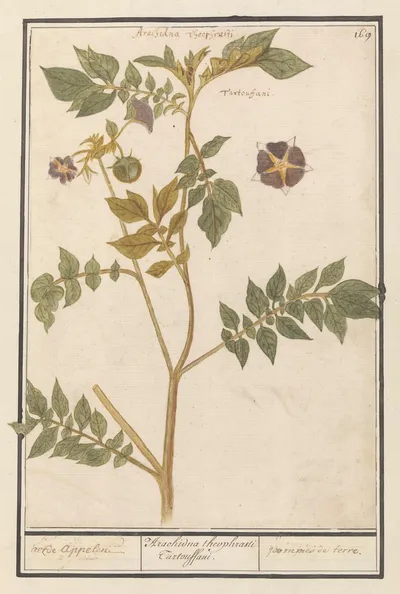
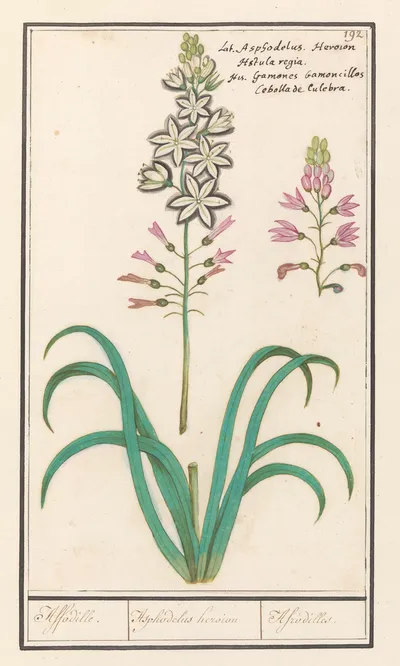
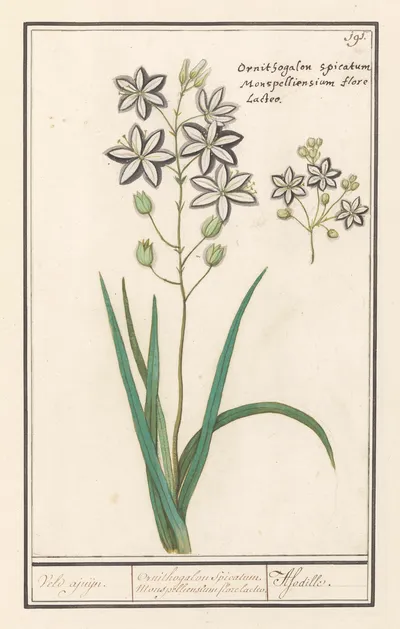
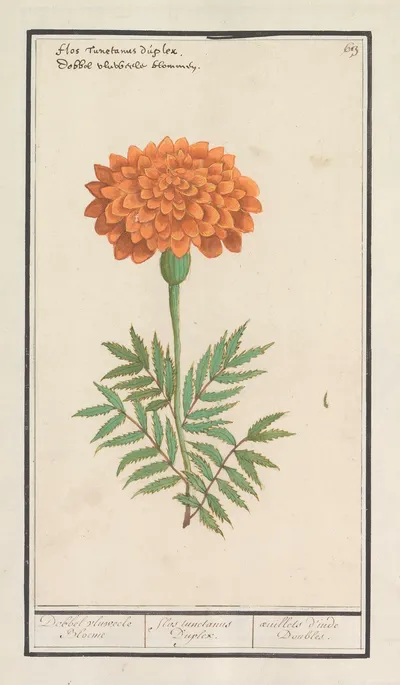
Tall and narrow, the plant rising in one movement with generous margins — the upright format of most floras. No details are appended: a plate for looking, not for keying out. Old plates set the plant slightly off centre, with unequal margins — that small imbalance is what keeps it alive.
Line and Colour
Before 1700 most botanical figures came from woodcut: thick, hard lines in relief, colour brushed on afterwards. Decide first whether it was printed or painted; only then discuss whether it is beautiful. If you mean to copy it: take its skeleton, its margins and the order of its colours; the burin's hatching is the language of copper — suggest it with pencil density, do not imitate it stroke for stroke.
Poetic Resonance
投我以木瓜,报之以琼琚。匪报也,永以为好也。
—— 《诗经·卫风·木瓜》
She threw me a quince; I gave back a jade pendant — not as repayment, but to be friends forever.
The poem gives the mood first and the picture supplies the form; set the line beside the plate and the fruit becomes its resting point.
Symbolism
In China the pomegranate means many sons, the peach long life, the orange good fortune; in Europe the apple is temptation and knowledge, the grape abundance and sacrifice. Flower language was added later; the flower knows nothing of it, and that innocence is part of its power.
Season and Place
a fruit portfolio spans the whole harvest. Temperate fruits came mostly from Eurasia, later from the Americas. Nineteenth-century nurseries printed varietal albums for trade and exhibition: every fruit on the page was a saleable claim. The year 1596 on the plate is that of publication, not of flowering — the gathering came a year or two earlier. Read the locality and the flowering season both with a discount: one is hearsay, the other a ten-day peak.
The Book and the Hand
“Historia Naturalis van Rudolf” carries only Anselmus Boëtius de Boodt's name. The image is public domain; the hand-colouring is still one person's hand.
What to Take Away
Appreciation is not knowledge but habit — one more look each time. Two centuries on, the plant may still flower in some garden; the one on this sheet stopped in the season of 1596.