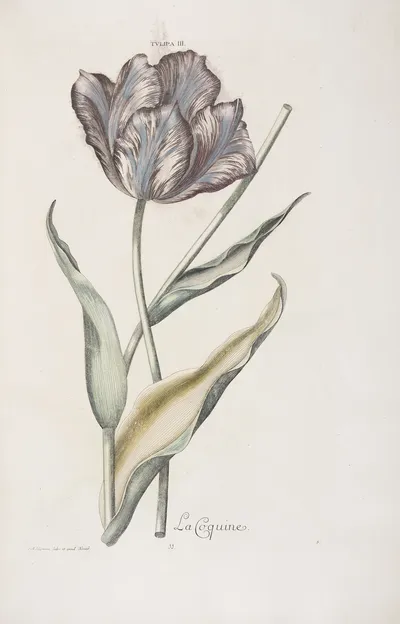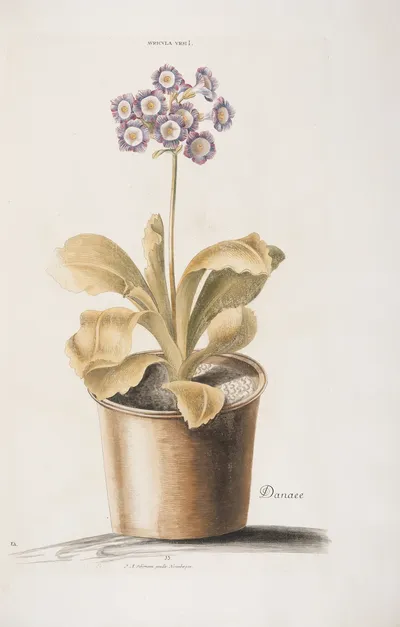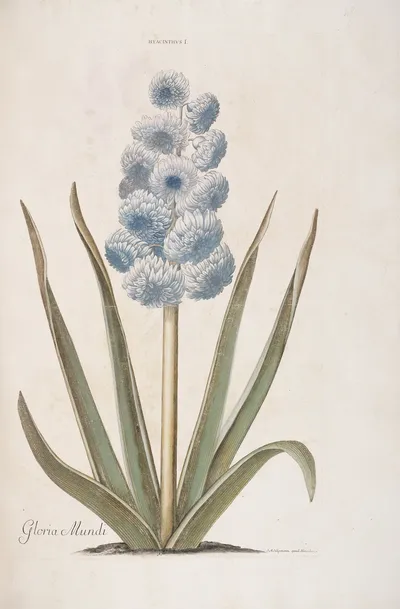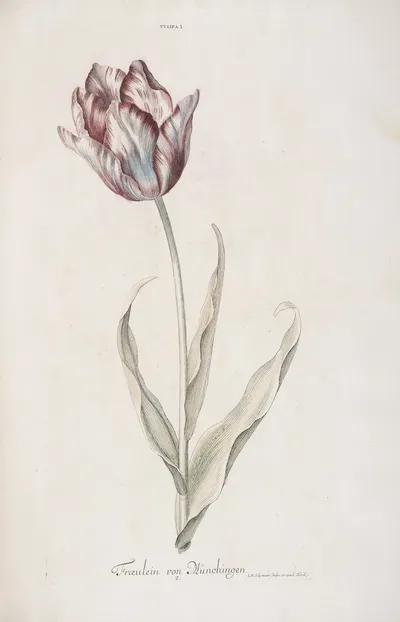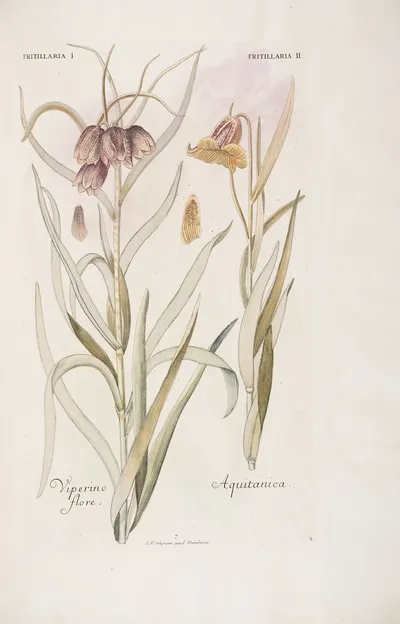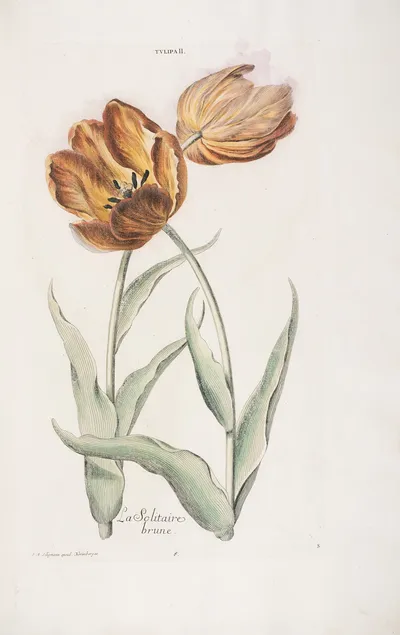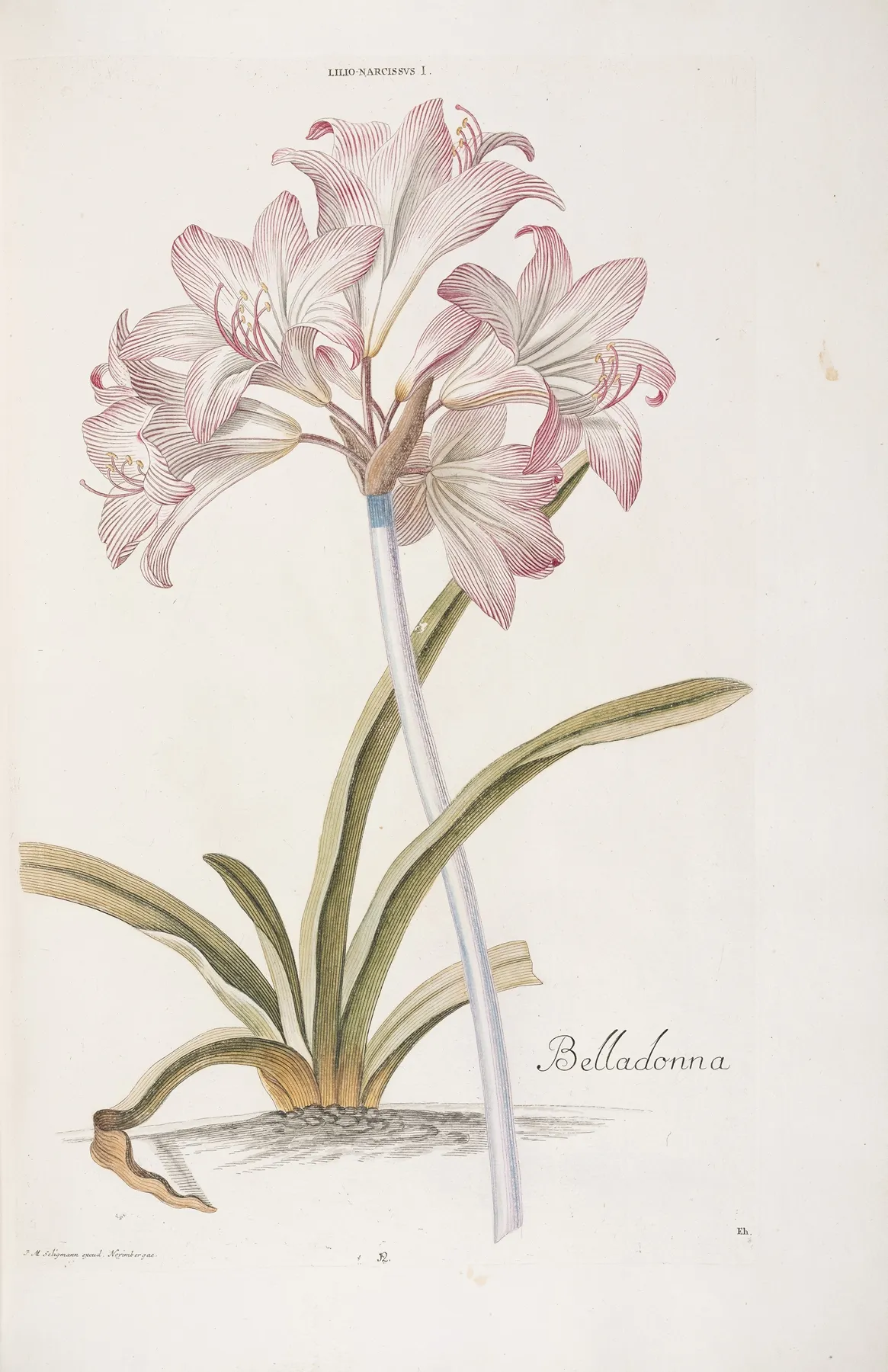
Lilio-Narcissus I. Belladonna (1772)
Ten ways of seeing
- upright 1.55 : 1
First Look
搜尽奇峰打草稿。
—— 清·石涛《苦瓜和尚画语录》
Exhaust the strange peaks, and then make the sketch.
The sheet is vertical: the eye climbs and settles in the upper half. Let the plant stand before you look for detail. Then step in close: watch where colour meets line, and whether the line ever breaks. Third, find the darkest small patch: the whole tonal order is measured from there.
Name and Thing
No reliable binomial survives, so the printed title must serve. Neither name nor binomial survives: the printed title must do.
Form and Colour
A layered bulb, upright strap leaves, six white tepals and a small golden cup — the Chinese name is 'silver terrace with a golden cup'.No colour group is recorded. Three things fix the habit: leaf arrangement, tepal count, and how the flower is borne.
Composition
Tall and narrow, the plant rising in one movement with generous margins — the upright format of most floras. No details are appended: a plate for looking, not for keying out. Cover the margins with your thumb and the plate suffocates; uncover them and the flower breathes again.
Line and Colour
Eighteenth-century plates are mostly copper engraving: hatched lines for shadow, then hand-colouring by another hand. Craft leaves franker evidence than inscriptions. If you mean to copy it: take its skeleton, its margins and the order of its colours; the burin's hatching is the language of copper — suggest it with pencil density, do not imitate it stroke for stroke.
Poetic Resonance
含香体素欲倾城,山矾是弟梅是兄。
—— 宋·黄庭坚《王充道送水仙花五十枝》
Fragrant, white-bodied, all but city-toppling; the snowbell is its younger brother, the plum its elder.
The poem gives the mood first and the picture supplies the form; set the line beside the plate and the corolla becomes its resting point.
Symbolism
In China it is the New Year's offering — clear, fragrant, a little otherworldly; in Europe, because of Narcissus, it means self-love and the gaze turned inward. Meanings change their tune: the same flower can say opposite things within a century.
Season and Place
Late winter into early spring: forced in water in the twelfth month, blooming at the New Year. Native to the Mediterranean, reaching China by sea in the late Tang. The year 1772 on the plate is that of publication, not of flowering — the gathering came a year or two earlier. The bud and the ripe fruit on one branch tell the season; the name in the title often tells the journey.
The Book and the Hand
“Hortus nitidissimis omnem per annum superbiens floribus sive Amoenissimorum florum imagines 1” carries only Christoph Jakob Trew's name. The image is public domain; the hand-colouring is still one person's hand.
What to Take Away
Appreciation is not knowledge but habit — one more look each time. Two centuries on, the plant may still flower in some garden; the one on this sheet stopped in the season of 1772.