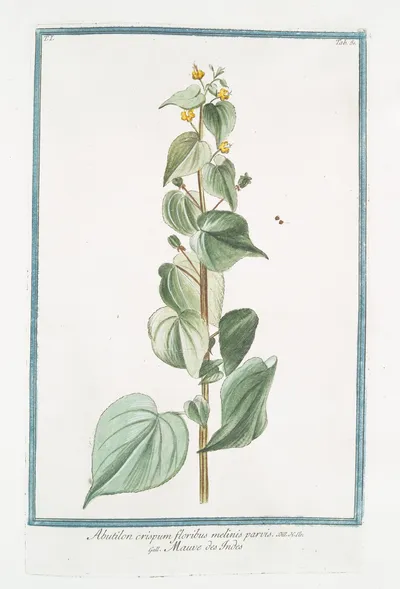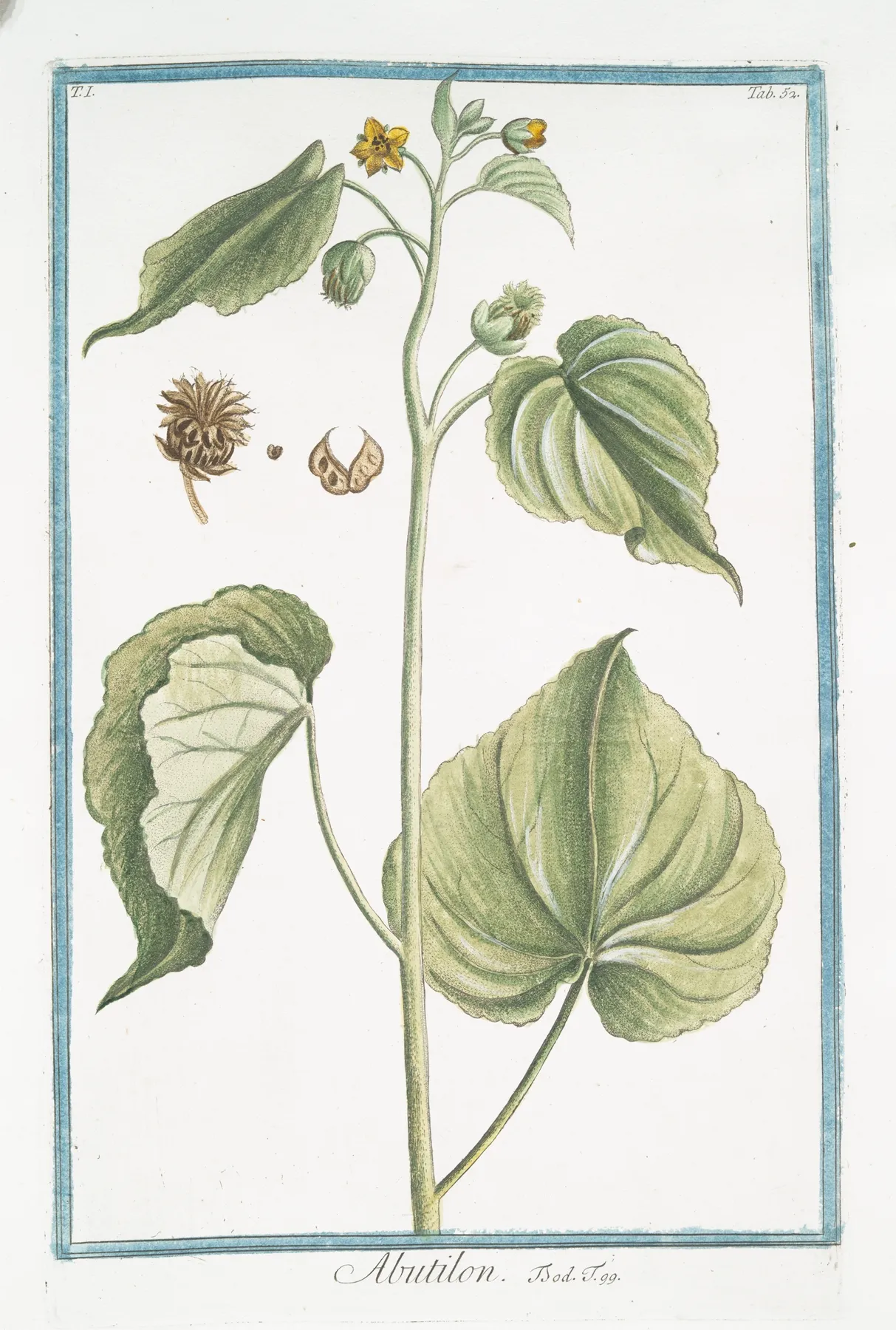
Abutilon. (Flowering Maples) (1772-1793)
Ten ways of seeing
- upright 1.48 : 1
First Look
六法者何?一、气韵生动是也;二、骨法用笔是也;三、应物象形是也;四、随类赋彩是也;五、经营位置是也;六、传移模写是也。
—— 南齐·谢赫《古画品录》
The six laws: spirit resonance alive; bone-method in the brush; matching form; colour by kind; planning the placing; copying the masters.
The sheet is vertical: the eye climbs and settles in the upper half. Let the plant stand before you look for detail. Then step in close: watch where colour meets line, and whether the line ever breaks. Third, find the darkest small patch: the whole tonal order is measured from there.
Name and Thing
Only the genus Abutilon is given; species-level names came later. No established Chinese name exists, so it is cited by its binomial alone.
Form and Colour
Flowering trees and shrubs put out branches first; blossoms open before or with the leaves, usually five thin, translucent petals around a cluster of fine stamens.No colour group is recorded. A single plant, laid out with nothing hidden.
Composition
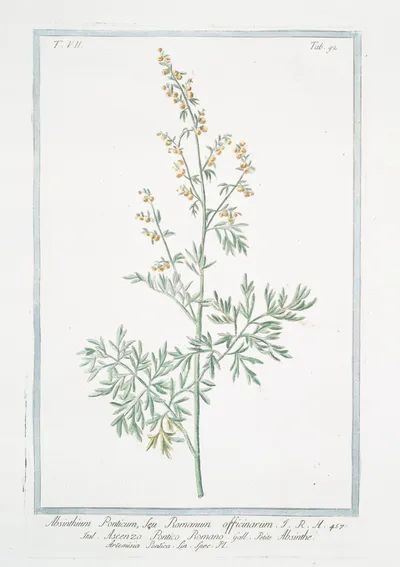
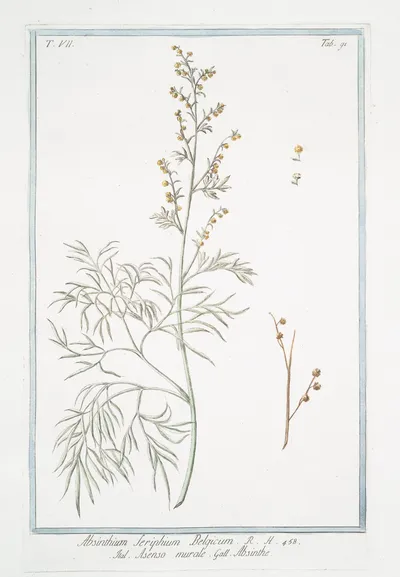
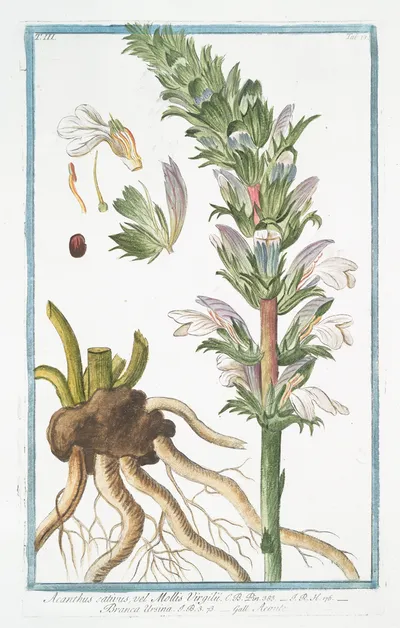
Tall and narrow, the plant rising in one movement with generous margins — the upright format of most floras. No details are appended: a plate for looking, not for keying out. Old plates set the plant slightly off centre, with unequal margins — that small imbalance is what keeps it alive.
Line and Colour
Eighteenth-century plates are mostly copper engraving: hatched lines for shadow, then hand-colouring by another hand. There is evidence on the back too: the plate mark pressed into the paper, the slight relief of the pigment, lines worn shallow in a later printing. If you mean to copy it: take its skeleton, its margins and the order of its colours; the burin's hatching is the language of copper — suggest it with pencil density, do not imitate it stroke for stroke.
Poetic Resonance
杏花燕月人俱远,枫叶吴霜思独悬。
—— 《送杨尚䌹杨名甫毛贞甫陆全卿四进士归省·其四·全卿》
The poem gives the mood first and the picture supplies the form; set the line beside the plate and the corolla becomes its resting point.
Symbolism
Plum is solitude, peach is marriage, apricot is spring itself, crabapple is a fragile fate; the hibiscus, opening at dawn and falling at dusk, is impermanence. In a flora it is a species first and a symbol second; the order is worth keeping.
Season and Place
Mid spring: plum first, then peach and apricot, cherry last — the season keeps its order. cherry and crabapple went east to Japan and west to Europe. The year 1772 on the plate is that of publication, not of flowering — the gathering came a year or two earlier. See this kind of plate in the flowering season if you can: once you have met the living flower, you stop reading only colour.
The Book and the Hand
“Hortus Romanus juxta systema Tournefortianum” carries only Giorgio Bonelli's name. A plate is collective work: drawer, engraver and colourist were different hands, and the unnamed ones decided how good it looks.
What to Take Away
If you keep one line, keep Guo Xi's: from afar its momentum, up close its texture. The flower of that year is dust, yet its image on paper has outlived every living cousin.
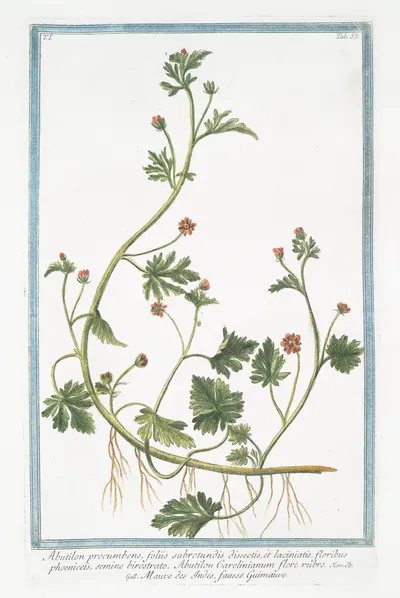 Previous plate
Abutilon procumbens, foliis subrotundis dissectis, et laciniatis, floribus phoeniceis, semine birostrato. Abutilon Carolinianum flore rubro – Mauve des Indes, fausse Guimmauve (1772-1793)
 Next plate
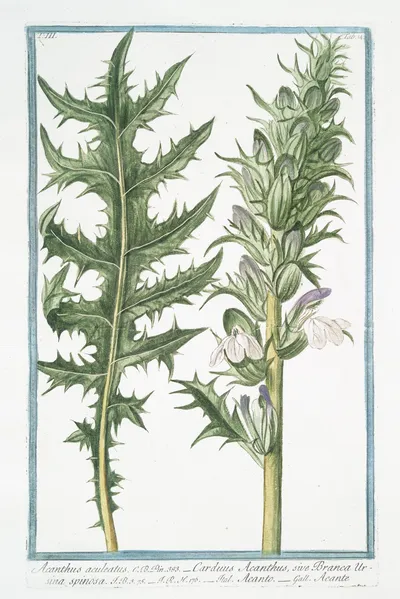
Acanthus aculeatus – Carduus Acanthus, sive Branca Ursina spinosa – Acanto – Acante. (Butcher’s broom) (1772-1793)