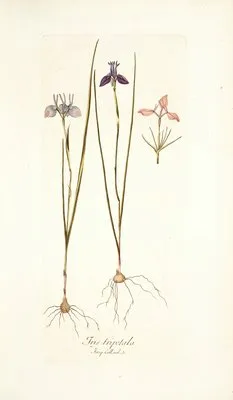
Iris tricuspis
Tws trcupis|天门冬目
Iris tricuspis
Ten ways of seeing
- measured cast yellow-green
- upright 1.75 : 1
First Look
江馆清秋,晨起看竹,烟光日影露气,皆浮动于疏枝密叶之间。
—— 清·郑板桥《题画竹》
On an autumn morning at the river lodge I looked at the bamboo: mist, sunlight, dew, all drifting among the sparse and dense leaves.
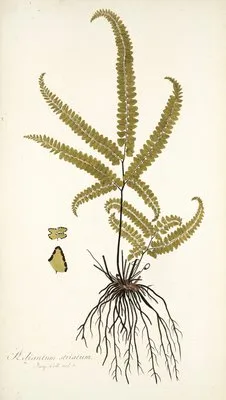
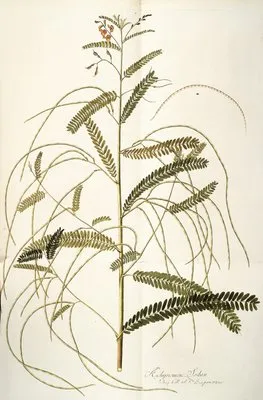
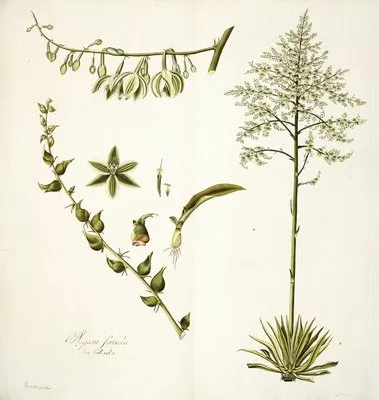
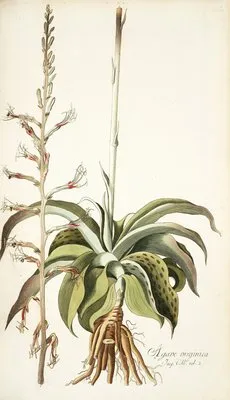
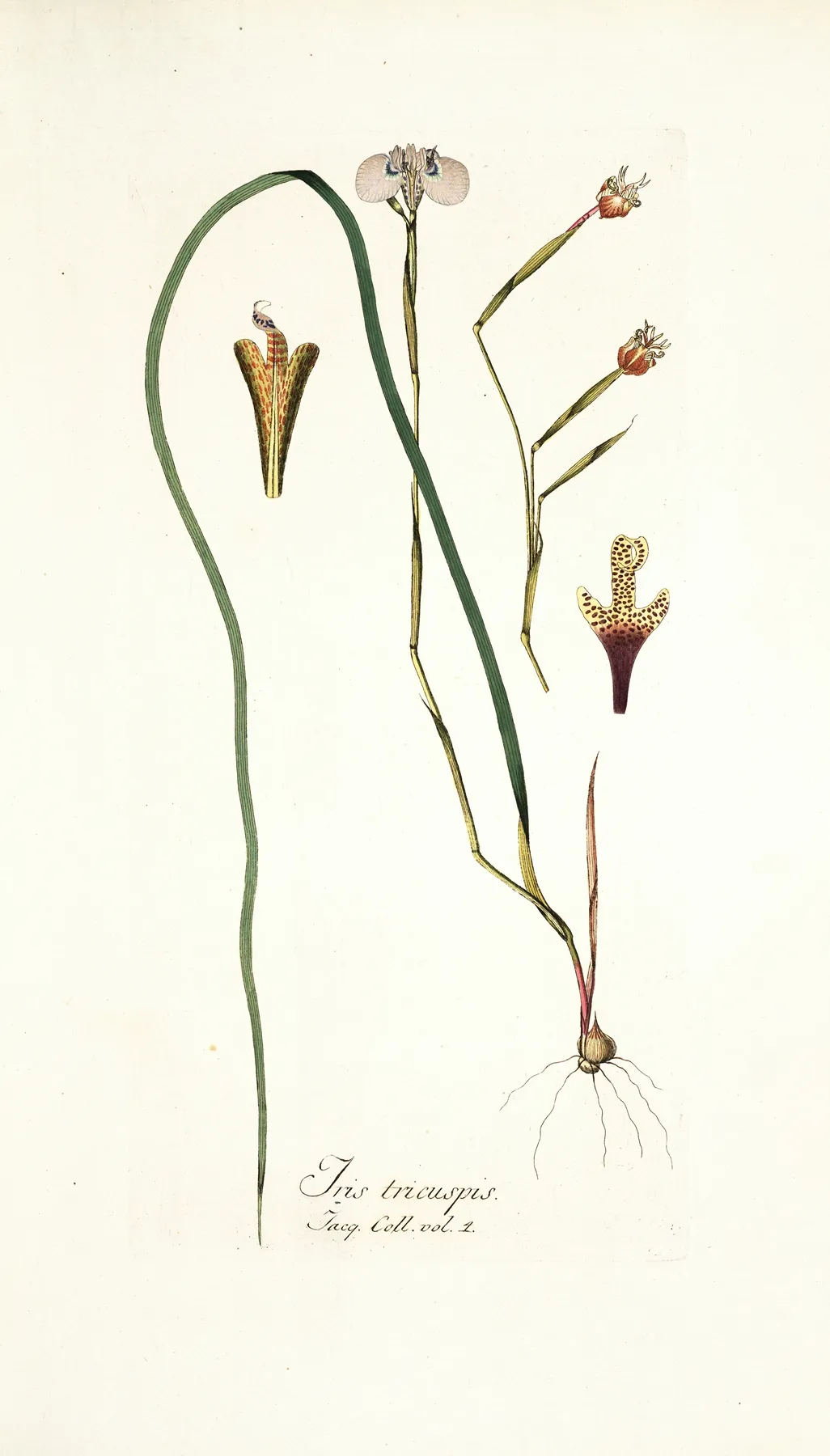
The sheet is vertical: the eye climbs and settles in the upper half. Let the plant stand before you look for detail. Then step in close: watch where colour meets line, and whether the line ever breaks. Third, find the darkest small patch: the whole tonal order is measured from there.
Name and Thing
The binomial is Iris tricuspis: the first word is the genus it belongs among, the second the epithet that sets it apart. The genus name Iris: Iris is the Greek goddess of the rainbow, for the many hues of the flowers. The Chinese name 天门冬目 is a modern rendering of the Latin, not an old garden name.
Form and Colour
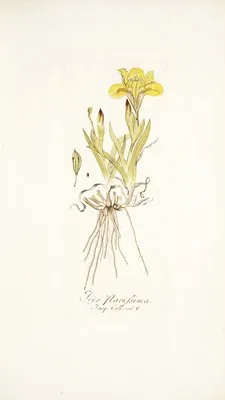
Measured on this plate: flower colour covers 2.5% of the sheet, foliage 1.6%, the cast yellow-green with a second note of amber. No other plate shares exactly this measure. Irises carry rhizomes or bulbs, sword-shaped leaves in two ranks, and six tepals — three falls drooping, often bearded or speckled, three standards erect.No colour group is recorded. A single plant, laid out with nothing hidden.
Composition
The sheet is tall. No details are appended: a plate for looking, not for keying out. The plant covers only 5% of the sheet, centred above centre; the emptiness is where the eye rests.
Line and Colour
Eighteenth-century plates are mostly copper engraving: hatched lines for shadow, then hand-colouring by another hand. There is evidence on the back too: the plate mark pressed into the paper, the slight relief of the pigment, lines worn shallow in a later printing. If you mean to copy it: take its skeleton, its margins and the order of its colours; the burin's hatching is the language of copper — suggest it with pencil density, do not imitate it stroke for stroke.
Poetic Resonance
薜荔水中摽本远,菖蒲石上见花难。
—— 宋·洪咨夔《又敬和寓舍》
The poem gives the mood first and the picture supplies the form; set the line beside the plate and the corolla becomes its resting point.
Symbolism
In China sweet flag hung at the door wards off evil at midsummer; in Europe the iris is the messenger, since Iris was the rainbow goddess who carried divine words. In a flora it is a species first and a symbol second; the order is worth keeping.
Season and Place
Late spring to early summer, peaking in April and May, before the summer rains. in Europe Iris germanica gave the perfume trade its orris root. The year 1781 on the plate is that of publication, not of flowering — the gathering came a year or two earlier. Read the locality and the flowering season both with a discount: one is hearsay, the other a ten-day peak.
The Book and the Hand
“Icones Plantarum Rariorum” carries only Nikolaus Joseph Freiherr von Jacquin's name. A plate is collective work: drawer, engraver and colourist were different hands, and the unnamed ones decided how good it looks.
What to Take Away
Next time you stand before a flowering plant, give it three minutes: leaf arrangement, direction of the flower, the darkest patch. Two centuries on, the plant may still flower in some garden; the one on this sheet stopped in the season of 1781.
About this plate
Iris tricuspis is plate 305, from Icones Plantarum Rariorum, drawn by Nikolaus Joseph Freiherr von Jacquin. This public-domain plate is reproduced at high resolution, free to view and download. Publication: Vindobonae, C.F. Wappler, 1781-1793.