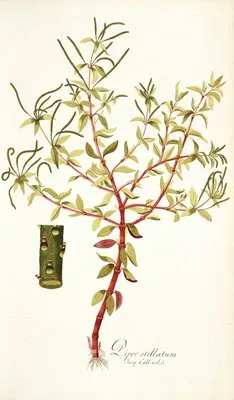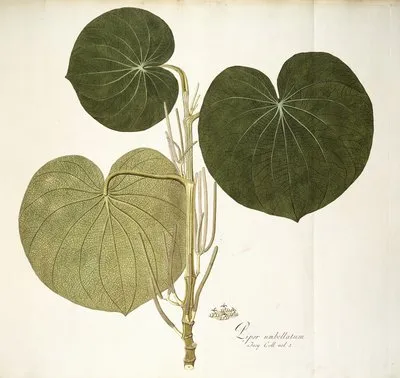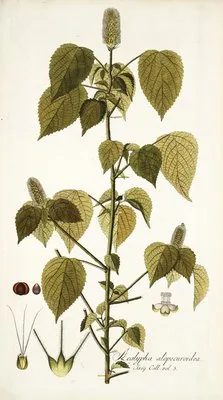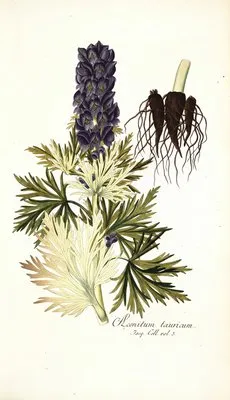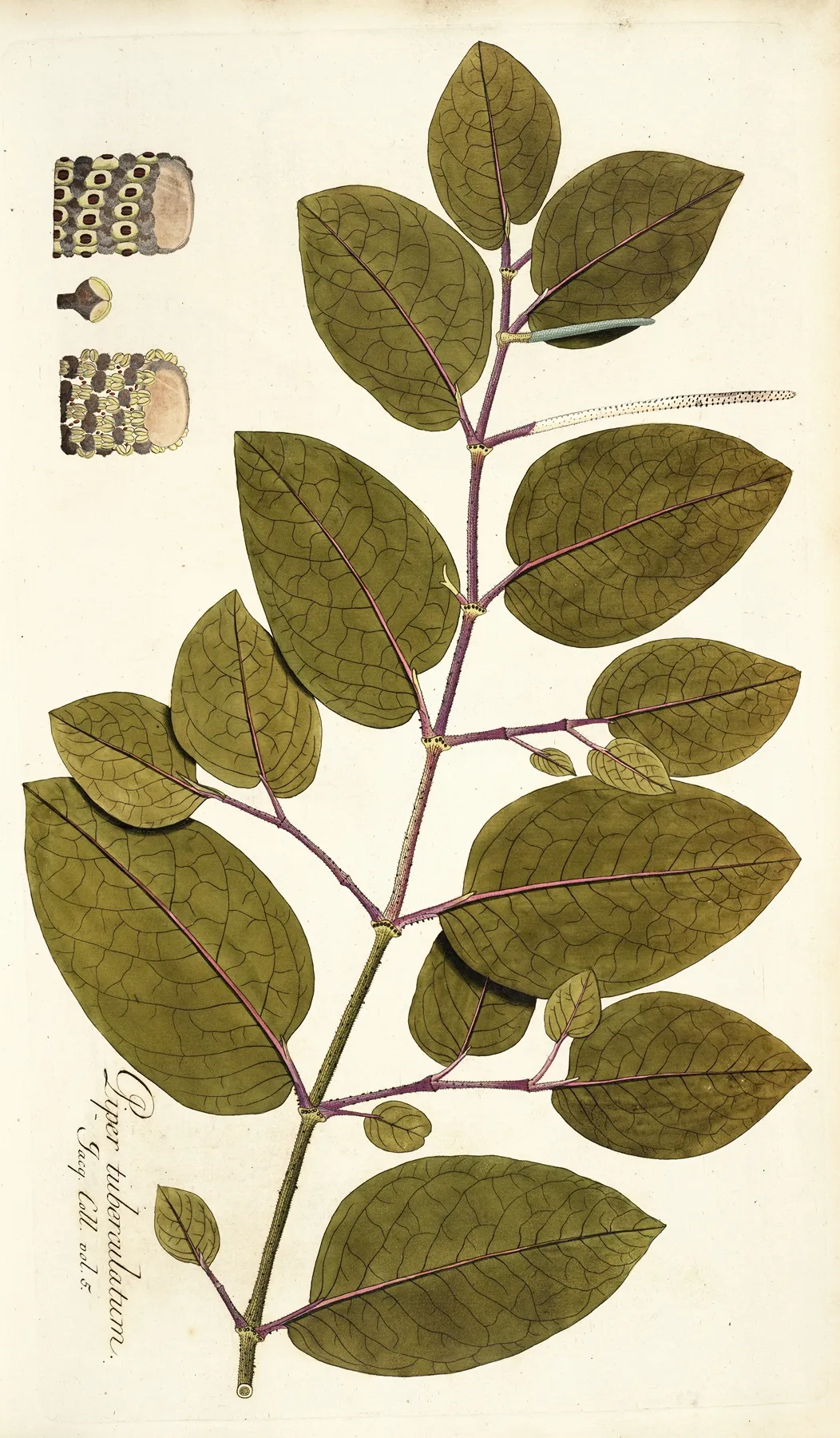
Piper tuberculatum
茎节胡椒
Piper tuberculatum
Ten ways of seeing
- measured cast yellow-green
- upright 1.71 : 1
First Look
真山水之川谷,远望之以取其势,近看之以取其质。
—— 宋·郭熙《林泉高致·山水训》
Mountains and valleys: from afar take their momentum, up close take their texture — the two distances from which any picture is read.
The sheet is vertical: the eye climbs and settles in the upper half. Let the plant stand before you look for detail. Then step in close: watch where colour meets line, and whether the line ever breaks. Third, find where the yellow is deepest: the whole tonal order is measured from that patch.
Name and Thing
The binomial is Piper tuberculatum: the first word is the genus it belongs among, the second the epithet that sets it apart. Two words carry a whole provenance. The Chinese name 茎节胡椒 is a modern rendering of the Latin, not an old garden name.
Form and Colour
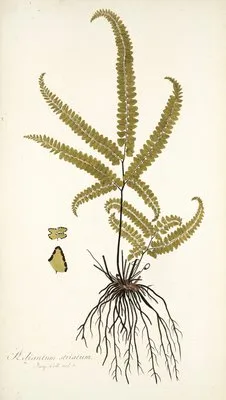
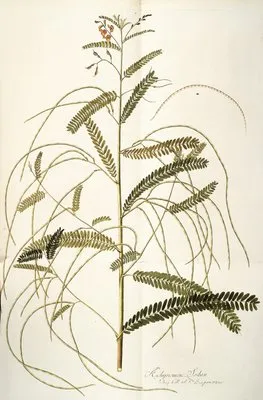
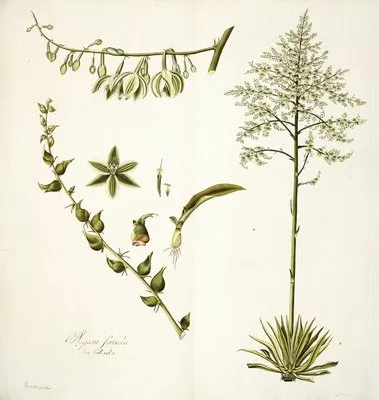
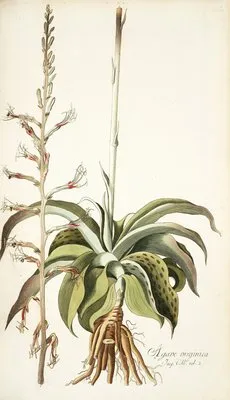
Measured on this plate: flower colour covers 41.5% of the sheet, foliage 0.0%, the cast yellow-green. No other plate shares exactly this measure. A botanical plate: one plant lifted from field or glasshouse and set at the centre of the sheet, root, stem, leaf, flower and fruit in turn, made legible, citable, transmissible. Filed under yellow — a honey-yellow, built in washes from a pale ground. Three things fix the habit: leaf arrangement, tepal count, and how the flower is borne.
Composition
The sheet is tall. No details are appended: a plate for looking, not for keying out. The plant fills 43% of the sheet, centred near the centre — the herbarium way, drawn to be read whole.
Line and Colour
Eighteenth-century plates are mostly copper engraving: hatched lines for shadow, then hand-colouring by another hand. Decide first whether it was printed or painted; only then discuss whether it is beautiful. If you mean to copy it: take its skeleton, its margins and the order of its colours; the burin's hatching is the language of copper — suggest it with pencil density, do not imitate it stroke for stroke.
Poetic Resonance
朝饮木兰之坠露兮,夕餐秋菊之落英。
—— 战国·屈原《离骚》
At dawn I drink the dew fallen from magnolia; at dusk I dine on the fallen petals of autumn chrysanthemum.
The poem gives the mood first and the picture supplies the form; set the line beside the plate and the yellow the corolla becomes its resting point.
Symbolism
The symbolism of such a plate lies not in flower lore but in record: the belief that a plant deserves to be drawn accurately — the plainest ethic of the scientific age. This plate leans yellow, which in flower language adds one more degree of feeling. In a flora it is a species first and a symbol second; the order is worth keeping.
Season and Place
the rest of the year it is only a mass of leaves. Various: local hillside or a plant brought from overseas. The nineteenth-century botanic garden and glasshouse were their first address away from home. The year 1781 on the plate is that of publication, not of flowering — the gathering came a year or two earlier. See this kind of plate in the flowering season if you can: once you have met the living flower, you stop reading only colour.
The Book and the Hand
“Icones Plantarum Rariorum” carries only Nikolaus Joseph Freiherr von Jacquin's name. From drawing to plate the sheet passed through several hands — the engraver aimed at accuracy, the colourist at speed, and between them lies each plate's unevenness.
What to Take Away
Carry three rules away: whole before detail; line before colour; picture before book. Two centuries on, the plant may still flower in some garden; the one on this sheet stopped in the season of 1781.
About this plate
Piper tuberculatum is plate 510, from Icones Plantarum Rariorum, drawn by Nikolaus Joseph Freiherr von Jacquin. This public-domain plate is reproduced at high resolution, free to view and download. Publication: Vindobonae, C.F. Wappler, 1781-1793.