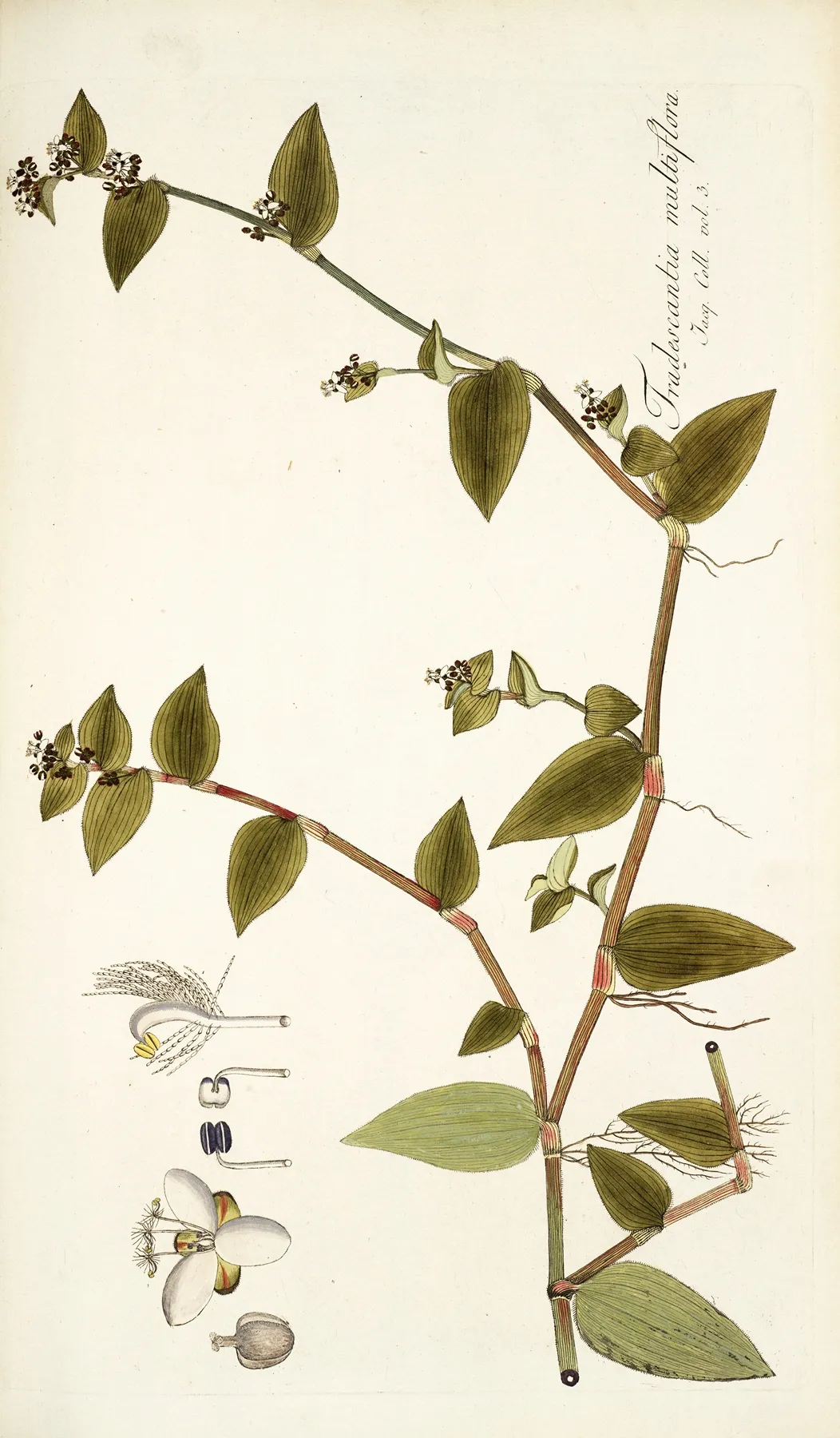
Tradescantia multiflora
鸭跖草目
Tradescantia multiflora
Ten ways of seeing
- measured cast yellow-green
- upright 1.71 : 1
First Look
六法者何?一、气韵生动是也;二、骨法用笔是也;三、应物象形是也;四、随类赋彩是也;五、经营位置是也;六、传移模写是也。
—— 南齐·谢赫《古画品录》
The six laws: spirit resonance alive; bone-method in the brush; matching form; colour by kind; planning the placing; copying the masters.
The sheet is vertical: the eye climbs and settles in the upper half. Let the plant stand before you look for detail. Then step in close: watch where colour meets line, and whether the line ever breaks. Third, find the darkest small patch: the whole tonal order is measured from there.
Name and Thing
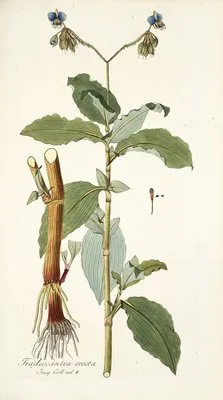
The binomial is Tradescantia multiflora: the first word is the genus it belongs among, the second the epithet that sets it apart. Here the epithet multiflora means “many-flowered” — the name records the feature the namer noticed first. The Chinese name 鸭跖草目 is a modern rendering of the Latin, not an old garden name.
Form and Colour
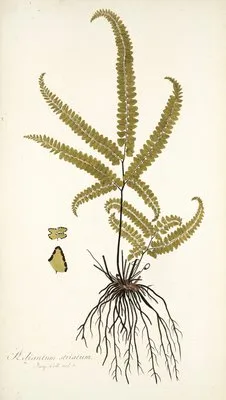
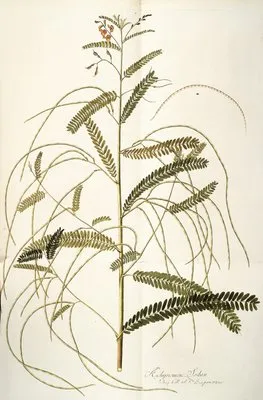
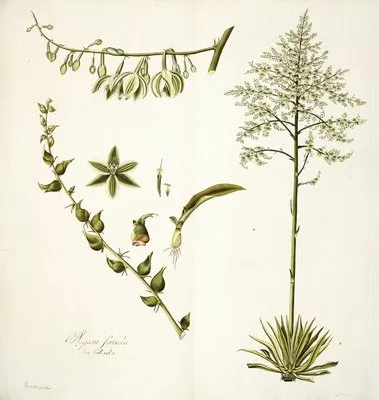
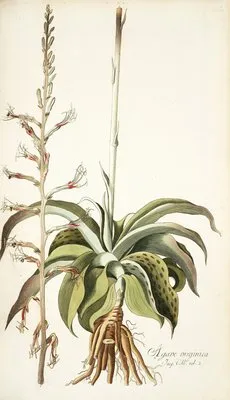
Measured on this plate: flower colour covers 14.5% of the sheet, foliage 0.0%, the cast yellow-green with a second note of amber. No other plate shares exactly this measure. A botanical plate: one plant lifted from field or glasshouse and set at the centre of the sheet, root, stem, leaf, flower and fruit in turn, made legible, citable, transmissible.No colour group is recorded. A single plant, laid out with nothing hidden.
Composition
The sheet is tall. No details are appended: a plate for looking, not for keying out. The plant covers only 16% of the sheet, centred below centre; the emptiness is where the eye rests.
Line and Colour
Eighteenth-century plates are mostly copper engraving: hatched lines for shadow, then hand-colouring by another hand. There is evidence on the back too: the plate mark pressed into the paper, the slight relief of the pigment, lines worn shallow in a later printing. If you mean to copy it: take its skeleton, its margins and the order of its colours; the burin's hatching is the language of copper — suggest it with pencil density, do not imitate it stroke for stroke.
Poetic Resonance
朝饮木兰之坠露兮,夕餐秋菊之落英。
—— 战国·屈原《离骚》
At dawn I drink the dew fallen from magnolia; at dusk I dine on the fallen petals of autumn chrysanthemum.
The poem gives the mood first and the picture supplies the form; set the line beside the plate and the corolla becomes its resting point.
Symbolism
The symbolism of such a plate lies not in flower lore but in record: the belief that a plant deserves to be drawn accurately — the plainest ethic of the scientific age. Flower language was added later; the flower knows nothing of it, and that innocence is part of its power.
Season and Place
Plates usually record flowering, the fortnight when a plant is most identifiable. Various: local hillside or a plant brought from overseas. The nineteenth-century botanic garden and glasshouse were their first address away from home. The year 1781 on the plate is that of publication, not of flowering — the gathering came a year or two earlier. The bud and the ripe fruit on one branch tell the season; the name in the title often tells the journey.
The Book and the Hand
“Icones Plantarum Rariorum” carries only Nikolaus Joseph Freiherr von Jacquin's name. A plate is collective work: drawer, engraver and colourist were different hands, and the unnamed ones decided how good it looks.
What to Take Away
Carry three rules away: whole before detail; line before colour; picture before book. The flower of that year is dust, yet its image on paper has outlived every living cousin.
About this plate
Tradescantia multiflora is plate 625, from Icones Plantarum Rariorum, drawn by Nikolaus Joseph Freiherr von Jacquin. This public-domain plate is reproduced at high resolution, free to view and download. Publication: Vindobonae, C.F. Wappler, 1781-1793.