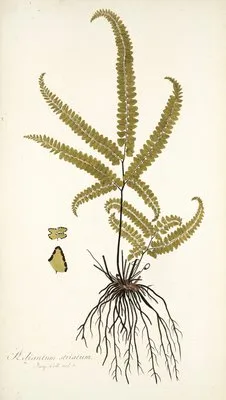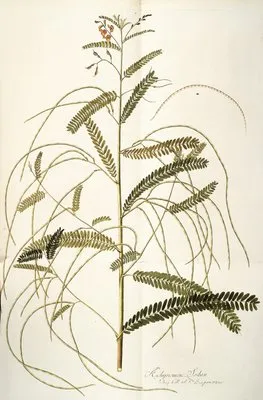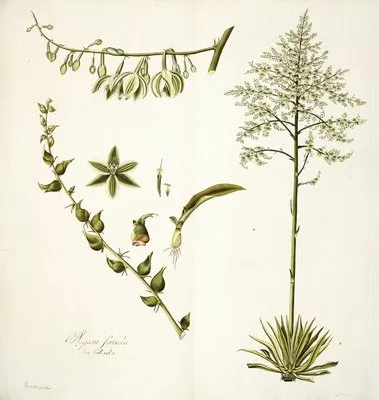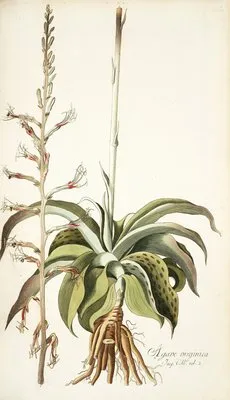
Vitis vinifera
Vitis vinifera|葡萄
Vitis vinifera
About this plate
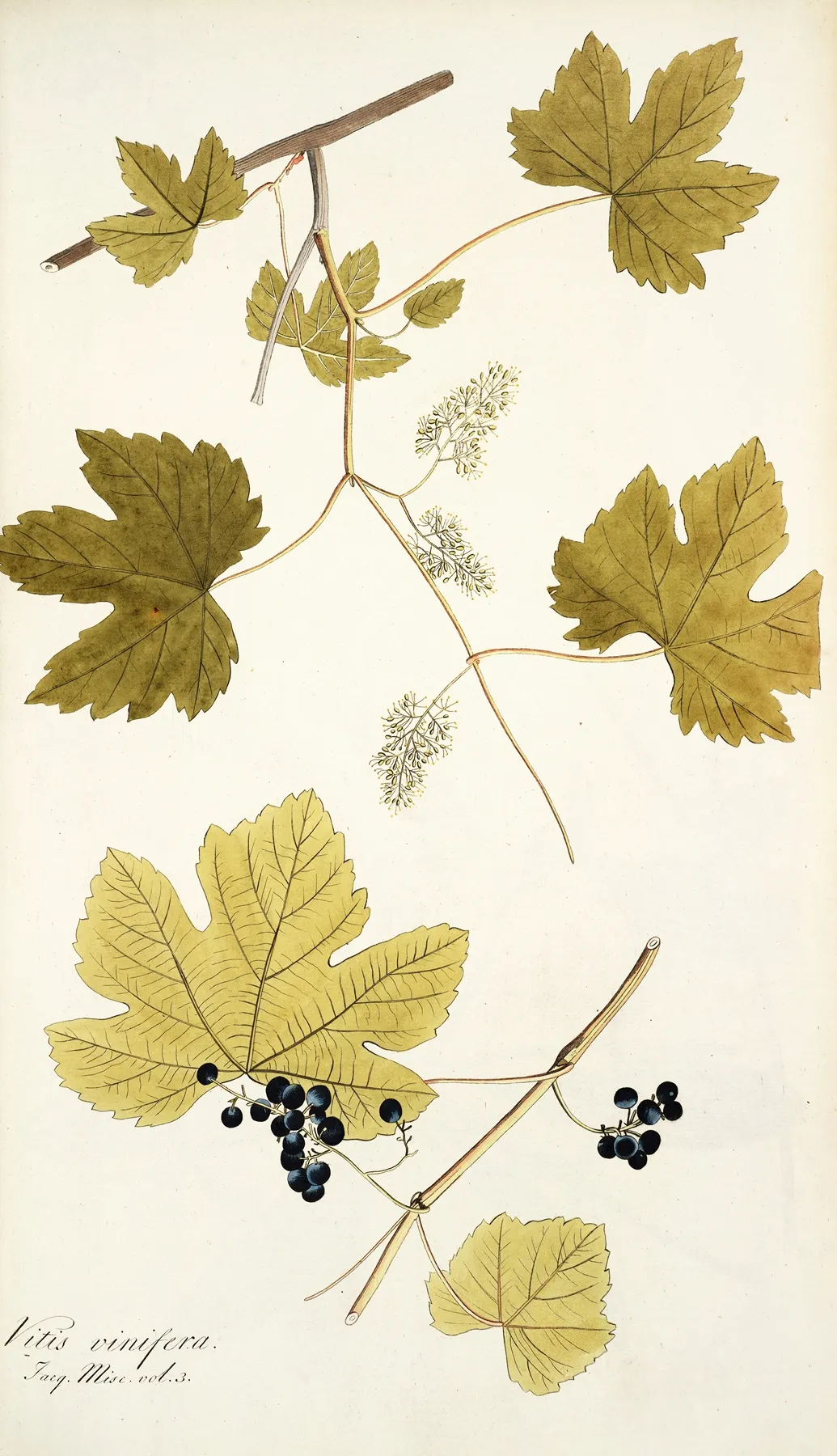
Vitis vinifera is plate 640, from Icones Plantarum Rariorum, drawn by Nikolaus Joseph Freiherr von Jacquin. This public-domain plate is reproduced at high resolution, free to view and download. Publication: Vindobonae, C.F. Wappler, 1781-1793.
Twelve ways of seeing
- measured cast yellow-green
- upright 1.74 : 1
- published 1781
- Plate 640
Not a catalogue entry but a way of looking: how to stand, what to notice, how the line was cut, when it flowers, where it came from, who made it — and then the poems and the classics that taught China to see the same flower. Read the twelve in order and the plate opens.
-
First Look
搜尽奇峰打草稿。
—— 清·石涛《苦瓜和尚画语录》
Exhaust the strange peaks, and then make the sketch.
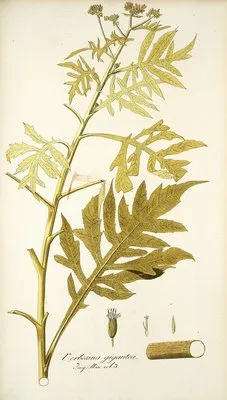
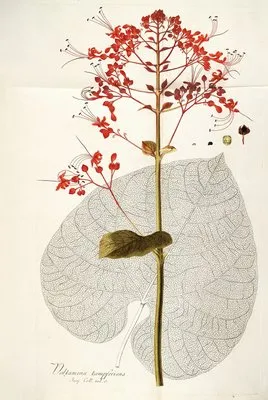
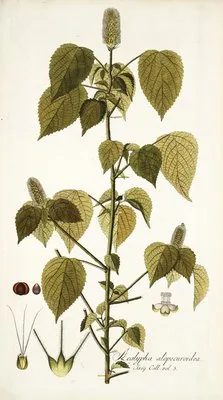
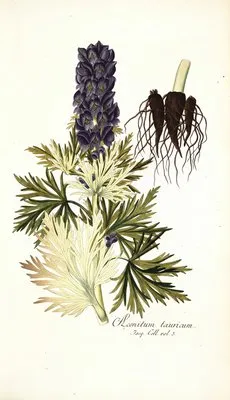
The sheet is vertical: the eye climbs and settles in the upper half. Let the plant stand before you look for detail. Then step in close: watch where colour meets line, and whether the line ever breaks. Third, find where the yellow is deepest: the whole tonal order is measured from that patch. The pose leans right: the upper half carries 12 points further right than the lower — a living thing, not a diagram.
-
Name and Thing
The binomial is Vitis vinifera: the first word is the genus it belongs among, the second the epithet that sets it apart. Two words carry a whole provenance. The Chinese name 葡萄 is a modern rendering of the Latin, not an old garden name.
-
Form and Colour
Measured on this plate: flower colour covers 23.2% of the sheet, foliage 0.0%, the cast yellow-green. No other plate shares exactly this measure. Fruit plates pair the whole fruit with a section: the outline identifies the variety, the cut reveals skin thickness, core size and seed arrangement — the evidence of registration. Filed under yellow — a honey-yellow, built in washes from a pale ground. Three things fix the habit: leaf arrangement, tepal count, and how the flower is borne.
-
Composition
Tall and narrow, the plant rising in one movement with generous margins — the upright format of most floras. (about 1.74 : 1) No details are appended: a plate for looking, not for keying out. The plant covers only 24% of the sheet, centred near the centre; the emptiness is where the eye rests. Old plates set the plant slightly off centre, with unequal margins — that small imbalance is what keeps it alive.
-
Line and Colour
Eighteenth-century plates are mostly copper engraving: hatched lines for shadow, then hand-colouring by another hand. Craft leaves franker evidence than inscriptions.
-
Season
Late summer into autumn, variety by variety; a fruit portfolio spans the whole harvest. The year 1781 on the plate is that of publication, not of flowering — the gathering came a year or two earlier. The best time to read such a plate is its flowering season: three minutes under the tree explains what no text can.
-
Provenance
Temperate fruits came mostly from Eurasia, later from the Americas. Nineteenth-century nurseries printed varietal albums for trade and exhibition: every fruit on the page was a saleable claim. In the same volume the kin are shelved together; set several plates side by side.
-
The Book and the Hand
“Icones Plantarum Rariorum” was drawn by Nikolaus Joseph Freiherr von Jacquin and published 1781-1793. This plate is Plate 640. The image is public domain; the hand-colouring is still one person's hand.
-
Poetic Resonance
玳瑁筵,葡萄酒,殷勤红袖,莫惜捧金瓯。
—— 《正宫·小梁州·春怀》
The poem gives the mood first and the picture supplies the form; set the line beside the plate and the yellow the fruit becomes its resting point.
-
The Written Tradition
主胸中瘕热逆气,利水谷。久服,去臭下气通神,一名橘皮。生川谷。
—— 神农本草经·橘柚第一百一十一
The Book of Songs has a quince given and a jade pendant returned — fruit as ritual gift already in pre-Qin China. The difference is not of quality but of question: Europe asks what it is, China asks whom it resembles.
-
Symbolism
In China the pomegranate means many sons, the peach long life, the orange good fortune; in Europe the apple is temptation and knowledge, the grape abundance and sacrifice. This plate leans yellow, which in flower language adds one more degree of feeling. Flower language was added later; the flower knows nothing of it, and that innocence is part of its power.
-
What to Take Away
Appreciation is not knowledge but habit — one more look each time. A flora exists to be consulted; look long enough and you forget to consult — someone in 1781 gave a whole day to a single flower.