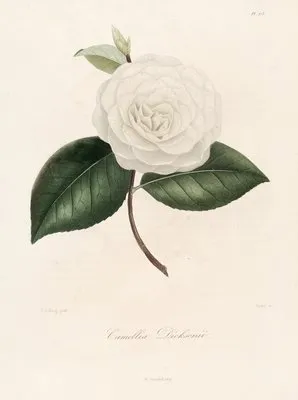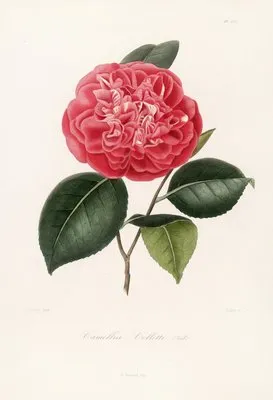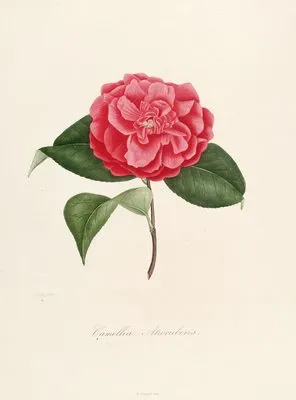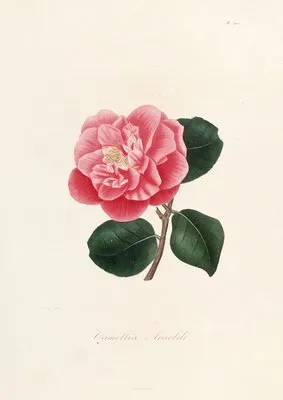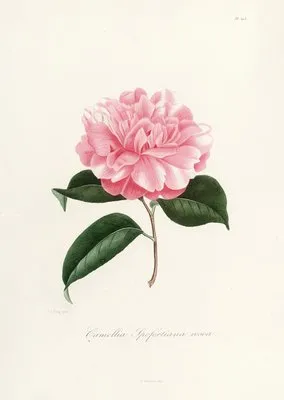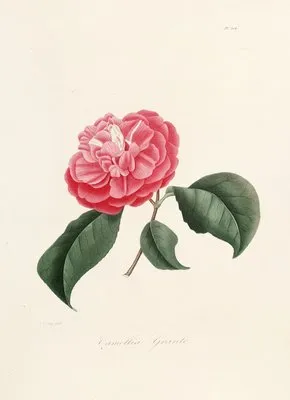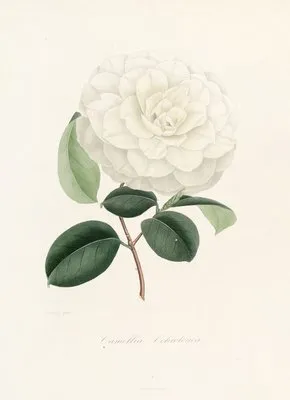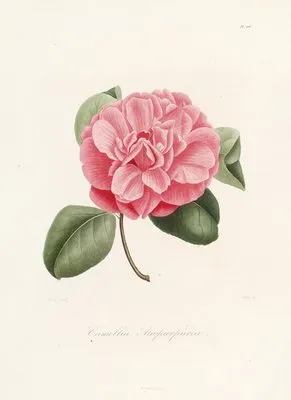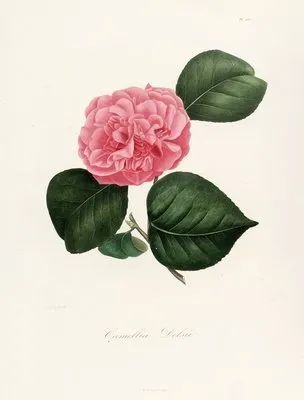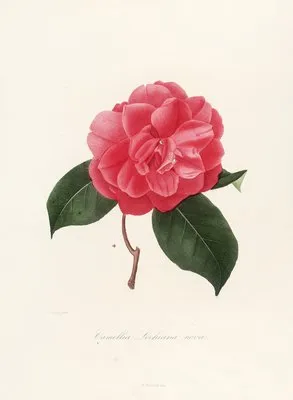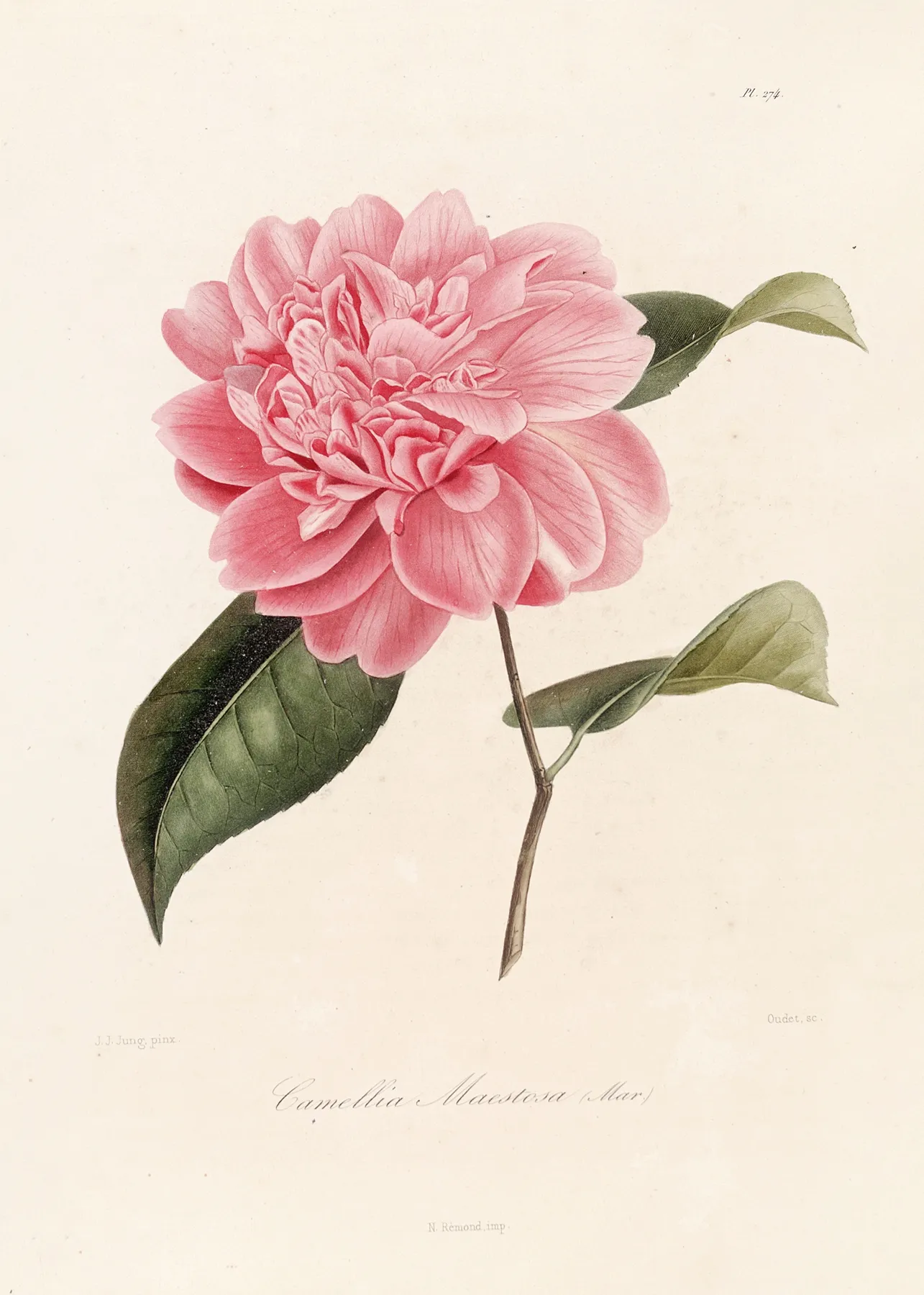
Iconographie du genre Camellia Pl.074
Jung pinx|Oudet, sc J Jung pinx Camelia Maestosa cMlar) N. Rémond,imp
Iconographie du genre Camellia Pl.074
Ten ways of seeing
- measured cast red
- upright 1.40 : 1
First Look
六法者何?一、气韵生动是也;二、骨法用笔是也;三、应物象形是也;四、随类赋彩是也;五、经营位置是也;六、传移模写是也。
—— 南齐·谢赫《古画品录》
The six laws: spirit resonance alive; bone-method in the brush; matching form; colour by kind; planning the placing; copying the masters.
The sheet is vertical: the eye climbs and settles in the upper half. Let the plant stand before you look for detail. Then step in close: watch where colour meets line, and whether the line ever breaks. Third, find the darkest small patch: the whole tonal order is measured from there. The pose leans right: the upper half carries 9 points further right than the lower — a living thing, not a diagram.
Name and Thing
Only the genus Camellia is given; species-level names came later. No established Chinese name exists, so it is cited by its binomial alone.
Form and Colour
Measured on this plate: flower colour covers 15.7% of the sheet, foliage 1.7%, the cast red with a second note of yellow-green. No other plate shares exactly this measure. Camellias are evergreen shrubs with thick, waxen, serrate leaves; the double flowers overlap like roof tiles and fall whole, petals still attached.No colour group is recorded. Three things fix the habit: leaf arrangement, tepal count, and how the flower is borne.
Composition
The sheet is tall. No details are appended: a plate for looking, not for keying out. The plant covers only 20% of the sheet, centred above centre; the emptiness is where the eye rests.
Line and Colour
The first half of the nineteenth century moved from copper to steel to lithography; stipple could render the softest transition. There is evidence on the back too: the plate mark pressed into the paper, the slight relief of the pigment, lines worn shallow in a later printing. If you mean to copy it: take its skeleton, its margins and the order of its colours; the burin's hatching is the language of copper — suggest it with pencil density, do not imitate it stroke for stroke.
Poetic Resonance
夜饮海棠月,朝漱山茶露。
—— 宋·范成大《壬辰三月十八日石湖花下作》
The poem gives the mood first and the picture supplies the form; set the line beside the plate and the corolla becomes its resting point.
Symbolism
In China the camellia is the friend that endures; in Europe it became Eastern beauty and unattainability, and after La Dame aux Camélias, a token of brief life. Flower language was added later; the flower knows nothing of it, and that innocence is part of its power.
Season and Place
a single flower may last a fortnight. Southwest China and Japan, with Yunnan the centre of diversity. The year 1841 on the plate is that of publication, not of flowering — the gathering came a year or two earlier. Read the locality and the flowering season both with a discount: one is hearsay, the other a ten-day peak.
The Book and the Hand
“Iconographie du genre Camellia” carries only Lorenzo Berlese's name. A plate is collective work: drawer, engraver and colourist were different hands, and the unnamed ones decided how good it looks.
What to Take Away
Carry three rules away: whole before detail; line before colour; picture before book. A flora exists to be consulted; look long enough and you forget to consult — someone in 1841 gave a whole day to a single flower.
About this plate
Iconographie du genre Camellia Pl.074 is plate 74, from Iconographie du genre Camellia, drawn by Lorenzo Berlese. This public-domain plate is reproduced at high resolution, free to view and download. Publication: Paris, H. Cousin, 1841-1843.