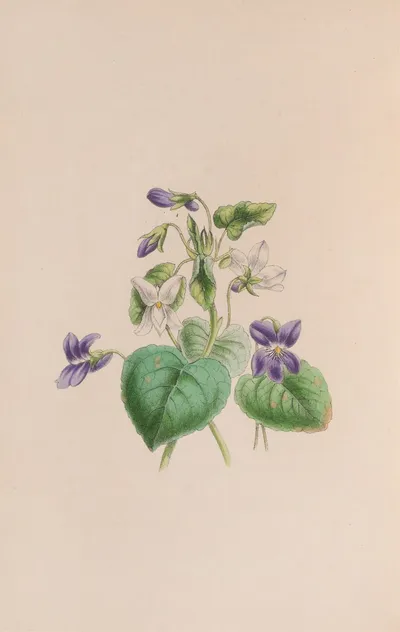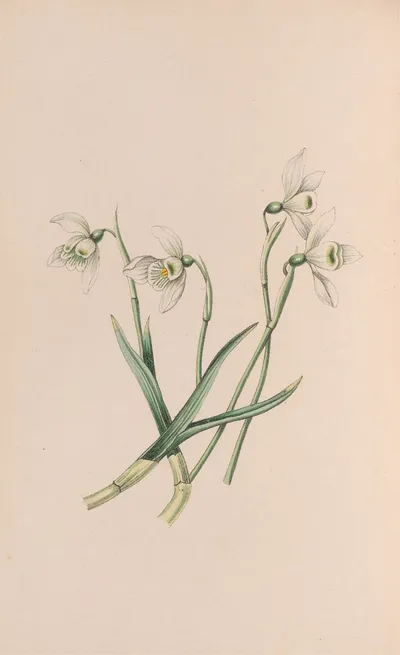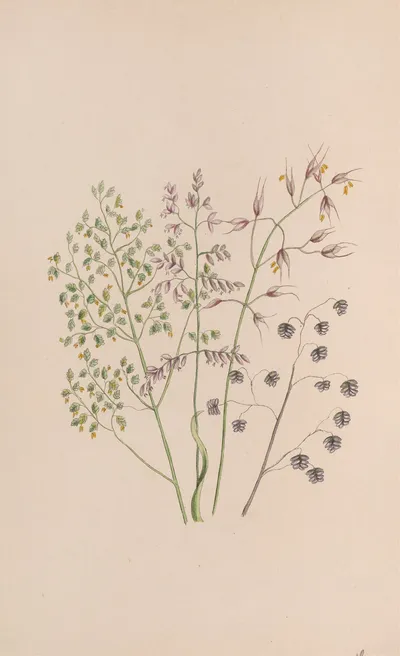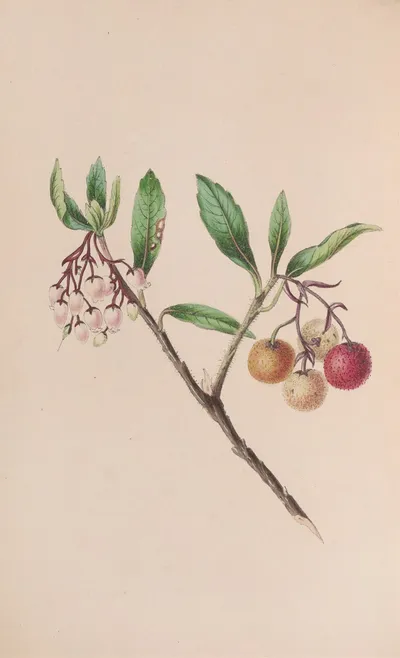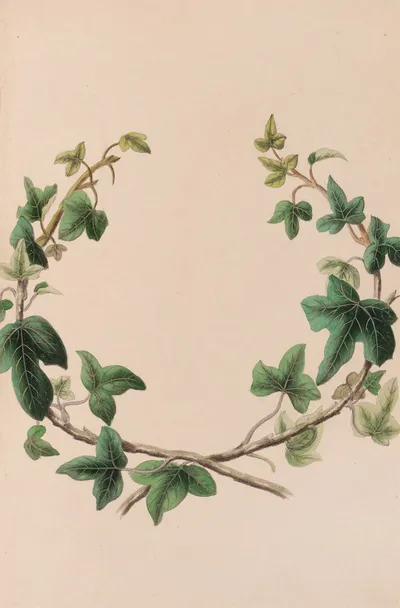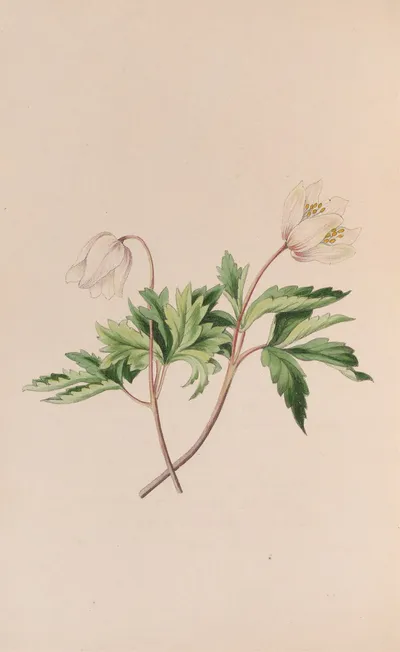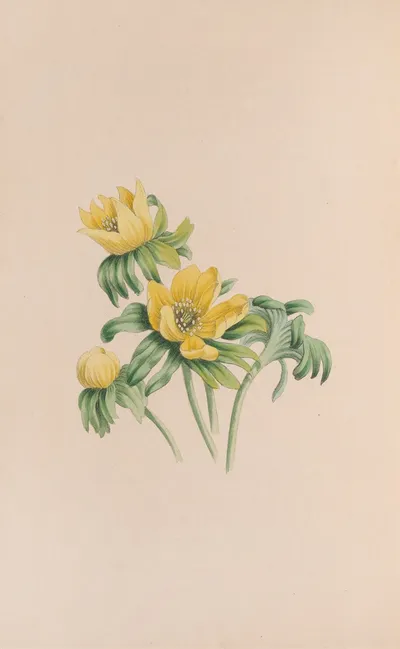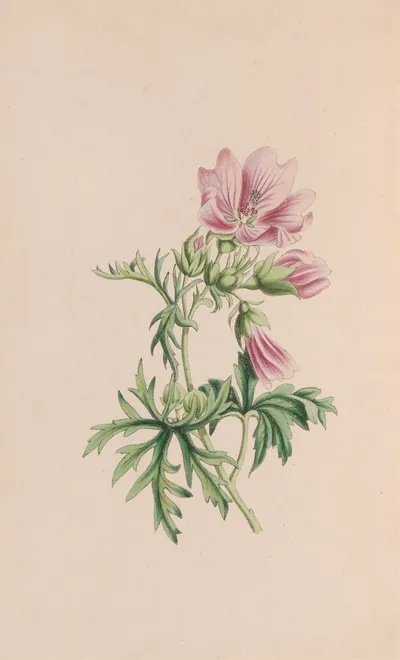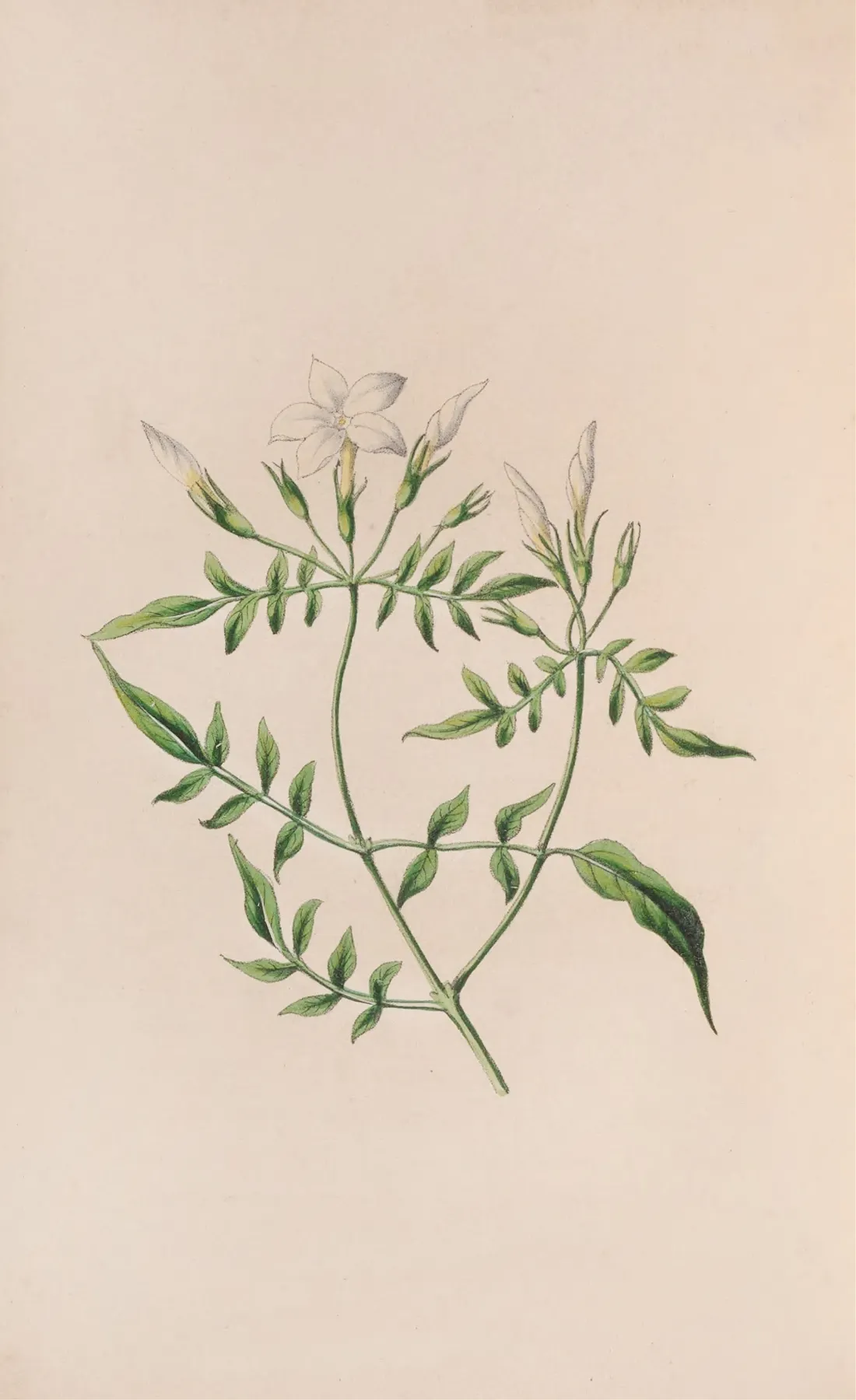
Strawberry Tree (1840)
Ten ways of seeing
- upright 1.64 : 1
First Look
真山水之川谷,远望之以取其势,近看之以取其质。
—— 宋·郭熙《林泉高致·山水训》
Mountains and valleys: from afar take their momentum, up close take their texture — the two distances from which any picture is read.
The sheet is vertical: the eye climbs and settles in the upper half. Let the plant stand before you look for detail. Then step in close: watch where colour meets line, and whether the line ever breaks. Third, find the darkest small patch: the whole tonal order is measured from there.
Name and Thing
The binomial is Strawberry tree: the first word is the genus it belongs among, the second the epithet that sets it apart. Two words carry a whole provenance. No established Chinese name exists, so it is cited by its binomial alone.
Form and Colour
Fruit plates pair the whole fruit with a section: the outline identifies the variety, the cut reveals skin thickness, core size and seed arrangement — the evidence of registration.No colour group is recorded. Read the outline, then the colour layers, then the brush.
Composition
Tall and narrow, the plant rising in one movement with generous margins — the upright format of most floras. No details are appended: a plate for looking, not for keying out. Cover the margins with your thumb and the plate suffocates; uncover them and the flower breathes again.
Line and Colour
The first half of the nineteenth century moved from copper to steel to lithography; stipple could render the softest transition. Decide first whether it was printed or painted; only then discuss whether it is beautiful. If you mean to copy it: take its skeleton, its margins and the order of its colours; the burin's hatching is the language of copper — suggest it with pencil density, do not imitate it stroke for stroke.
Poetic Resonance
昔日居邻招屈亭,枫林橘树鹧鸪声。
—— 唐·刘禹锡《酬朗州崔员外与任十四兄侍御同过鄙人旧居见怀之什时守吴郡》
The poem gives the mood first and the picture supplies the form; set the line beside the plate and the fruit becomes its resting point.
Symbolism
In China the pomegranate means many sons, the peach long life, the orange good fortune; in Europe the apple is temptation and knowledge, the grape abundance and sacrifice. In a flora it is a species first and a symbol second; the order is worth keeping.
Season and Place
a fruit portfolio spans the whole harvest. Temperate fruits came mostly from Eurasia, later from the Americas. Nineteenth-century nurseries printed varietal albums for trade and exhibition: every fruit on the page was a saleable claim. The year 1840 on the plate is that of publication, not of flowering — the gathering came a year or two earlier. Read the locality and the flowering season both with a discount: one is hearsay, the other a ten-day peak.
The Book and the Hand
“Le bouquet des souvenirs: a wreath of friendship” carries only John Stevens Henslow's name. From drawing to plate the sheet passed through several hands — the engraver aimed at accuracy, the colourist at speed, and between them lies each plate's unevenness.
What to Take Away
Next time you stand before a flowering plant, give it three minutes: leaf arrangement, direction of the flower, the darkest patch. A flora exists to be consulted; look long enough and you forget to consult — someone in 1840 gave a whole day to a single flower.