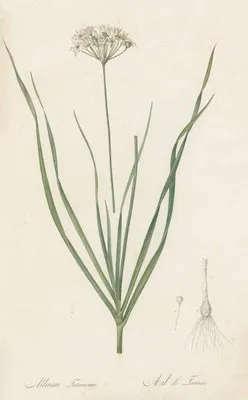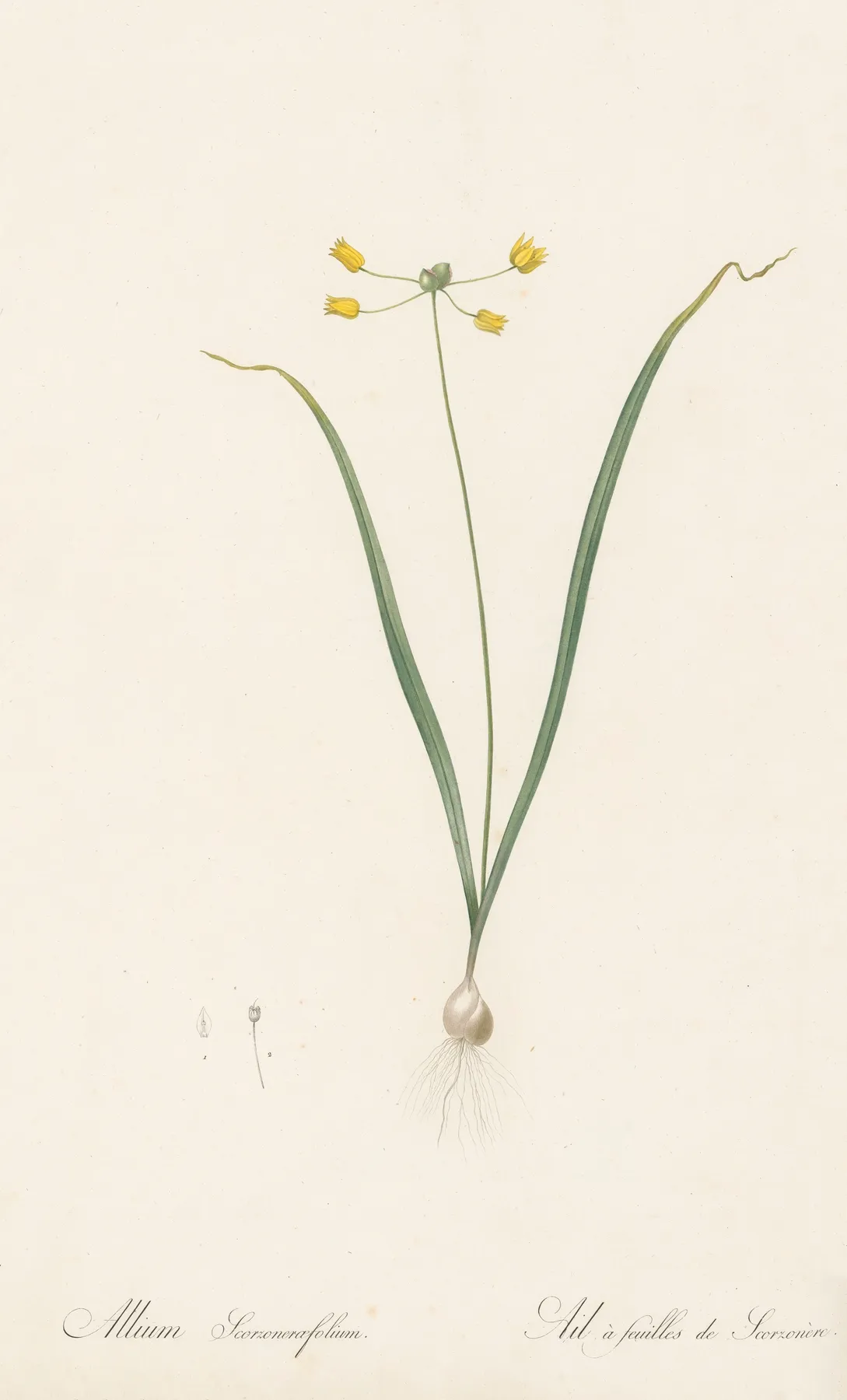
Allium scorzoneraefolium
葱亚科
Allium scorzoneraefolium
About this plate
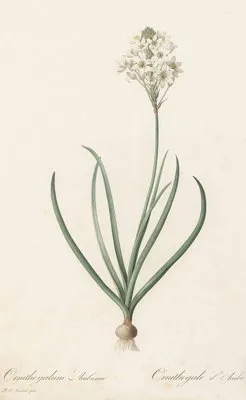
Allium scorzoneraefolium is plate 39, from The Liliaceae - Volume Two, drawn by Pierre-Joseph Redouté. This public-domain plate is reproduced at high resolution, free to view and download. Publication: Paris, Imprimerie de Didot Jeune, 1802-1816.
Twelve ways of seeing
- measured cast yellow-green
- upright 1.65 : 1
- published 1802
- Plate 39
Not a catalogue entry but a way of looking: how to stand, what to notice, how the line was cut, when it flowers, where it came from, who made it — and then the poems and the classics that taught China to see the same flower. Read the twelve in order and the plate opens.
-
First Look
凡画山水,意在笔先。
—— 唐·王维《山水论》
In painting, the intention precedes the brush.
The sheet is vertical: the eye climbs and settles in the upper half. Let the plant stand before you look for detail. Then step in close: watch where colour meets line, and whether the line ever breaks. Third, find the darkest small patch: the whole tonal order is measured from there.
-
Name and Thing
The binomial is Allium scorzoneraefolium: the first word is the genus it belongs among, the second the epithet that sets it apart. Two words carry a whole provenance. The Chinese name 葱亚科 is a modern rendering of the Latin, not an old garden name.
-
Form and Colour
Measured on this plate: flower colour is sparing, 0.6% of the sheet against 0.5% of foliage, the cast tending yellow-green — as with pale or white blooms, outline and tone do the talking. Bulbous plants store the year underground — bulb, corm or tuber — then send up a few thick leaves and a single scape, with six tepals in cup, funnel or star.No colour group is recorded. Read the outline, then the colour layers, then the brush.
-
Composition
Tall and narrow, the plant rising in one movement with generous margins — the upright format of most floras. (about 1.65 : 1) No details are appended: a plate for looking, not for keying out. The plant covers only 3% of the sheet, centred a little right of centre; the emptiness is where the eye rests. Old plates set the plant slightly off centre, with unequal margins — that small imbalance is what keeps it alive.
-
Line and Colour
The first half of the nineteenth century moved from copper to steel to lithography; stipple could render the softest transition. Take a loupe to three places: petal edge, leaf vein, caption. An unbroken line means engraving; colour crossing the outline means a hand.
-
Season
Early spring to early summer, genus by genus: tulips and hyacinths first, gladiolus and amaryllis later. The year 1802 on the plate is that of publication, not of flowering — the gathering came a year or two earlier. The best time to read such a plate is its flowering season: three minutes under the tree explains what no text can.
-
Provenance
Three homelands: the Mediterranean, Central Asia and South Africa. The tulip came from Ottoman gardens and became a Dutch mania; South African bulbs filled European glasshouses after 1800. The localities on the plate are those of a century ago; plants travel and places change their names.
-
The Book and the Hand
“The Liliaceae - Volume Two” was drawn by Pierre-Joseph Redouté and published 1802-1816. This plate is Plate 39. The image is public domain; the hand-colouring is still one person's hand.
-
Poetic Resonance
郁金垂嫩柳,罯画委高笼。
—— 唐·元稹《春六十韻》
The poem gives the mood first and the picture supplies the form; set the line beside the plate and the corolla becomes its resting point.
-
The Written Tradition
人无癖不可与交,以其无深情也。
—— 明·张岱《陶庵梦忆》
Never make a friend of a man without an obsession: he has no deep feeling.
Li Bai's 'orchid wine, fragrant with yujin' is often misread as tulips; the Tang yujin was a turmeric-like root used to scent wine — same name, different plant. You need not parse every word: take the line, and the flower acquires a second face.
-
Symbolism
The tulip was an imperial emblem in Istanbul and a speculative bubble in Amsterdam; the hyacinth sprang from a boy's blood in Greek myth. What bulbs share is concealment: next year kept underground. Meanings change their tune: the same flower can say opposite things within a century.
-
What to Take Away
Carry three rules away: whole before detail; line before colour; picture before book. A flora exists to be consulted; look long enough and you forget to consult — someone in 1802 gave a whole day to a single flower.