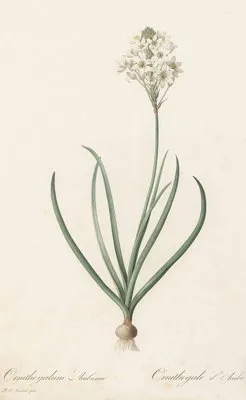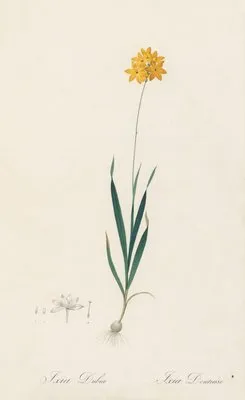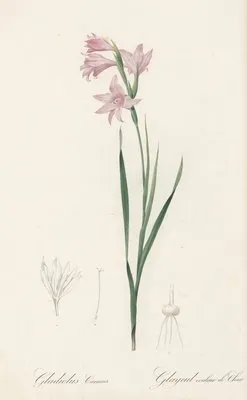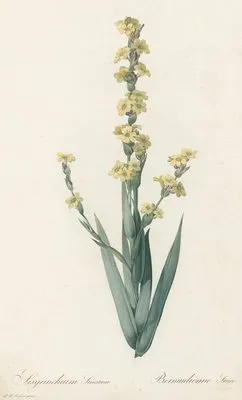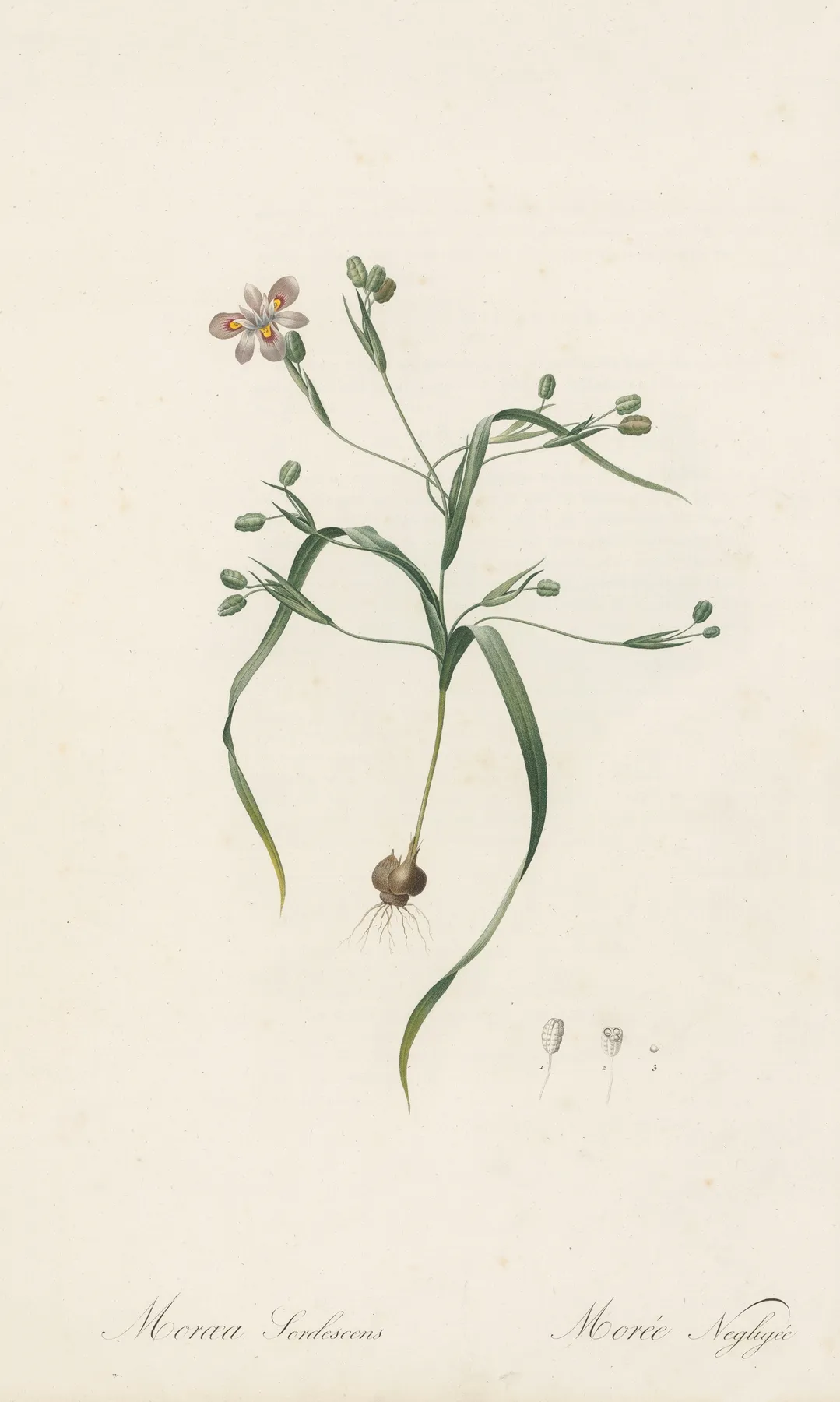
Moraea sordescens
Moraea sordescens
Moraea sordescens
About this plate
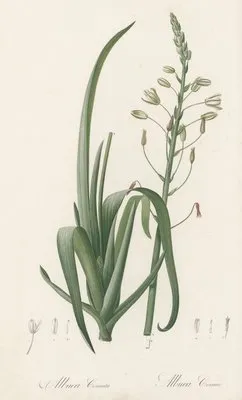
Moraea sordescens is plate 11, from The Liliaceae - Volume Two, drawn by Pierre-Joseph Redouté. This public-domain plate is reproduced at high resolution, free to view and download. Publication: Paris, Imprimerie de Didot Jeune, 1802-1816.
Twelve ways of seeing
- measured cast amber
- upright 1.67 : 1
- published 1802
- Plate 11
Not a catalogue entry but a way of looking: how to stand, what to notice, how the line was cut, when it flowers, where it came from, who made it — and then the poems and the classics that taught China to see the same flower. Read the twelve in order and the plate opens.
-
First Look
凡画山水,意在笔先。
—— 唐·王维《山水论》
In painting, the intention precedes the brush.
The sheet is vertical: the eye climbs and settles in the upper half. Let the plant stand before you look for detail. Then step in close: watch where colour meets line, and whether the line ever breaks. Third, find the darkest small patch: the whole tonal order is measured from there.
-
Name and Thing
The binomial is Moraea sordescens: the first word is the genus it belongs among, the second the epithet that sets it apart. Two words carry a whole provenance. No established Chinese name exists, so it is cited by its binomial alone.
-
Form and Colour
Measured on this plate: flower colour is sparing, 0.5% of the sheet against 0.9% of foliage, the cast tending amber — as with pale or white blooms, outline and tone do the talking. Irises carry rhizomes or bulbs, sword-shaped leaves in two ranks, and six tepals — three falls drooping, often bearded or speckled, three standards erect.No colour group is recorded. A single plant, laid out with nothing hidden.
-
Composition
Tall and narrow, the plant rising in one movement with generous margins — the upright format of most floras. (about 1.67 : 1) No details are appended: a plate for looking, not for keying out. The plant covers only 4% of the sheet, centred above centre; the emptiness is where the eye rests. Cover the margins with your thumb and the plate suffocates; uncover them and the flower breathes again.
-
Line and Colour
The first half of the nineteenth century moved from copper to steel to lithography; stipple could render the softest transition. Take a loupe to three places: petal edge, leaf vein, caption. An unbroken line means engraving; colour crossing the outline means a hand.
-
Season
Late spring to early summer, peaking in April and May, before the summer rains. The year 1802 on the plate is that of publication, not of flowering — the gathering came a year or two earlier. The best time to read such a plate is its flowering season: three minutes under the tree explains what no text can.
-
Provenance
Temperate north. In China iris and sweet flag belong to the Dragon Boat festival; in Europe Iris germanica gave the perfume trade its orris root. The volume was made in 1802-1816, when most of this knowledge came from living plants under glass.
-
The Book and the Hand
“The Liliaceae - Volume Two” was drawn by Pierre-Joseph Redouté and published 1802-1816. This plate is Plate 11. The image is public domain; the hand-colouring is still one person's hand.
-
Poetic Resonance
别后相思隔烟水,菖蒲花发五云高。
—— 唐·元稹《寄贈薛濤》
The poem gives the mood first and the picture supplies the form; set the line beside the plate and the corolla becomes its resting point.
-
The Written Tradition
五月五日,采艾以为人,悬门户上,以禳毒气。
—— 南朝梁·宗懔《荆楚岁时记》
On the fifth of the fifth month they gather mugwort, shape it into a figure and hang it on the door to drive off fever — plant as medicine and as charm.
The Bencao Gangmu lists iris and sweet flag among herbs; the Jingchu seasonal records describe hanging mugwort and flag at the door at midsummer — a custom unbroken for a thousand years. Keep the line; it will surface the next time you meet the same plant.
-
Symbolism
In China sweet flag hung at the door wards off evil at midsummer; in Europe the iris is the messenger, since Iris was the rainbow goddess who carried divine words. Flower language was added later; the flower knows nothing of it, and that innocence is part of its power.
-
What to Take Away
Carry three rules away: whole before detail; line before colour; picture before book. Two centuries on, the plant may still flower in some garden; the one on this sheet stopped in the season of 1802.