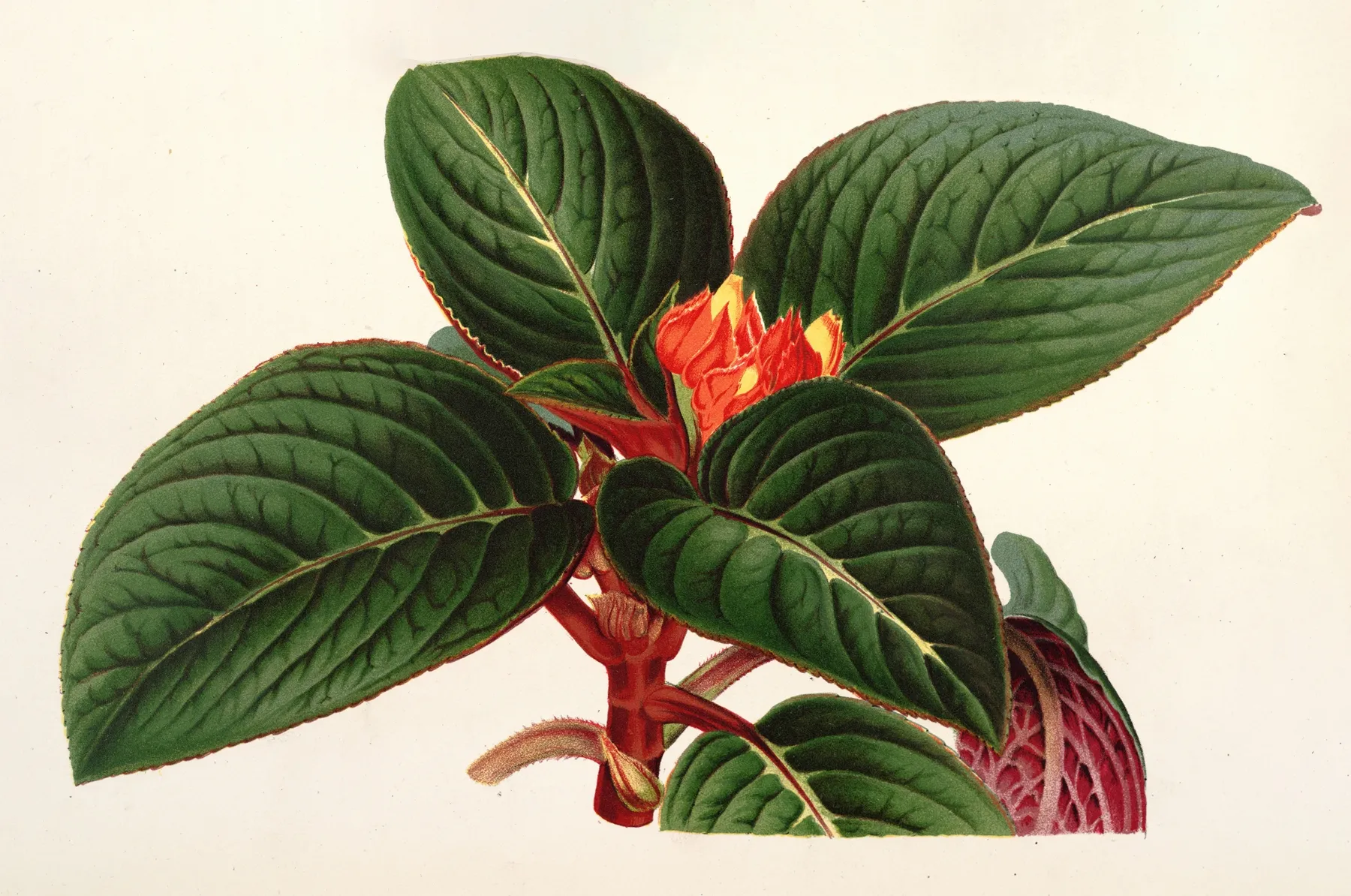
Alloplectus Zamorensis
Alloplectus Zamorensis
Ten ways of seeing
- measured cast red
- broad 0.66 : 1
First Look
凡画山水,意在笔先。
—— 唐·王维《山水论》
In painting, the intention precedes the brush.
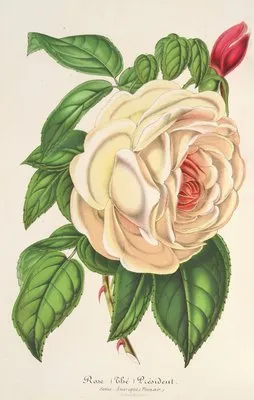
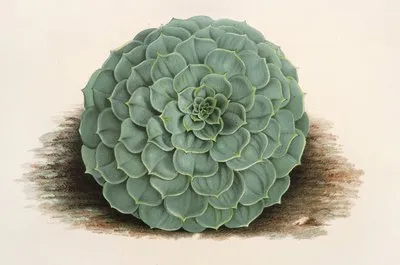
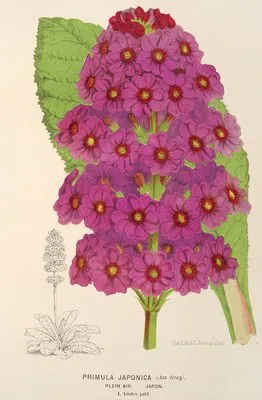
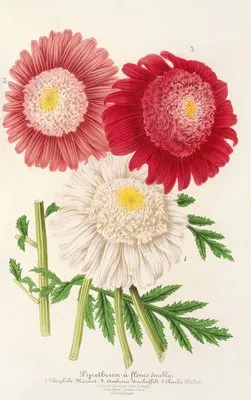
Broad and horizontal: the eye travels side to side. Find where it stops. Then step in close: watch where colour meets line, and whether the line ever breaks. Third, find where the green is deepest: the whole tonal order is measured from that patch. The pose leans right: the upper half carries 11 points further right than the lower — a living thing, not a diagram.
Name and Thing
The binomial is Alloplectus zamorensis: the first word is the genus it belongs among, the second the epithet that sets it apart. Two words carry a whole provenance. No established Chinese name exists, so it is cited by its binomial alone.
Form and Colour
Measured on this plate: flower colour covers 10.2% of the sheet, foliage 29.9%, the cast red with a second note of amber. No other plate shares exactly this measure. A botanical plate: one plant lifted from field or glasshouse and set at the centre of the sheet, root, stem, leaf, flower and fruit in turn, made legible, citable, transmissible. a moss green. Read the outline, then the colour layers, then the brush.
Composition
The sheet is broad. No details are appended: a plate for looking, not for keying out. The plant fills 49% of the sheet, centred near the centre — the herbarium way, drawn to be read whole.
Line and Colour
In the later nineteenth century chromolithography took over: colour printed rather than painted, line demoted. There is evidence on the back too: the plate mark pressed into the paper, the slight relief of the pigment, lines worn shallow in a later printing. If you mean to copy it: block in the broad shapes and colours first, detail last; lithographic softness comes from thin washes — two or three pale layers will get you close.
Poetic Resonance
朝饮木兰之坠露兮,夕餐秋菊之落英。
—— 战国·屈原《离骚》
At dawn I drink the dew fallen from magnolia; at dusk I dine on the fallen petals of autumn chrysanthemum.
The poem gives the mood first and the picture supplies the form; set the line beside the plate and the green the corolla becomes its resting point.
Symbolism
The symbolism of such a plate lies not in flower lore but in record: the belief that a plant deserves to be drawn accurately — the plainest ethic of the scientific age. In a flora it is a species first and a symbol second; the order is worth keeping.
Season and Place
Plates usually record flowering, the fortnight when a plant is most identifiable. Various: local hillside or a plant brought from overseas. The nineteenth-century botanic garden and glasshouse were their first address away from home. The year 1854 on the plate is that of publication, not of flowering — the gathering came a year or two earlier. The bud and the ripe fruit on one branch tell the season; the name in the title often tells the journey.
The Book and the Hand
“L'Illustration horticole” carries only Charles Antoine Lemaire's name. The image is public domain; the hand-colouring is still one person's hand.
What to Take Away
Carry three rules away: whole before detail; line before colour; picture before book. Two centuries on, the plant may still flower in some garden; the one on this sheet stopped in the season of 1854.
About this plate
Alloplectus Zamorensis is plate 373, from L'Illustration horticole, drawn by Charles Antoine Lemaire. This public-domain plate is reproduced at high resolution, free to view and download. Publication: Gand, Belgium, Imprimerie et lithographie de F. et E. Gyselnyck,1854-1896.