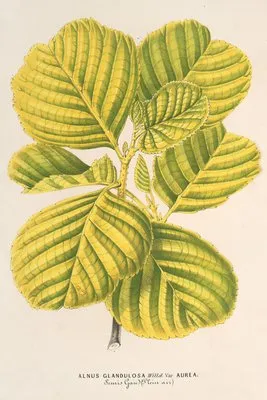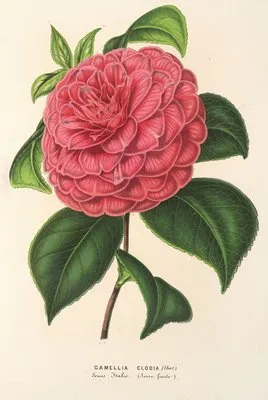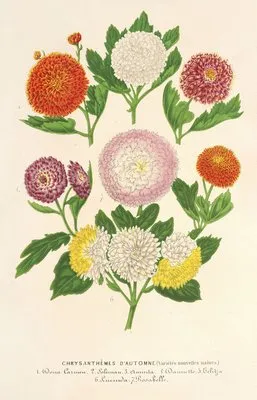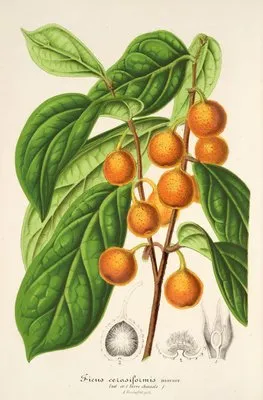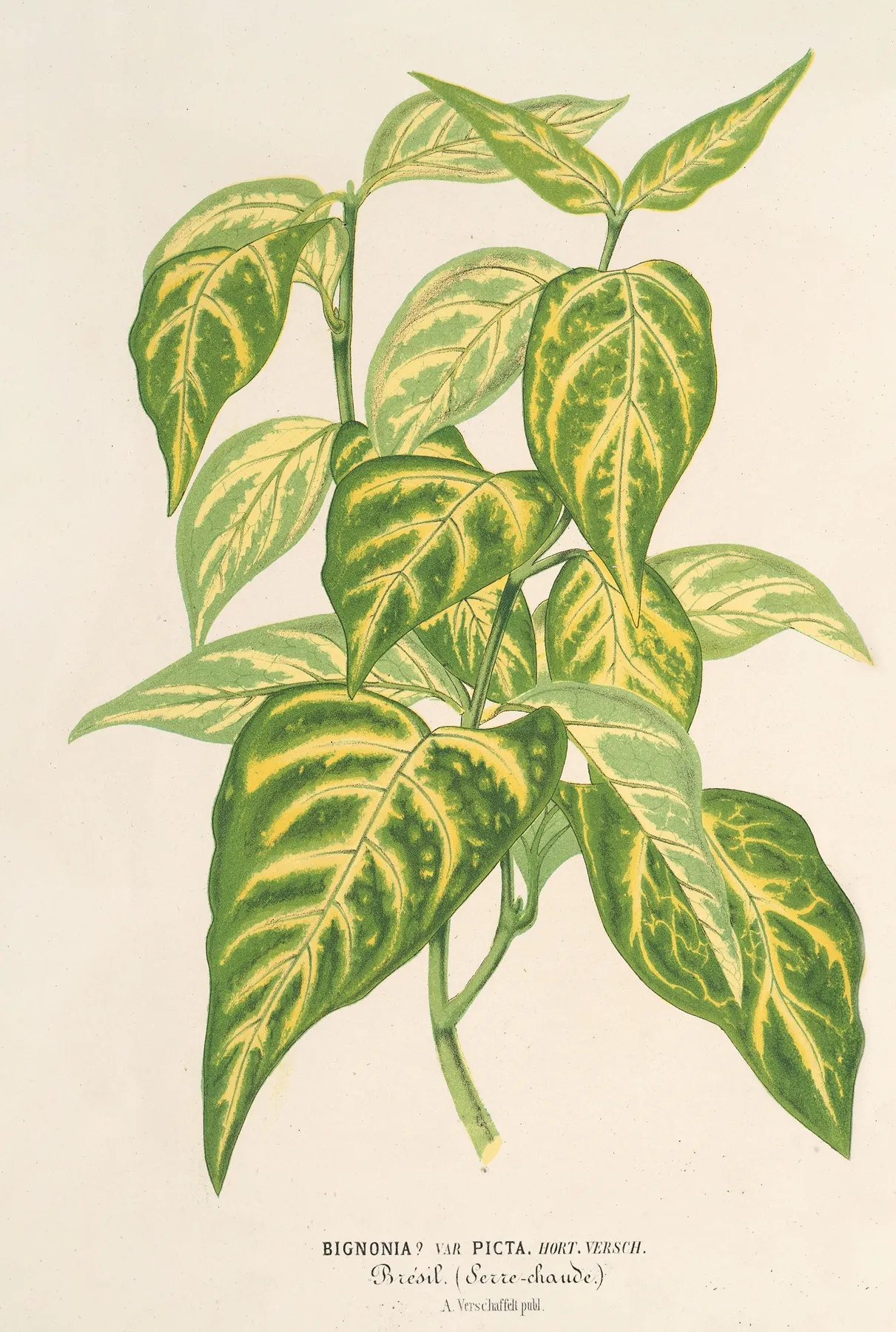
Bignonia picta
Verschafet publ|紫葳科
Bignonia picta
About this plate
Bignonia picta is plate 81, from L'Illustration horticole, drawn by Charles Antoine Lemaire. This public-domain plate is reproduced at high resolution, free to view and download. Publication: Gand, Belgium, Imprimerie et lithographie de F. et E. Gyselnyck,1854-1896.
Twelve ways of seeing
One plate, read twelve times over: its name, its colour, the burin and the brush, the shape of the sheet, the season, the soil it came from, the book it belongs to, its language of flowers, the poem it answers to, the lore behind it, how to look, and what remains.
-
The Name
The plate is titled “Bignonia picta”, numbered Plate 81. Its binomial is Bignonia picta: the genus places it among its kin, the epithet records a place, a shape or a person. The Chinese name 紫葳科 is a modern rendering of the Latin, not an old garden name — between a plant and its names there is always translation.
-
Form and Colour
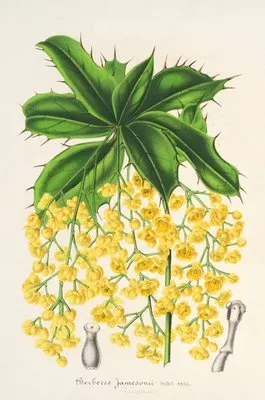
Tropical plants defy temperate habits: heavy, saturated flowers with strong scent, leathery or dissected leaves, stems that climb, swell, or reduce to spines. Filed under yellow — a honey-yellow. The colour is built in washes: a pale ground first, then deepening at the petal base and in shadow. A single plant, laid out on the sheet with nothing hidden.
-
Line and Colour
In the later nineteenth century chromolithography took over: colour printed rather than painted, line demoted. Images grew more accurate and less personal. Look closely at the line and the colour: an unbroken line means engraving, colour crossing the outline by half a millimetre means hand-colouring. Craft leaves franker evidence than inscriptions.
-
Composition
Tall and narrow, the plant rising in one movement with generous margins above and below — the upright format of most floras. (about 1.49 : 1). No details are appended: this is a plate for looking, not for keying out.
-
Season
The tropics have no four seasons, only wet and dry; flowering follows the first rains, so a month on the plate often means 'after the rain'. The year 1854 on the plate is the year of publication, not of flowering — the gathering came a year or two earlier.
-
Provenance
Central and South America, Southeast Asia, India, Ceylon. Eighteenth- and nineteenth-century artists either sailed with the ships or drew from living specimens under glass. In the same volume the kin are shelved together; set several plates side by side and the differences declare themselves.
-
The Book
“L'Illustration horticole” was drawn by Charles Antoine Lemaire and published 1854-1896. This plate is Plate 81. The image is in the public domain; the hand-colouring on the paper is still one person's hand, two centuries ago.
-
Symbolism
In China these plants carry no classical symbolism; their meaning is newness — new worlds, new species, new trade routes. They show natural history's expanding edge. This plate leans yellow, which in flower language adds one more degree of feeling. In a flora it is a species first and a symbol second; the order is worth keeping.
-
Poetic Resonance
日啖荔枝三百颗,不辞长作岭南人。
—— 宋·苏轼《食荔枝》
Three hundred lychees a day — I would not mind being a southerner all my life.
The poem gives the mood first and the picture supplies the form; set the line beside the plate and the yellow the corolla becomes its resting point.
-
Classical Lore
Ji Han's fourth-century Records of the Plants of the South is China's earliest regional flora; Europe's counterpart was the exotic flora brought home by voyages — both by-products of empire and trade. Chinese flower books ranked plants by character; European floras described them by form and name. This plate belongs to the second tradition, yet bears reading by the first. A flora asks what it is; a flower book asks what it means. Read both or half-read the plate.
-
How to Look
See how the artist handles the unfamiliar: are the veins structurally true, or invented? In tropical plates the venation is where mistakes show. And read the caption and number: not part of the picture, but the door through which it entered knowledge.
-
Afterword
A flora exists to be consulted; look long enough and you forget to consult — someone in 1854 gave a whole day to a single flower.